
Last updated November 15, 2026
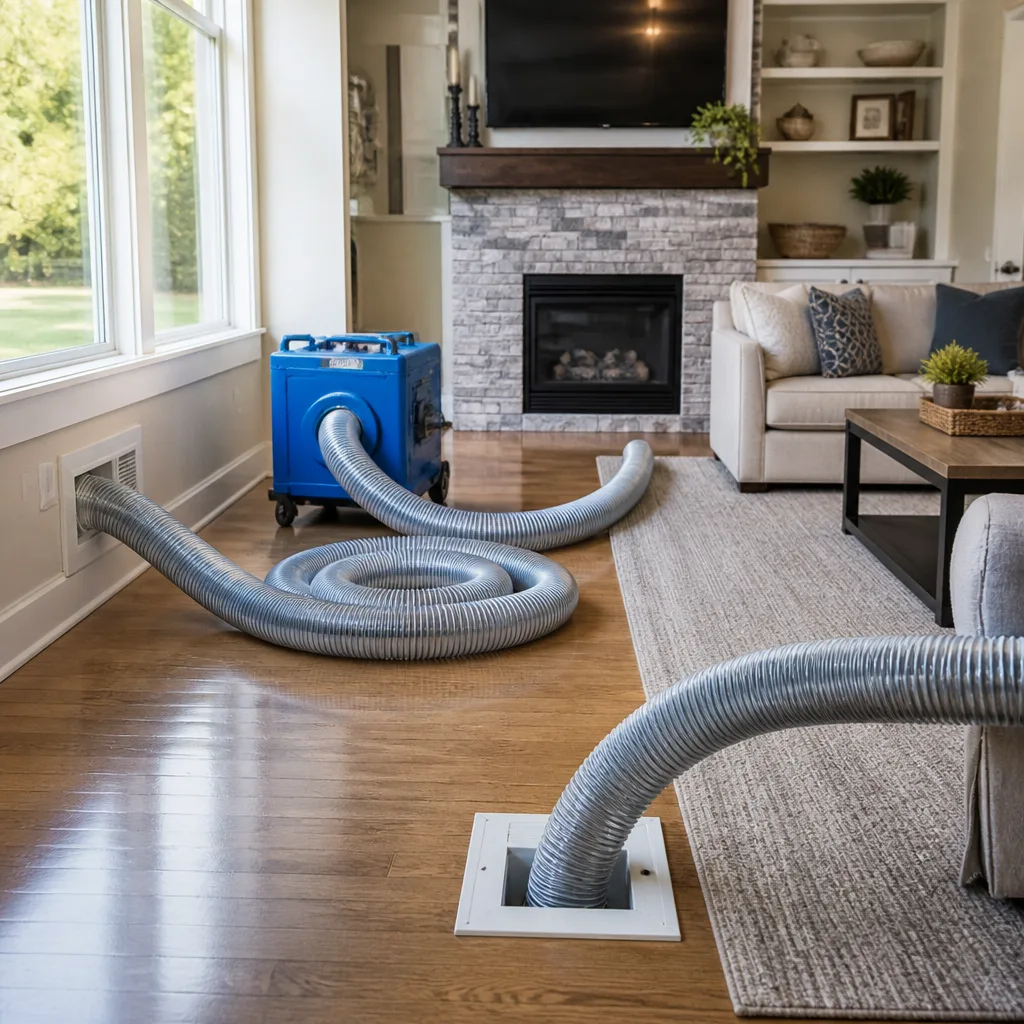 Whole-home duct cleaning
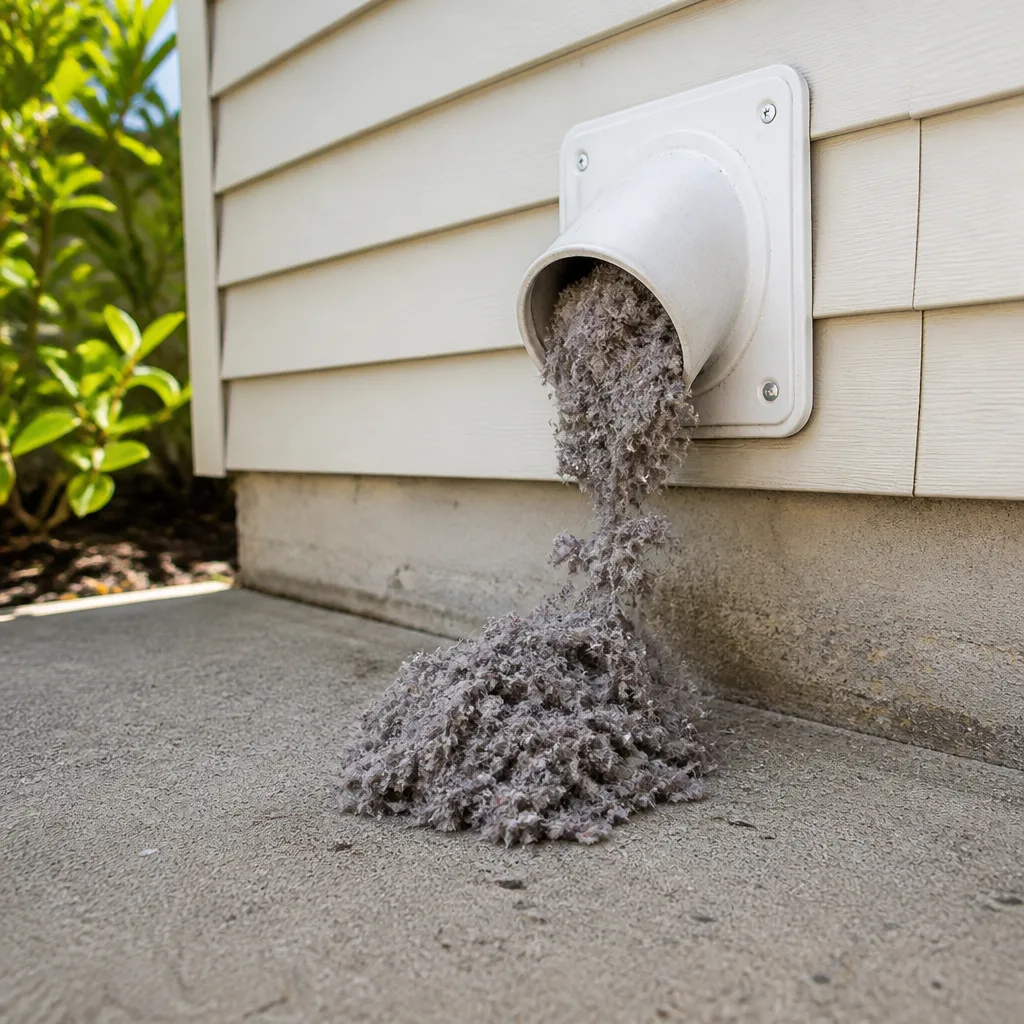 Dryer vent cleaning
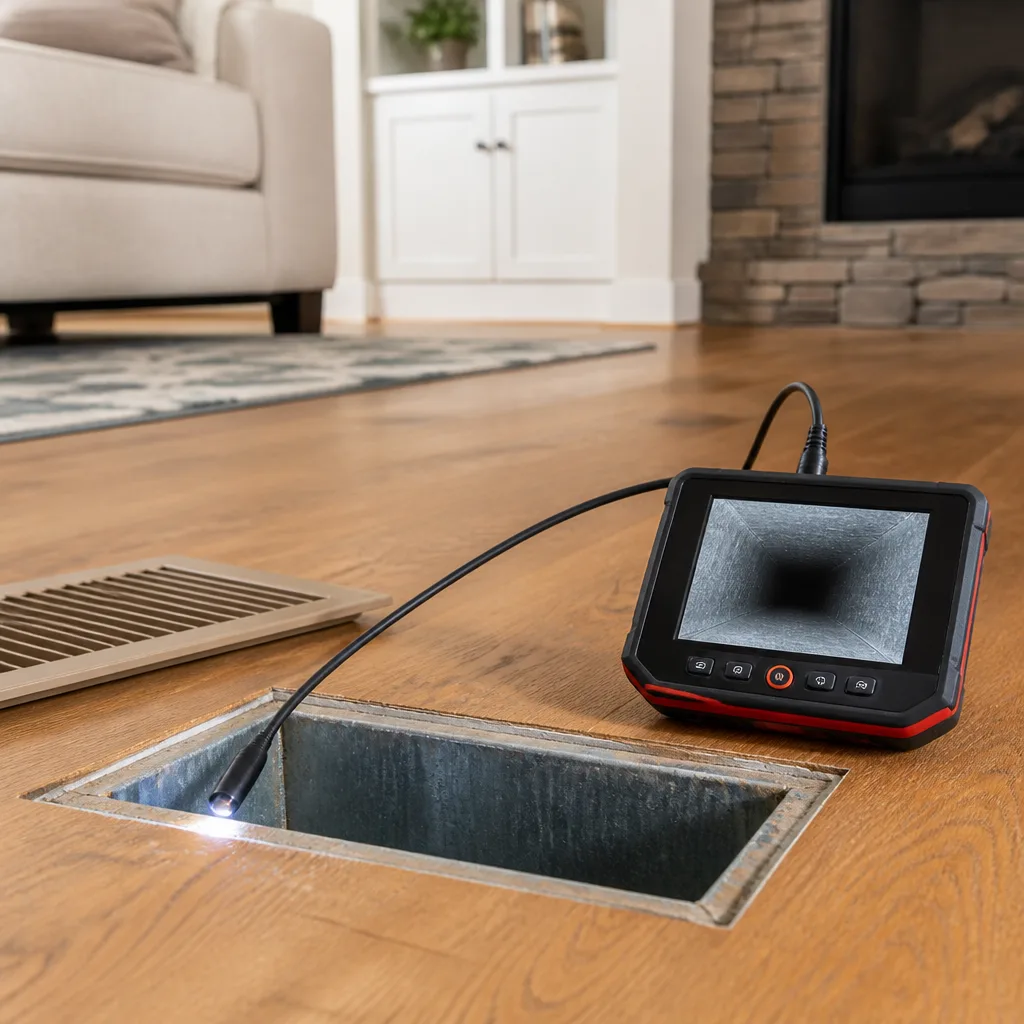 Camera inspection
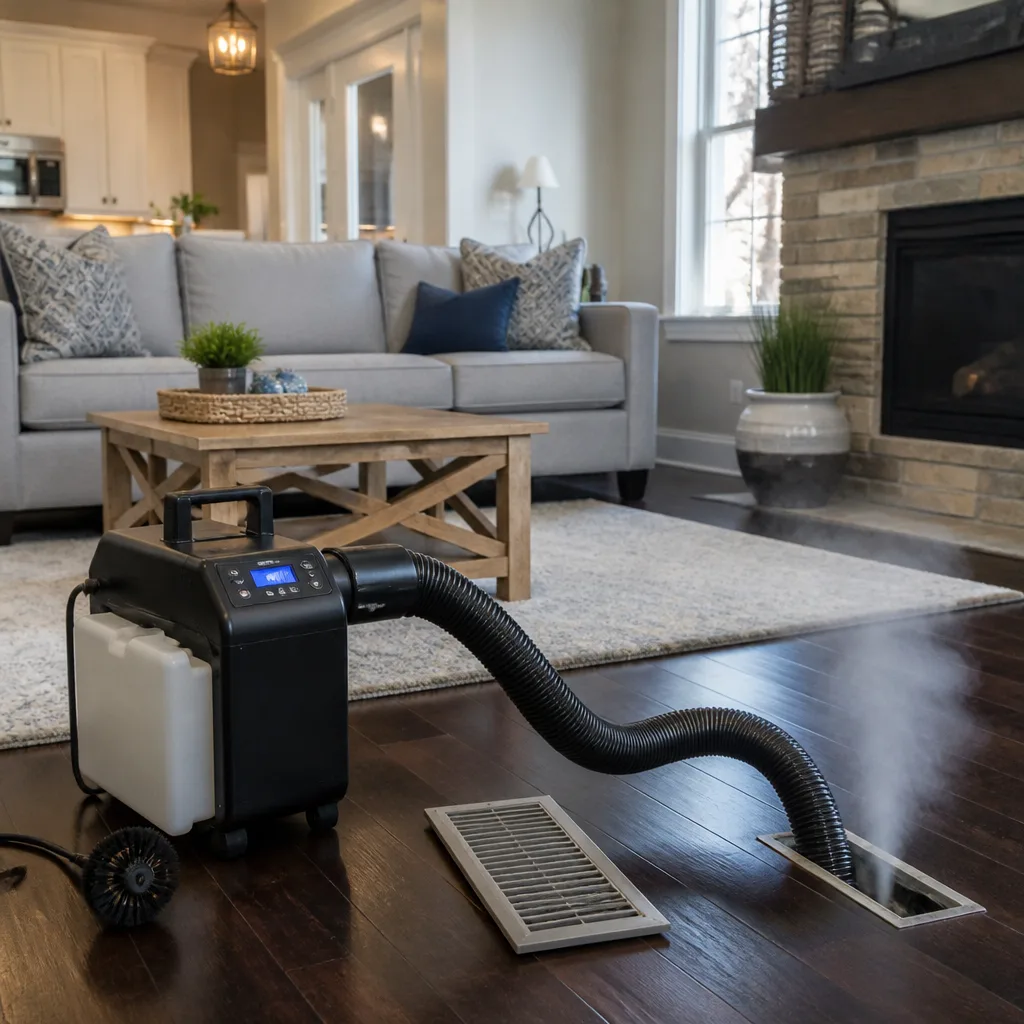 Sanitizing & deodorizing
Whole-system duct and dryer vent check with before-and-after photos - you see exactly what came out of your vents
That "$99 whole-house special" is a bait ad - the real number appears once they are in your hallway, or the "clean" is a shop-vac at the register. We photograph the inside of your ducts before and after instead.
Choosing the Right Air Duct Cleaning Brand: A Buyer’s Guide for Mesquite
Most homeowners shopping for duct cleaning compare company names, star ratings, and coupon prices. That is the wrong comparison. What actually decides whether the job works is what the company brings through your door – whether the negative-pressure unit moves enough air to create true source-removal conditions, and whether the agitation system can reach past the first bend in your ductwork. Two companies can quote the same number and deliver completely different results because one is running professional-grade extraction equipment and the other is running a shop vac with a hose attachment. This guide explains what to ask, what the equipment categories actually mean, and how to tell the difference before you book. We’ll keep it specific to Mesquite homes and the way ductwork here is built.
Quick Answer
The right air duct cleaning brand in Mesquite is the one that uses professional negative-pressure extraction and mechanical agitation equipment – recognized systems like Rotobrush, Nikro, or Abatement Technologies – rather than unbranded portable hardware, and that can also inspect, document with video, and repair damaged ductwork instead of only cleaning it. Ask what equipment they use, whether they run both agitation and extraction, and whether you’ll see before-and-after footage of your own ducts. A company that can answer those three questions clearly is the one worth hiring.
Styles & brands we work with
- Whole-home duct cleaning
- Dryer vent cleaning
- Camera inspection
- Sanitizing & deodorizing
Table of Contents
- What “Brand” Actually Means in Duct Cleaning
- The Two Equipment Categories You Need to Know
- What CFM Ratings Mean for a Mesquite Home
- Named Equipment Brands and What Each One Does
- Questions to Ask During a Quote Call
- Why Equipment Grade Shows Up in the Price
- The Camera Inspection and Why It Matters
- Beyond Cleaning: Repair and Air Quality Upgrades
What “Brand” Actually Means in Duct Cleaning
In most home services, “brand” means the company name on the truck. In duct cleaning, it also means the equipment manufacturer – and that second meaning is the one that determines whether the work is real. Rotobrush, Nikro, and Abatement Technologies are manufacturers of professional duct cleaning systems, not marketing labels a company can slap on its website. When a company says it uses Rotobrush, that’s a specific claim about the agitation tool it runs. When it says it works with Abatement Technologies equipment, that’s a claim about its ability to handle contaminant and particulate abatement, not just routine dust.
Why does this matter for a Mesquite homeowner? Because duct cleaning is a source-removal job. The goal is to dislodge settled debris from the interior walls of the ductwork and capture it under negative pressure so it leaves the house. If the agitation tool can’t reach the surfaces and the extraction unit can’t hold enough vacuum, debris gets stirred up and then resettles – sometimes in a different part of the system, sometimes back in the living space. You paid for a cleaning and got a disturbance.
We’ve seen this pattern often enough to name it plainly: the difference between two duct cleaning companies with similar websites is usually the difference between professional-grade hardware and entry-level tools. That’s the comparison worth making before you book anything in Mesquite.
The Two Equipment Categories You Need to Know
Professional duct cleaning uses two pieces of equipment working together: an agitation system that breaks debris loose and an extraction system that pulls it out under negative pressure. Both matter, and the extraction side is where the categories split.
Portable Extraction Units
Portable units are self-contained machines that sit inside or just outside the home and connect to the duct system through a hose. They’re the standard in residential work because they reach anywhere a vehicle can’t park, they work on second floors and in tight attics, and they don’t require pulling up to the house. Quality varies enormously across the portable category – a professional Rotobrush or Nikro unit is a different machine from a contractor-grade shop vac, even though both are technically portable.
Truck-Mount Systems
Truck-mount systems use a large vacuum unit mounted in the vehicle and a long hose run into the home. They generate higher extraction capacity, but they only work where the vehicle can park close to the duct access point. In Mesquite homes with long driveways, alley access, or ductwork on the far side of the house, the hose run becomes the limiting factor – and a truck-mount unit that can’t maintain vacuum at the end of a long hose is not delivering the advantage it advertises.
What Actually Matters
Most residential duct cleaning in Mesquite is done with professional portable extraction, and that’s appropriate. What separates a good setup isn’t truck-mount versus portable. It’s whether the portable unit is a real professional machine with adequate capacity, whether the agitation tool can reach beyond the first bend, and whether the technician uses both together rather than one or the other.
What CFM Ratings Mean for a Mesquite Home
CFM stands for cubic feet per minute, and it’s the measure of how much air an extraction unit moves. In duct cleaning, airflow is what creates the negative-pressure condition that captures dislodged debris instead of letting it settle back into the system. Higher CFM means stronger capture. Low CFM means the agitation tool loosens debris that the unit can’t pull through.
For a typical single-story Mesquite home with a standard central air system, professional extraction needs to maintain vacuum across the whole duct network while the technician works each branch. That’s harder than it sounds because every branch you open creates a leak that bleeds off vacuum from the others. A machine with real capacity holds up. A marginal one doesn’t, and the last rooms cleaned end up with worse capture than the first.
You don’t need to memorize CFM numbers. You need to ask whether the unit is a professional extraction machine or a general-purpose vacuum, and whether the technician plans the cleaning sequence so vacuum is maintained throughout. Here’s what that sequence usually involves on a normal Mesquite job:
- Camera inspection to see the internal condition of the ductwork before anything is touched.
- Sealing of supply and return registers except the one being worked, to concentrate vacuum.
- Negative-pressure extraction connected at a central point, running for the duration.
- Mechanical agitation with a rotary brush or air whip through each branch, working from the far end back toward the extraction point.
- Post-cleaning camera inspection and video documentation comparing before and after.
- Replacement of filters and confirmation that registers and seals are reinstalled correctly.
If a company can’t describe a sequence like that in plain language, the equipment question is already answered.
Named Equipment Brands and What Each One Does
Professional duct cleaning equipment comes from a small number of manufacturers. Knowing which system a company uses tells you what kind of work it’s set up to handle. Here are the names you’ll encounter in Mesquite, and what each system is built for.
- Rotobrush: Rotary brush agitation systems designed for residential ductwork. The brush head spins through flex and sheet-metal ducts to break debris loose from the walls, and the system pairs with an extraction unit under negative pressure. It’s the workhorse of professional residential cleaning because it reaches where a stationary tool can’t.
- Nikro: Professional negative-air machines and duct cleaning equipment. Nikro systems are built for sustained vacuum, and they’re often run alongside agitation tools to hold source-removal conditions through the whole job. Companies that run Nikro are typically set up for larger or more contaminated systems.
- Abatement Technologies: Equipment designed for contaminant and particulate abatement, not just routine dust removal. When a job involves heavier contamination – renovation dust, pest activity, or indoor air quality concerns that go past normal household dust – the extraction setup needs to handle it. This is the rung above routine cleaning.
- Viper: Air-driven and mechanical agitation tools used to loosen debris in duct runs where a rotary brush isn’t the right fit. Viper tools work well on complex branch layouts and tight spaces.
We use Rotobrush and Nikro systems together on the jobs we’re connected to, rather than relying on a single tool. That pairing is deliberate: agitation and extraction are two different jobs, and the equipment should reflect that. For jobs involving heavier contaminants, Abatement Technologies equipment is on hand. Honeywell and Aprilaire products allow filtration and air quality upgrades to integrate with the duct work itself, and Guardsman products are incorporated into protective finishing after cleaning.
None of this is about brand loyalty for its own sake. It’s about a company being able to match the equipment to the job instead of forcing every job through one machine.
Questions to Ask During a Quote Call
The quote call is where you separate operators who know their tools from those who don’t. A real duct cleaning professional will answer these without hesitation; a generalist with a shop vac will get vague.
Here are the questions, in the order that gets the most useful information fastest:
- “What extraction equipment do you use, and what’s its rated airflow?” You’re listening for a specific machine name and a real answer. “Professional-grade unit” with no name is not an answer.
- “What agitation tool do you run, and does it reach the full length of each branch?” The right answer names a tool and describes how the technician works each run, not just the trunk line.
- “How do you seal the system to maintain negative pressure during the job?” This is the question that exposes marginal setups. If they can’t describe sealing registers and connecting extraction at a central point, the vacuum won’t hold.
- “Do you do a camera inspection before and after, and will you show me the footage?” A credible operator documents the condition of your ducts, not just the invoice.
- “Can you repair damaged ductwork, or only clean it?” Cleaning a system with disconnected joints or crushed runs wastes the cleaning. Repair capability separates a specialist from a cleaning-only crew.
- “Is the price per system or per vent?” Per-vent pricing is where bait-and-switch quoting hides. A flat price per system, agreed before work starts, is the clearer deal.
- “Do you also clean dryer vents, and how?” If dryer vent cleaning is an add-on afterthought, the answer will be short. If it’s a dedicated service, they’ll describe it in the same detail as duct work.
You’ll notice none of these questions require you to understand the equipment. You just need to hear whether the person on the phone does.
Why Equipment Grade Shows Up in the Price
Professional duct cleaning costs more per job to run than a quick visit with a portable vacuum, and that cost is real. A true extraction and agitation setup involves expensive machines, maintenance and filter replacement on those machines, longer job times because the cleaning is done properly branch by branch, and camera documentation. That’s the economic reality behind any legitimate quote.
What this means for you as a buyer: when you see quotes that differ by hundreds of dollars for what sounds like the same service, the difference is almost always equipment grade and whether the job is done completely. A quote built around a low teaser figure that grows once the technician is on site is not a better deal – it’s a different job, done differently. The way to protect yourself is to insist on one flat price per system, agreed before work starts, and to ask what equipment will actually be brought in.
It’s also worth asking what happens after the cleaning. A company running professional equipment often includes protective finishing – Guardsman products, for example, are used to protect duct surfaces after cleaning. If a quote doesn’t mention what happens after the extraction, ask.
For a clearer picture of what a full job involves, our air duct cleaning page walks through the process end to end.
The Camera Inspection and Why It Matters
Camera inspection is a credibility signal. A technician who runs a camera through your ductwork before and after cleaning has committed to showing evidence of the work – not just telling you it was done. That’s a meaningful difference from a company that cleans and leaves without documentation.
Here’s what a proper camera component looks like on a residential job:
- Video or still shots of the interior walls of the duct before cleaning, which establish a baseline and show visible buildup.
- Shots after cleaning of the same sections, demonstrating the surfaces are cleared rather than just disturbed.
- Inspection of branch runs and transitions, not only the trunk line – the first bend in a branch is where debris accumulates and where a marginal tool stops reaching.
- A review of the footage with the homeowner, so you can see what the technician saw.
Companies that skip the camera are not necessarily dishonest, but you can’t verify the result without it. When choosing between two quotes, ask both to include video documentation. The one that already does so without being asked is the one that has built the job around accountability.
Beyond Cleaning: Repair and Air Quality Upgrades
Clean ducts are only half the story. A duct system that has been cleaned but has disconnected joints, crushed flex runs, or gaps at the register boots will not stay clean and will not deliver the airflow its rating suggests. This is why repair capability is a real differentiator in Mesquite, where many homes have ductwork in attics that runs through hot ceiling spaces and flex runs that get pinched during remodels or roof work.
A specialist that cleans and repairs addresses both problems in one service relationship:
- Duct repair: Reconnecting separated joints, replacing damaged sections, and sealing gaps that dump conditioned air into the attic. Cleaning alone cannot fix these.
- Whole-home filtration: Honeywell and Aprilaire products integrate with the duct system and upgrade the level of filtration the air handler can support. If you want more than a basic filter, this is where it starts.
- Air purification: Adding purification components at the HVAC is part of a duct-focused air quality upgrade, and it begins with the ductwork being sealed and clean enough to support it.
If you’re dealing with recurring dust or allergy symptoms in a Mesquite home and routine cleaning hasn’t helped, the question to ask is whether the ductwork itself is intact. A cleaning can be done well and still fail to improve the air if the system has gaps that pull in attic dust. Repair is the missing half. You can learn more about how a dedicated air duct cleaning visit fits with repair, or book dryer vent cleaning as its own dedicated fire-safety service.
Common Mistakes to Avoid
- Choosing on coupon price alone. A headline price that covers a steam clean of one register is not duct cleaning. Ask what the quoted price includes before you compare.
- Not asking about extraction capacity. Any company can describe agitation. The question that separates them is what negative-pressure equipment is on the job and how it’s connected.
- Hiring a company that cleans but can’t repair. In Mesquite’s older housing stock, disconnected and crushed flex runs are common. Cleaning without repair is a partial job.
- Skipping the camera documentation. Without before-and-after footage, you have no way to confirm the work. Ask for it upfront.
- Treating dryer vent cleaning as an add-on. Dryer vent cleaning is a fire-safety service, and it should be performed with the same equipment discipline as duct cleaning. Ask whether the company offers it as a dedicated service.
- Comparing quotes without normalizing the scope. A $99 per-vent quote and a flat per-system quote aren’t comparing the same work. Ask each company what the price covers, what equipment is used, and what documentation is provided.
- Assuming all Mesquite duct cleaning companies run the same equipment. They don’t. The difference between a Rotobrush and a shop vac is the difference between a cleaned system and a disrupted one.
See the difference
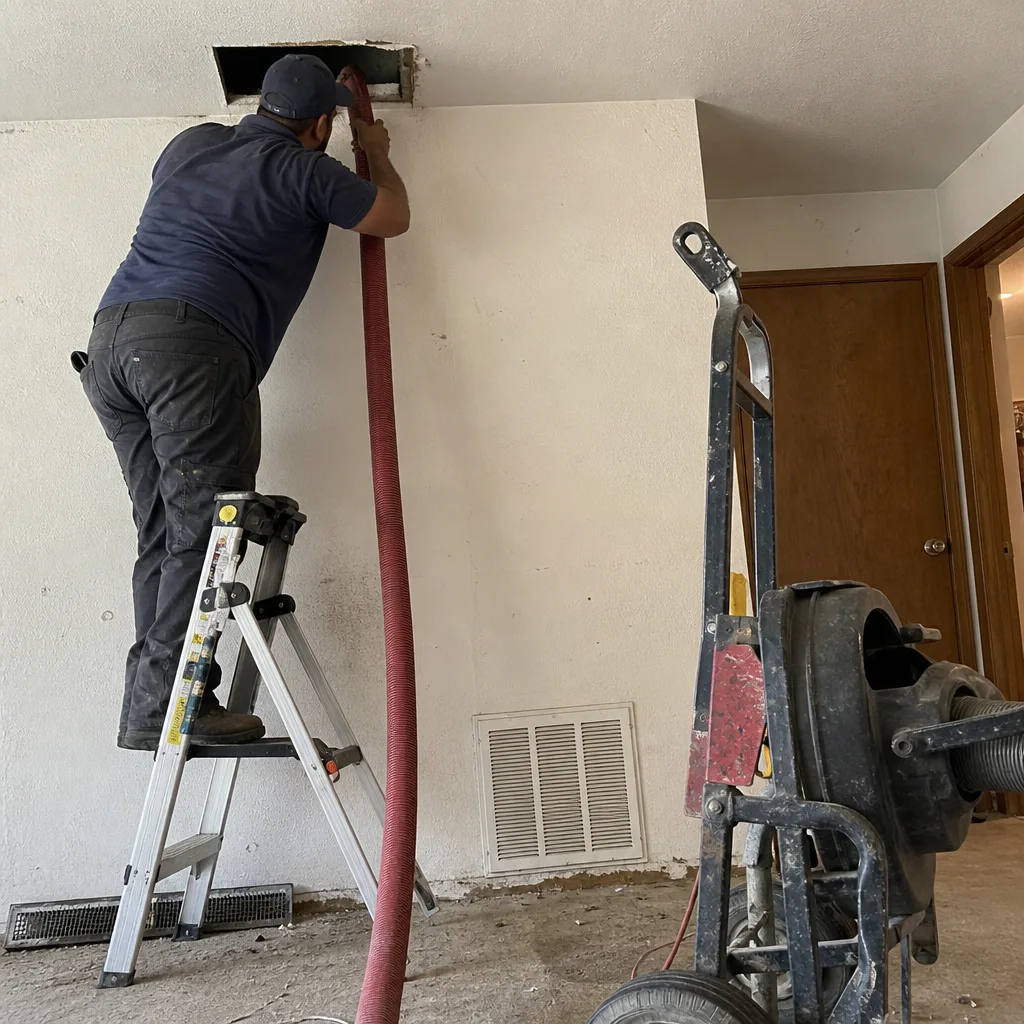 Before
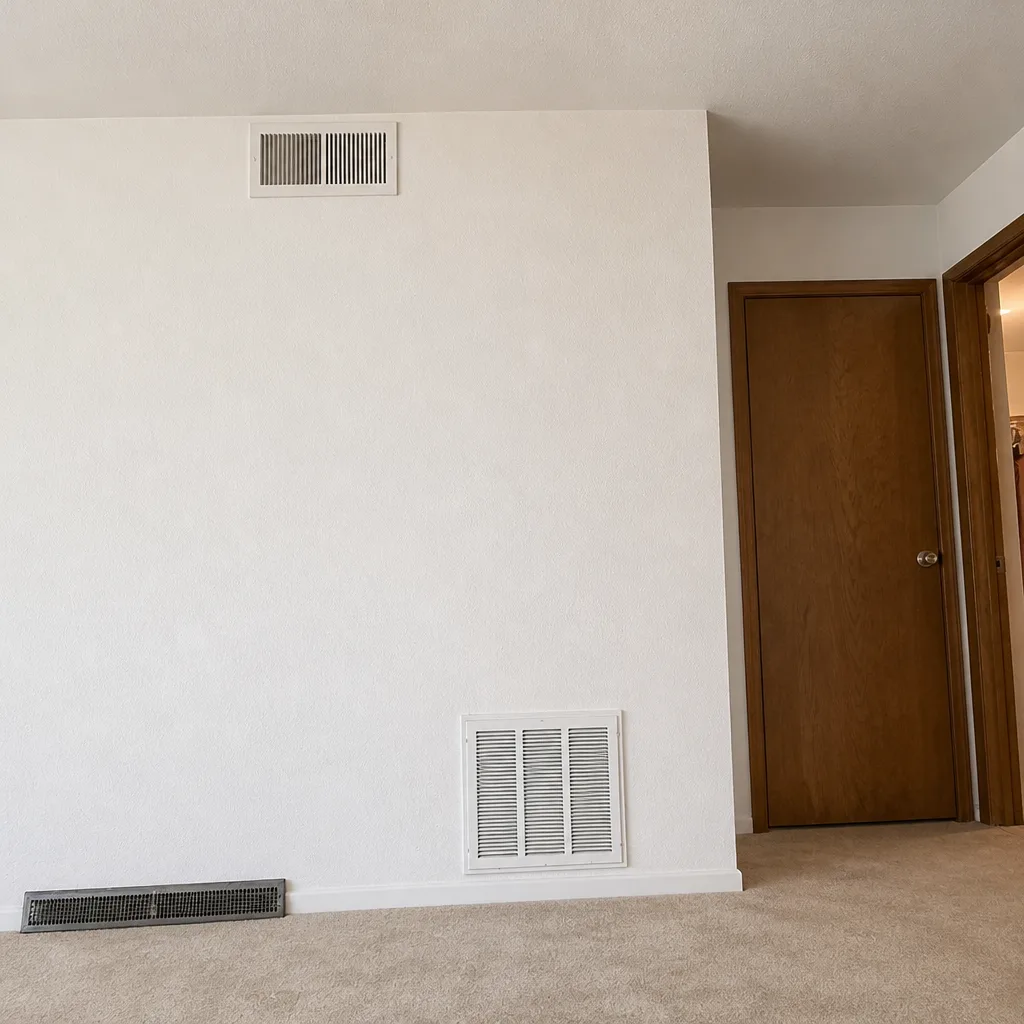 After
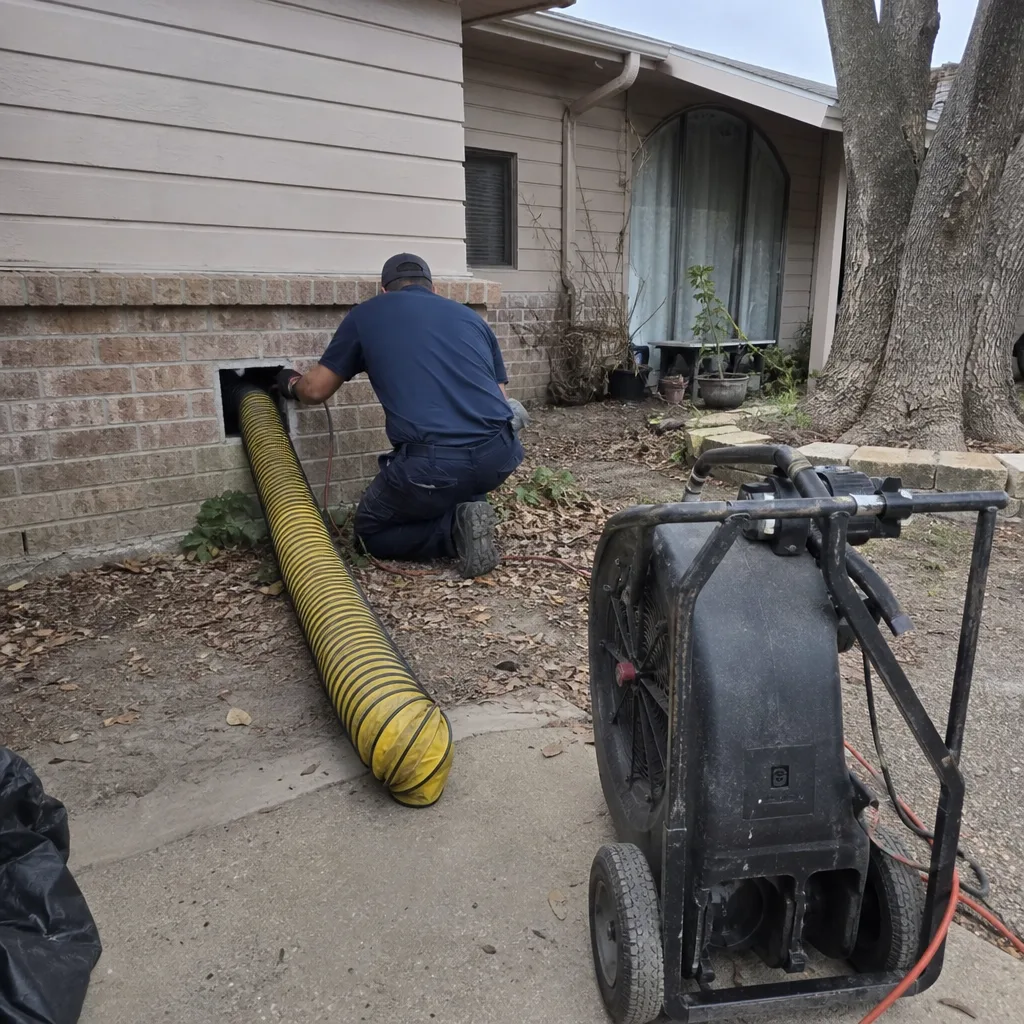 Before
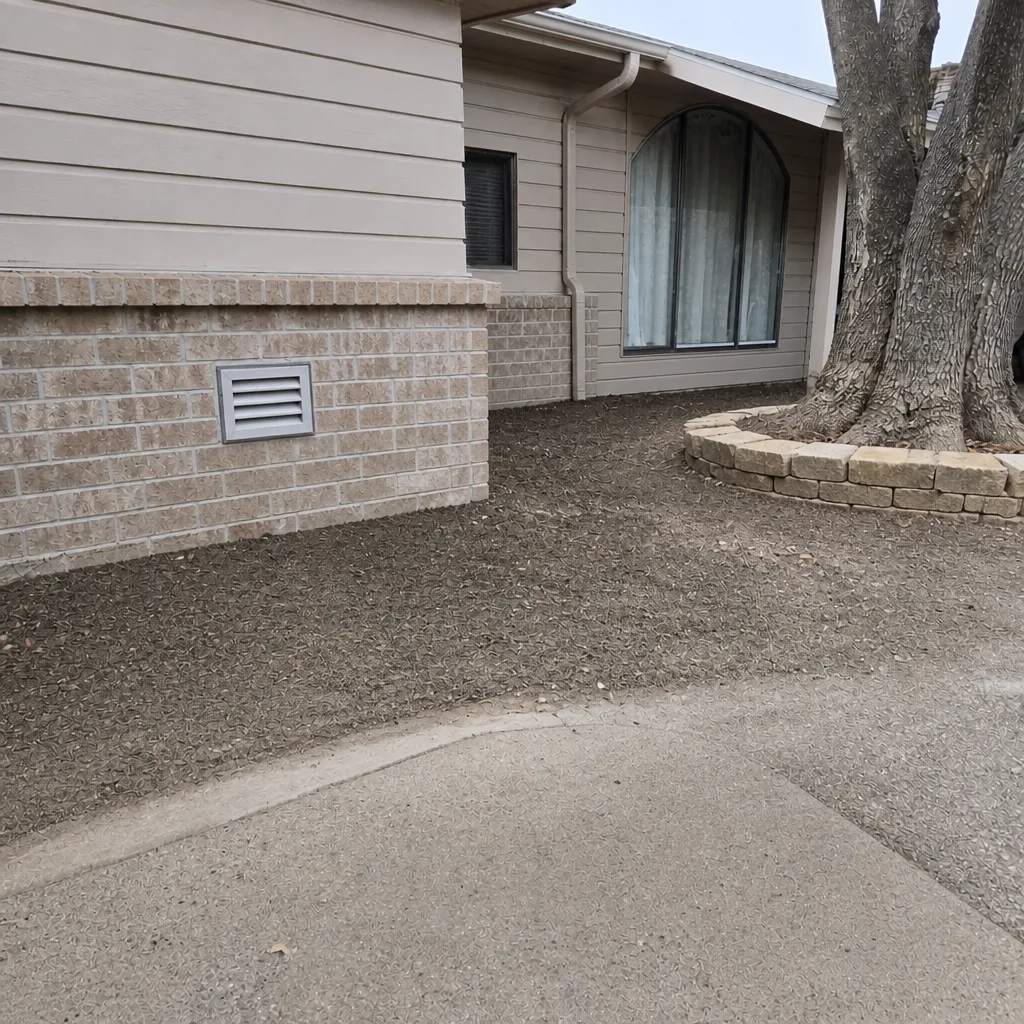 After
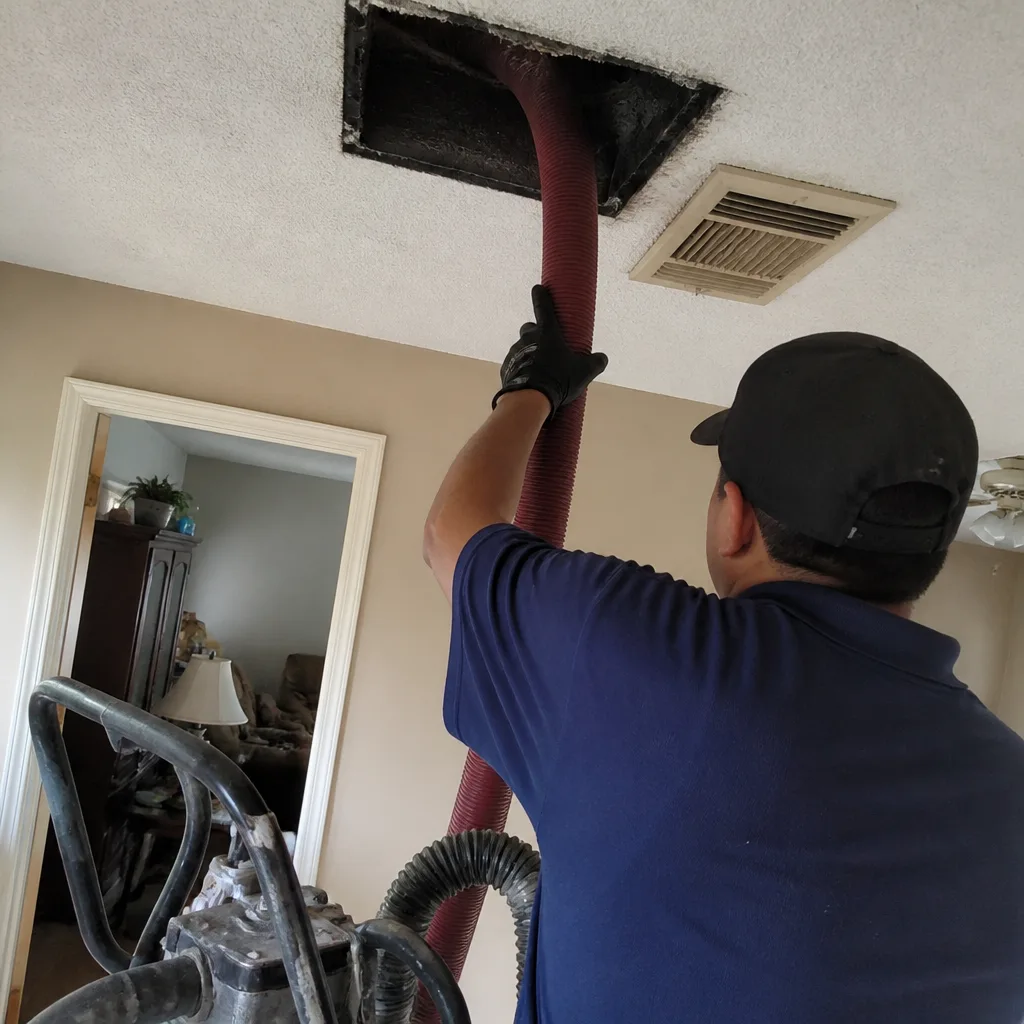 Before
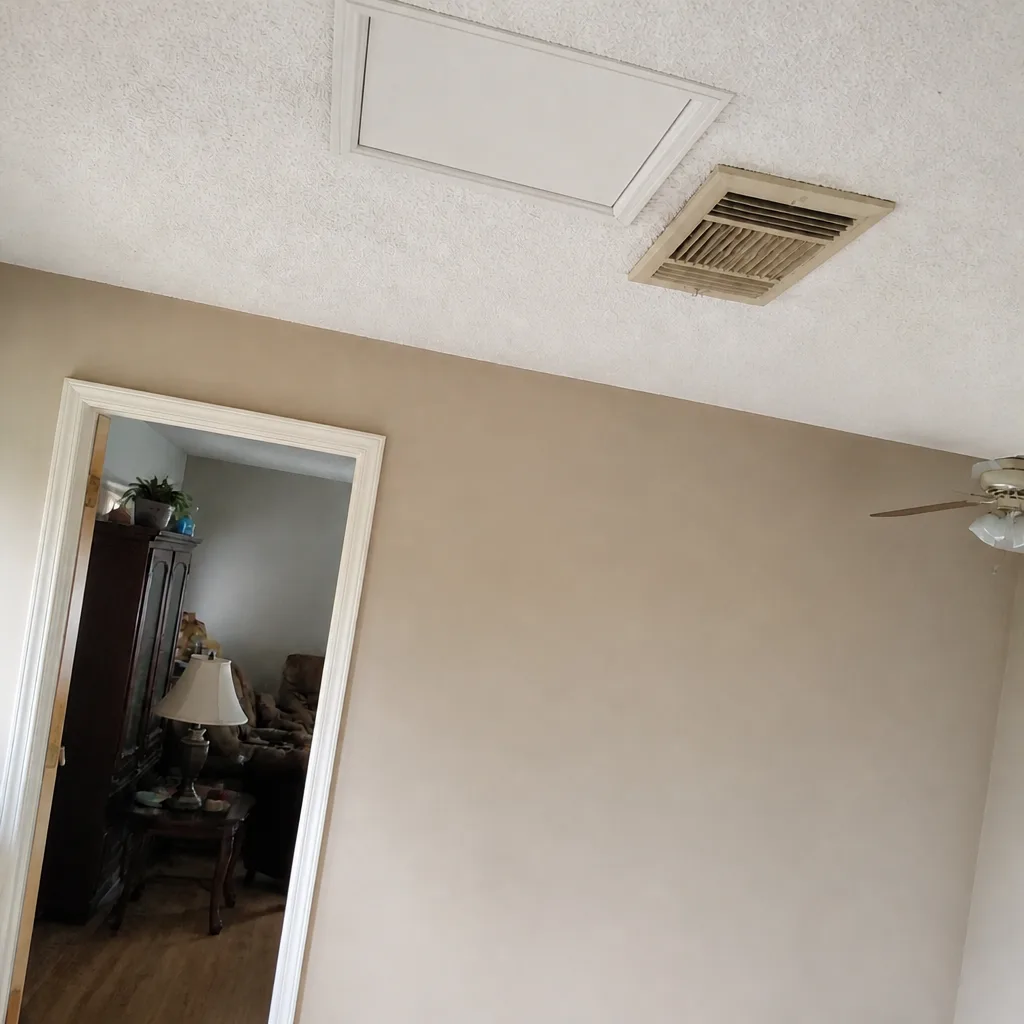 After
When to Call a Professional
Not every household needs duct cleaning on a set schedule. Some situations clearly warrant a professional visit: visible dust blowing from registers when the system starts, recurring allergy symptoms that persist after filter changes, a recent renovation that pulled construction dust into the return, the smell of mustiness when the air comes on, or a duct system where you can see disconnected joints or crushed flex runs in the attic. In each case, an inspection with camera documentation is the first step – you need to know what’s in the ducts before you decide what to do.
A Mesquite home with a dryer that takes multiple cycles to dry a load is another signal worth acting on. Dryer vent cleaning clears lint buildup that reduces airflow and creates fire risk, and it’s a service worth having done on its own schedule.
We connect Mesquite homeowners with technicians who have up to 10 years of experience and use professional-grade equipment. If you’re unsure whether you need cleaning, repair, or both, an inspection will tell you. Duct Cleaning Mesquite offers free estimates in Mesquite – call (855) 360-8359.
Frequently Asked Questions
The best duct cleaning company in Mesquite is the one using professional extraction and agitation equipment, offering an inspection with video documentation, and able to repair damaged ductwork rather than only clean it. Ask what equipment is used, whether a camera inspection is included, and whether you’ll receive before-and-after footage. That combination separates a specialist from a generalist. For a free estimate from our team, call (855) 360-8359.
Air duct cleaning is priced per job by a written estimate that reflects the size and condition of your system, the number of branches, and whether repair is needed. Prices vary considerably in the Mesquite market based on equipment grade and scope, so ask each company what the quoted price includes and what equipment is used. Call (855) 360-8359 for an exact quote – estimates are free.
Cheap quotes usually reflect cheaper equipment and a narrower scope. A low per-vent price often covers surface-level vacuuming of the visible ductwork without extraction under negative pressure, without agitation past the first bend, and without camera documentation. The work looks similar from the outside, but the result is different. If a quote is dramatically lower than the others, ask what equipment is used and what the price covers. Call (855) 360-8359 for a quote you can compare fairly.
Insist on camera inspection with before-and-after video documentation of your own ductwork. Video footage of the interior before and after cleaning is the most direct way to verify the work. Ask whether the technician reviews the footage with you at the end of the job. Our technicians document the work and review it with you – to book an inspection, call (855) 360-8359.
There’s no fixed schedule that fits every home. Visible dust from registers, recent renovation, musty odors when the system runs, and confirmed buildup inside the ducts are the signals that warrant cleaning. Homes with pets or heavy foot traffic may benefit from more frequent attention, while others go years without needing it. A camera inspection answers the question for your specific system. Call (855) 360-8359 for a free estimate.
Yes. Dryer vent cleaning is a dedicated service, performed with the same equipment discipline as duct cleaning. Lint buildup in the vent line restricts airflow and is a household fire hazard, and it’s worth having the vent cleared on its own schedule. To compare both services for your Mesquite home, call (855) 360-8359.
The Bottom Line
When you’re choosing between duct cleaning companies in Mesquite, the equipment question is the one that actually predicts the result. Professional-grade extraction and agitation systems – Rotobrush, Nikro, Abatement Technologies, Viper – are what make source removal possible, and companies running them are easy to identify by the way they answer questions about extraction, sealing, and documentation. Add camera inspection with before-and-after video and a repair capability that goes past cleaning, and you have a company worth hiring. One flat price per system, agreed before work starts, is the deal that protects you from the bait-and-switch reputation this industry has earned.
If you’d like a straightforward conversation about what your Mesquite home needs, call Duct Cleaning Mesquite at (855) 360-8359 for a free estimate. We answer 24/7. Fast dispatch from 7am to 7pm, Sunday through Friday. Our technicians have up to 10 years of experience and work with professional-grade equipment on every job. You can also read about our service area on our Mesquite page if you want to know more before booking.
Written by the team at Duct Cleaning Mesquite.