
Last updated November 15, 2026
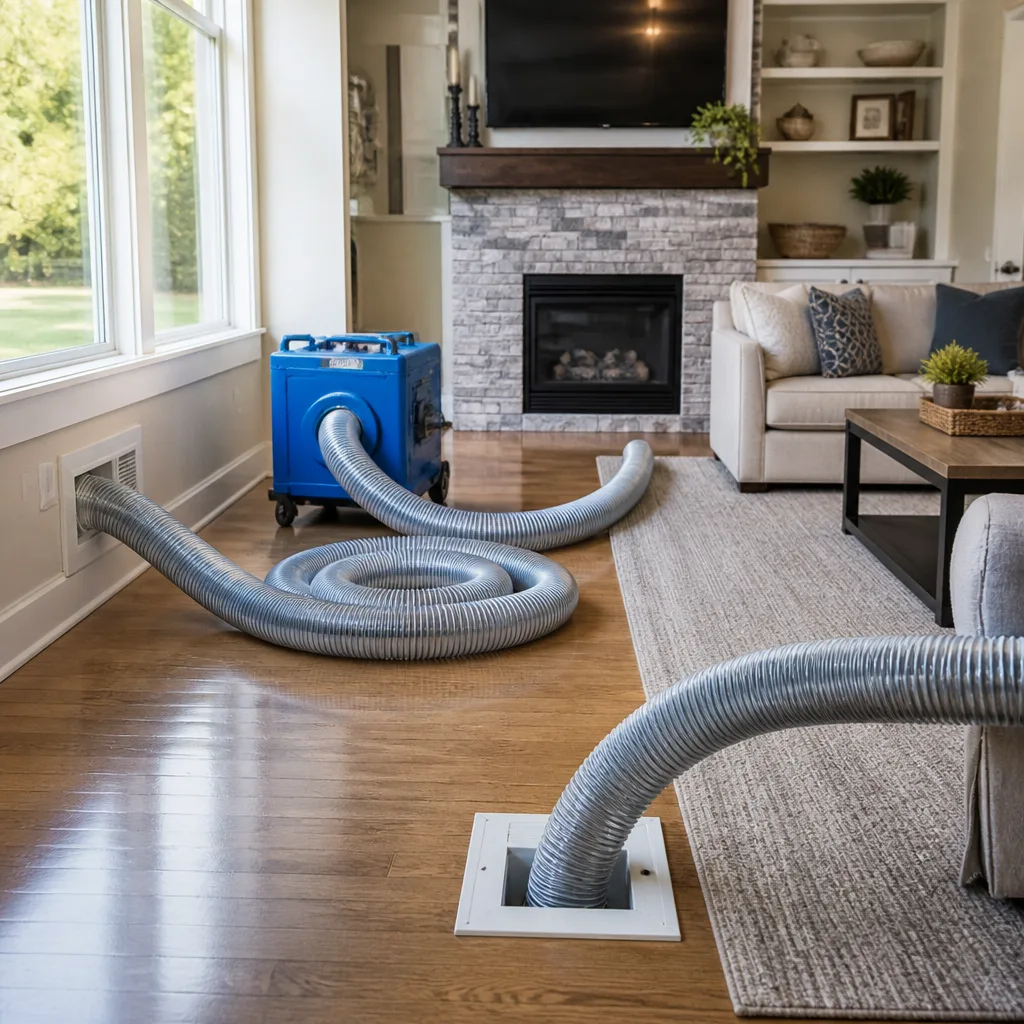 Whole-home duct cleaning
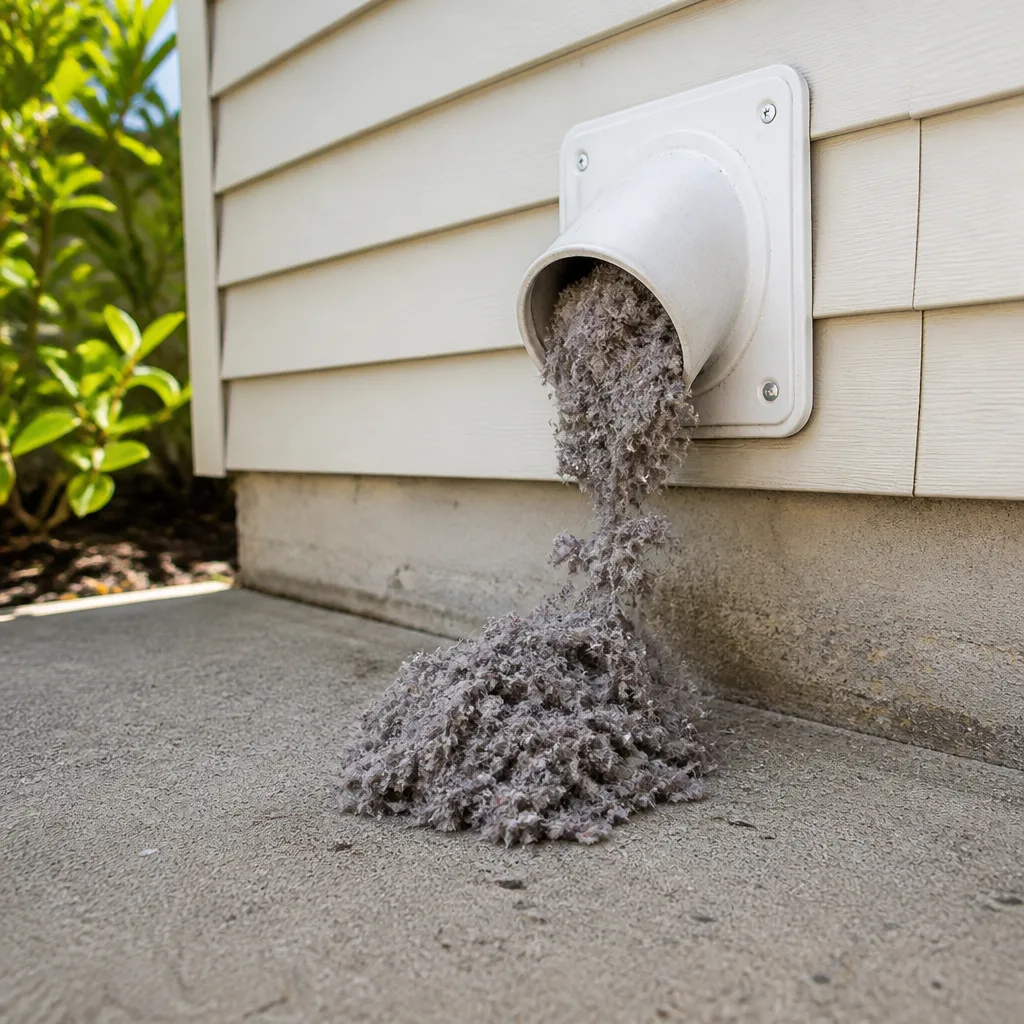 Dryer vent cleaning
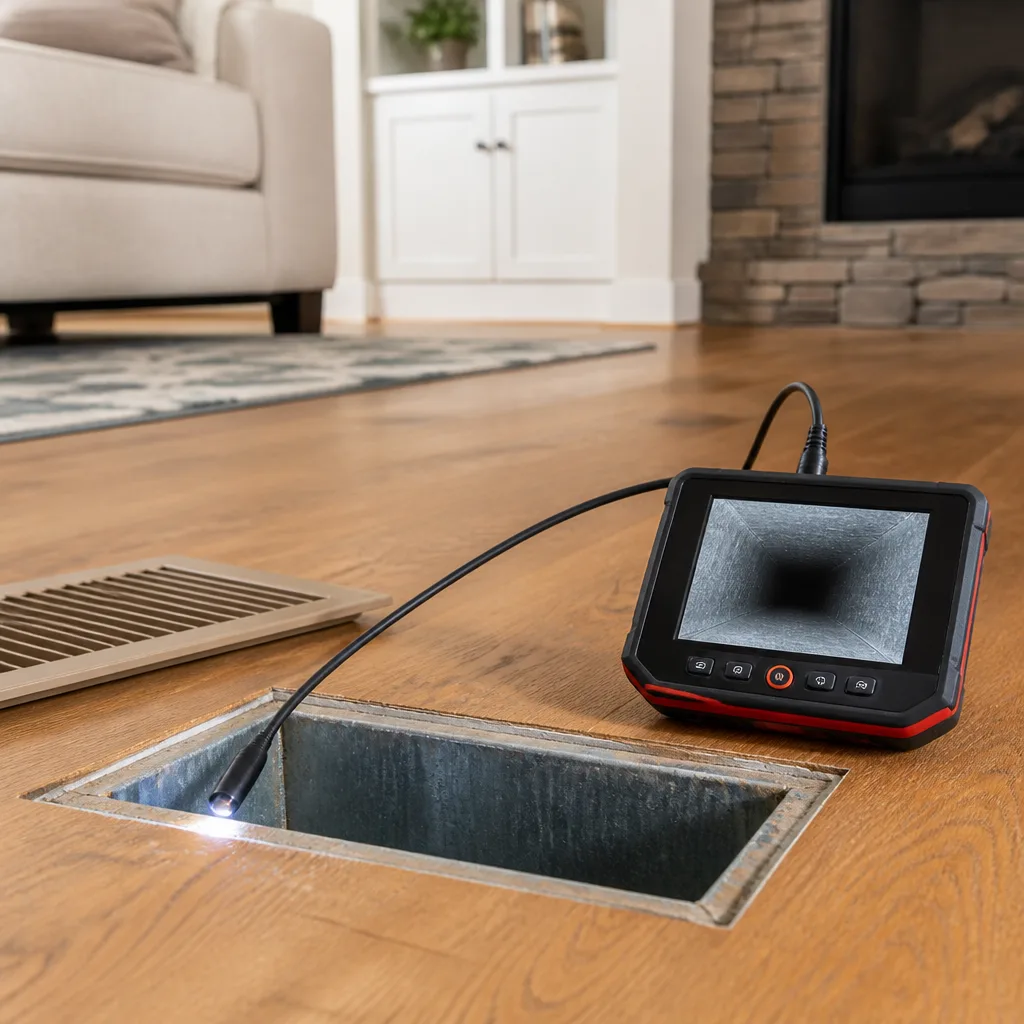 Camera inspection
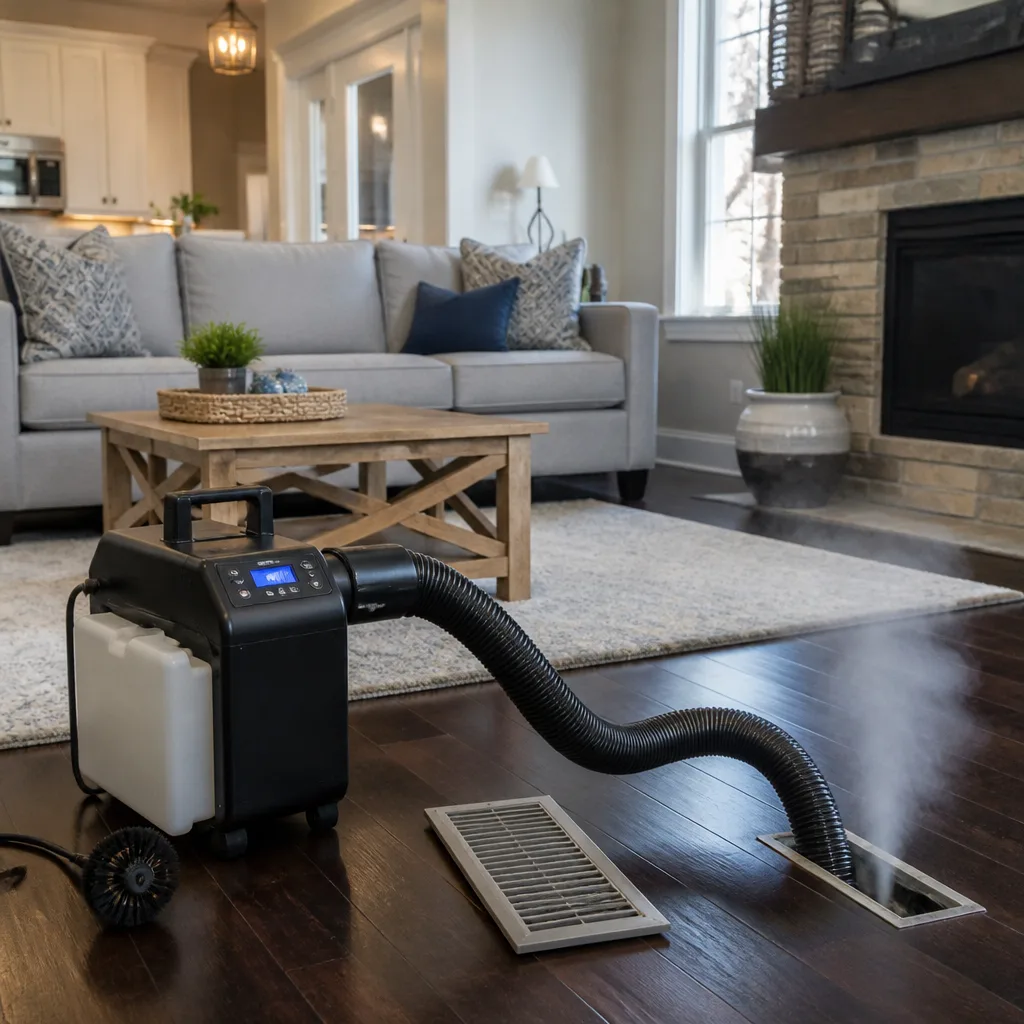 Sanitizing & deodorizing
Whole-system duct and dryer vent check with before-and-after photos - you see exactly what came out of your vents
That "$99 whole-house special" is a bait ad - the real number appears once they are in your hallway, or the "clean" is a shop-vac at the register. We photograph the inside of your ducts before and after instead.
How to Hire an Air Duct Cleaning Contractor in Mesquite: A Step-by-Step Guide
In Texas, any person can legally offer duct cleaning services tomorrow with zero training or certification. The card in your mailbox and the crew showing up with a shop vac are operating in the same unregulated market, and the lower bid often leaves ductwork in worse shape than before anyone arrived. That’s the uncomfortable truth behind this whole category of home service, and it’s why we wrote this guide. You’ll learn the three equipment questions to ask before booking, what a real certification actually requires, which red flags show up during an estimate, and how to read a post-cleaning report. Mesquite homeowners deserve a vetting framework, not a price war.
Quick Answer
To hire an air duct cleaning contractor in Mesquite, ask about equipment first (negative pressure, brush system type, camera capability), verify certification and insurance, walk through the estimate process for red flags, and insist on before-and-after documentation. Price alone tells you nothing in a state with no duct cleaning license. A legitimate contractor assesses your whole system before quoting and can show you the equipment they’ll actually use inside your home.
Styles & brands we work with
- Whole-home duct cleaning
- Dryer vent cleaning
- Camera inspection
- Sanitizing & deodorizing
Table of Contents
- Why Texas Has No Duct Cleaning License (and What That Means for Mesquite)
- The Three Equipment Questions to Ask Before You Book
- What NADCA ACR Certification Actually Requires
- Red Flags During the Estimate Process
- Step by Step: Vetting a Contractor in Seven Moves
- How to Read a Post-Cleaning Report
- Why Cleaning and Duct Repair Belong in One Relationship
- What Duct Cleaning Costs in Mesquite
Why Texas Has No Duct Cleaning License (and What That Means for Mesquite)
Texas does not license air duct cleaning as a trade. There’s no state exam, no required training hours, no continuing education, no disciplinary board specific to duct work. Someone can buy a vacuum, print business cards, and be “a duct cleaning company” by the weekend. That’s not a knock on every small operator. Some are excellent. But it does mean the burden of verification falls entirely on you, the homeowner, and no credential will be handed to you automatically.
What fills the gap is voluntary certification. The National Air Duct Cleaners Association (NADCA) runs a certification program, and individual technicians can earn the Air Systems Cleaning Specialist designation, commonly shortened to ASCS. NADCA also publishes a standard called ACR, the Assessment, Cleaning and Restoration standard, which describes how a proper job should be performed. None of this is legally required in Texas. It is, however, the clearest signal that a crew has been trained to a published procedure rather than improvising.
In practice, this means two Mesquite homes on the same street can book duct cleaning on the same day and receive completely different services. One crew vacuums the visible registers and leaves the trunk line full of debris. The other hooks a negative-pressure unit to the main plenum, agitates every branch run with a rotary brush, and photographs the interior before and after. Both charge money. Only one changed anything.
The market dynamic gets sharper in a metro as large as Dallas-Fort Worth, where franchise crews, one-truck operations, and air quality specialists all compete for the same homeowner. Mesquite sits right in the middle of that competition, close enough to Dallas that outside crews regularly cross into the city for work. That mobility makes it even harder to know who’s actually at your door. Vetting isn’t paranoia here. It’s basic due diligence in an unregulated trade.
The Three Equipment Questions to Ask Before You Book
Ask these three questions on the phone, before anyone comes out. The answers tell you more than any review or coupon. If a company can’t answer them clearly, that’s your answer.
1. What negative pressure does your vacuum pull, and how do you maintain it?
Duct cleaning works on the same principle as any extraction job: you agitate debris loose, and you pull it out under negative pressure so it never enters the living space. The vacuum connects to the main trunk line or air handler plenum, and the whole system stays under suction while brushes work each branch. A strong enough unit keeps dust from escaping into rooms. An undersized shop vac can’t maintain that seal, and instead of removing debris, it just stirs it around.
Ask specifically whether the unit is a purpose-built negative-pressure truck or trailer mount, and whether the crew seals all other openings before starting. Professional systems from Rotobrush are built for exactly this job, with containment and HEPA filtration built in rather than bolted on afterward.
2. What brush system do you use on branch runs and the trunk line?
Rotary brush systems reach surfaces that suction alone can’t touch. A flexible whip or a multi-brush head travels down each supply and return run, physically loosening the dust mat that clings to the duct walls. Without contact agitation, you’re only cleaning the air moving past, not the surface itself.
The better question is whether the crew uses more than one brush type. Rectangular trunk lines and round flex runs behave differently. A company that only carries one whip for every job is signaling that they don’t customize the approach to the ductwork they encounter.
3. Can you inspect the interior of my ducts with a camera before and after?
Camera inspection is the difference between showing and telling. A borescope or push camera lets the technician see inside the runs and document what’s actually there. It also lets them verify the cleaning was real. If a company can’t or won’t do interior camera work, the “before and after” is entirely verbal, and you have no way to check.
Insist on it. In our experience, crews using professional-grade equipment from brands like Rotobrush and Nikro treat camera inspection as standard practice, not an upsell. It’s also how they spot duct damage that cleaning alone won’t fix, which matters if the same company also offers repair.
What NADCA ACR Certification Actually Requires
NADCA’s ACR standard describes the accepted procedure for cleaning a residential duct system. Read it in plain terms and it breaks down into a handful of concrete steps that certified technicians follow and uncertified crews routinely skip.
- Source removal, not just surface vacuuming. ACR requires actually removing contaminants from the system, not just wiping the accessible surfaces or fogging the interior with a sanitizer to mask the problem.
- Whole-system coverage. Supply runs, return runs, the trunk line, the air handler plenum, and all grilles and registers are part of the job. Cleaning only the visible registers is not compliant with anything.
- Containment during work. The system stays under negative pressure throughout the cleaning so debris is captured, not redistributed into the home.
- Pre-cleaning assessment. A certified technician evaluates the system before starting, identifies problem areas, and photographs the before-and-after state of the ductwork.
- Documentation. A report on what was found, what was done, and what remains (if anything) is part of the process, not an optional courtesy.
Then there’s the part that gets glossed over. ACR-certified work assumes the technician has been trained to recognize duct damage, disconnected joints, crushed flex runs, and signs of microbial growth, and to advise the homeowner about them rather than just turning the vacuum on and leaving. That diagnostic layer is where certification actually earns its keep. Sanding dust off a duct wall is a mechanical task. Knowing when a duct needs repair rather than another cleaning is experience plus training.
For a Mesquite homeowner, the practical question becomes: what certification does your crew carry, and which members of the crew hold it? A company-level membership means less than knowing the actual technician who’ll be inside your home has been through the training.
Red Flags During the Estimate Process
The estimate is where unqualified companies reveal themselves. Watch for these specific behaviors before you sign anything.
- No pre-cleaning inspection offered. A contractor who quotes a price before seeing your system is guessing. The ducts in a Mesquite home with a single air handler and twenty years of suburban dust behave differently than a newer build with a sealed envelope. A real assessor wants to know what’s in the system first.
- Flat per-vent pricing with no system assessment. Counting registers is not an assessment. Ductwork layout, trunk line length, number of returns, and condition all affect the work. A company quoting strictly by vent count is pricing labor, not cleaning your system.
- Refusal to show equipment. If a crew won’t let you see the truck, the vacuum unit, or the brush heads, there’s likely a reason. Legitimate contractors are proud of their gear and happy to explain it.
- Aggressive add-ons before any inspection. Being pitched a sanitizer fog, a duct sealant, or an air purification package before the technician has looked at a single duct is a sales script, not a recommendation.
- No written estimate. Verbal pricing that “we’ll finalize on-site” is exactly how the bait-and-switch pattern starts. The number should be on paper before work begins.
- No camera, no photos. A company that can’t show interior duct images can’t document its work, which means you can’t confirm it.
- Pressure to decide immediately. Duct cleaning is scheduled work, not emergency work. Any company rushing the decision is rushing toward a quick sale.
None of these red flags, taken alone, guarantees a bad outcome. Together, they’re a pattern. In our experience, the companies that score well on the estimate process also score well on the actual job.
Step by Step: Vetting a Contractor in Seven Moves
Here’s the sequence we recommend to any Mesquite homeowner who wants a clean, defensible decision. Do these in order.
- Ask about certification and insurance over the phone. Get the specific answer, not “we’re fully certified.” Ask which certification, who holds it, and whether the crew carries general liability coverage. An insured and bonded contractor can produce a certificate.
- Request a pre-cleaning inspection before any number is quoted. The technician should walk the system, look at the air handler, and tell you what they’re seeing. If they quote sight-unseen, move on.
- Ask the three equipment questions. Negative pressure, brush system type, camera capability. Write the answers down.
- Request a written estimate that covers the whole system. Confirm it names the trunk line, all supply and return runs, all registers, and the air handler plenum. Flat per-vent pricing is a red flag.
- Confirm the job includes before-and-after photos of your own ducts. Not stock images, not a brochure. Your system, documented.
- Ask about duct repair capability. Even if you don’t need repair, find out whether the crew can identify duct damage and address it in the same relationship. We’ll explain why in a later section.
- Read the post-cleaning report before the invoice clears. Photos, summary of what was found, summary of what was done, and any recommendations for follow-up. If this feels like too much process, remember the alternative: a verbal “all done” and no proof.
Follow those seven steps and you’ll filter out most of the field. Most homeowners skip at least four of them, which is exactly why the market has room for low-effort operators.
How to Read a Post-Cleaning Report
A legitimate contractor leaves you with documentation. The report should include four things: interior before photos of each major duct run, interior after photos of the same runs, a written summary of the condition found (and any damage or concerns), and a note about what was and wasn’t cleaned.
What counts as a proper before-and-after? Same location, same angle, clear enough to compare. If the “after” photos are of your living room, that’s not documentation, that’s marketing. If every “after” shot looks suspiciously similar across different homes, the images probably aren’t from your system.
The report should also tell you what the technician couldn’t fix. This is where real expertise shows. Duct tape falling off a joint, a crushed flex run behind a knee wall, a return that’s pulling air from a crawlspace – those belong in the report, described in plain language. A contractor who documents damage but doesn’t pressure you to buy a fix is doing the job right.
One more expectation: the report should be handed over at the end of the visit, not promised for later. Verbal summaries are fine as a starting point, but the written record is what you keep. If you’re a property manager coordinating work on a rental, that documentation is worth more than the invoice.
Why Cleaning and Duct Repair Belong in One Relationship
Most duct cleaning companies clean. Fewer repair. That split creates a common problem: a homeowner hires a cleaner, the technician finds duct damage during the job, and the answer is “we can’t help with that, you’ll need another contractor.” Now you’re starting the hiring process again, with less information and more frustration.
Air duct repair is a distinct service, and it’s one most crews in the Mesquite market don’t provide. When cleaning and repair live in the same relationship, three things happen. First, the repair assessment is informed by what the cleaning crew actually saw inside the system. Second, the same crew can drop a camera into the trunk line and confirm a joint is back together. Third, you’re not paying for another inspection visit to re-verify what was already documented.
What should you ask to confirm a company can do both? Ask for a straight answer on three questions: Does the crew identify and repair separated joints, crushed flex runs, and loose connections as a standalone service? Do they document the repair with before-and-after photos of the same runs? And is the repair quoted on its own written estimate, agreed before the work starts? A full-system specialist will answer all three without hesitation.
This is why we built Duct Cleaning Mesquite around both services. Clean ducts are only half the story. A system that’s clean but leaking air through failed joints still doesn’t perform, and repairing those joints is a different job than running a brush through a duct.
If you already know your ducts need repair and you’re ready to book, our team handles air duct repair as a standalone call in Mesquite. For homes where the ducts are simply due for cleaning, the standard air duct cleaning service covers the full system with the equipment questions answered before we start.
What Duct Cleaning Costs in Mesquite
A few words on price, because this is where the low coupon starts. In our experience, a whole-system clean in Mesquite homes typically runs from around $350 to $700 depending on the system layout, the number of supply and return runs, and the condition of the ductwork. Those numbers are estimates. The written estimate sets the final price, and it’s agreed before any work begins.
A flat $49 or $99 “special” is not the same service. It’s usually a door-opener. Once the crew is on site, the price gets rebuilt from add-ons and upcharges, and homeowners often end up paying as much as they would have for a proper job, with weaker equipment and no documentation. The bait-and-switch pattern is so common in duct cleaning that it’s a cliché in the industry.
What makes a price defensible? One flat price per system, agreed before work, no per-vent pricing, and before-and-after photos of your own ducts. That structure protects you from the bait-and-switch entirely, because you’re agreeing to a whole job, not a labor rate that can be adjusted mid-visit.
Compare estimates on scope, not on the headline number. If one quote names the trunk line, the air handler plenum, all branches, all registers, and includes photo documentation, and the other quote is a per-vent figure with no system assessment, they aren’t comparable. The written estimate tells you which one you’re really buying. It’s also free, so there’s no reason to guess.
Our technicians have up to 10 years of experience and use professional-grade equipment from brands like Rotobrush and Nikro, plus Guardsman treatment products for finishing after cleaning. If a company can’t tell you what equipment they’re running, that’s your cue to compare harder.
Dryer Vent Cleaning as a Separate Service
One thing every homeowner should know: your dryer vent is a separate duct run, and it’s not part of a standard duct cleaning job. It’s also a leading household fire hazard. Lint accumulates inside the vent run and, over time, restricts airflow, overheats the dryer, and creates ignition conditions. That’s not alarmist marketing. It’s the reason dryer vent cleaning is typically treated as a dedicated service.
A proper dryer vent cleaning looks at the full run from the dryer connection to the exterior termination point, not just the accessible portion behind the unit. The technician should clear the entire length, confirm airflow after cleaning, and document the result. Ask about it during your duct estimate. A contractor who handles both services with the same equipment discipline is going to document both the same way.
Our team handles dryer vent cleaning as its own service, so if you’ve booked duct work and the vent is due, it’s one visit. Same written-estimate approach, same photo documentation, no separate vendor to hunt down.
When Cleaning Isn’t the Whole Answer: Air Quality Upgrades
Some Mesquite homes need more than duct cleaning. If there are allergy concerns, recurring dust after cleaning, or an HVAC system that seems to move less air than it should, the ductwork may be only part of the picture. Cleaning removes what’s already in the system. It doesn’t change what’s flowing in from the air handler or the return intake.
That’s where filtration upgrades come in. Products from Aprilaire and Honeywell integrate into your existing HVAC system and improve what’s captured downstream of the ducts. The right question isn’t “should I upgrade?” but “does my system have a filter doing real work?” Many Mesquite homes have a basic 1-inch filter that removes very little and a return that’s undersized for the air handler. Professional-grade solutions exist. They’re worth asking about after cleaning, once you know what’s actually going into your indoor air.
For more involved situations, our team uses Abatement Technologies equipment designed for contaminant and particulate abatement. That’s a different tier from routine dust removal, and it matters when an IAQ concern is driving the conversation. Air quality starts at the source, and the source is the ductwork.
We’ve also written a fuller guide to Mesquite duct and air quality considerations if you want context on the local climate and housing stock. Mild winters and a long cooling season mean the HVAC system runs hard for most of the year, which affects how quickly duct systems accumulate dust and how often cleaning is worth scheduling.
Common Mistakes to Avoid
- Booking on price alone. A $49 coupon and a $500 whole-system clean are not the same service, and the cheaper one often leaves dust redistributed through the home. Price is the least useful filter in an unregulated trade.
- Skipping the pre-cleaning inspection. A contractor who quotes before seeing your system has no idea what they’re cleaning. Insist on an inspection first, every time.
- Accepting flat per-vent pricing. Ducts aren’t vents. A system with two returns and a long trunk line costs more to clean properly than a small single-return home, and per-vent pricing hides that reality.
- Never asking about equipment. If you don’t know what vacuum and brush system is being used, you don’t know if you’re getting source removal or surface wiping. Ask before you book.
- Not requesting before-and-after photos. A verbal “all done” is not proof. Insist on documentation of your own ducts, not stock images.
- Assuming cleaning covers repair. Cleaning doesn’t fix separated joints or crushed flex runs. Ask about repair capability even if you don’t need it right now.
- Forgetting the dryer vent. Dryer vent cleaning is a separate service with a separate safety purpose. Don’t assume it’s bundled into your duct job.
See the difference
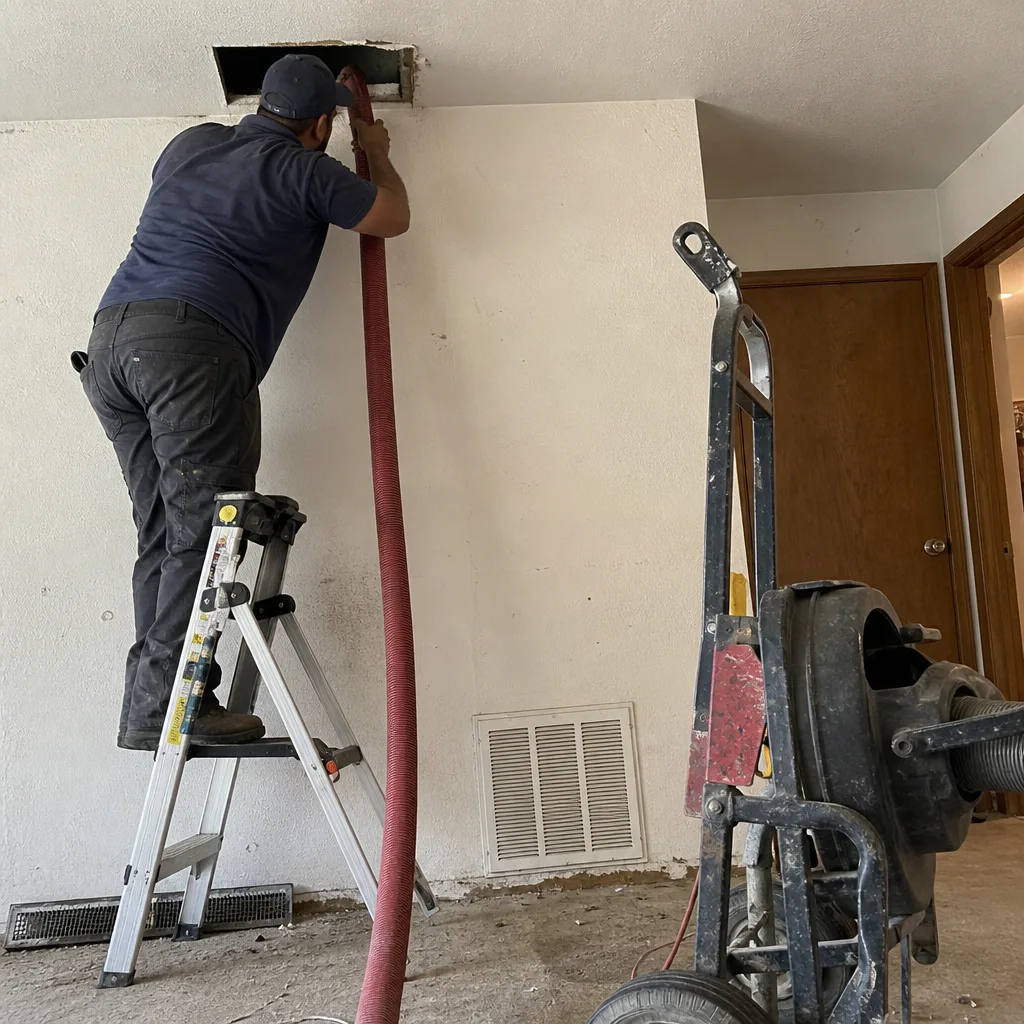 Before
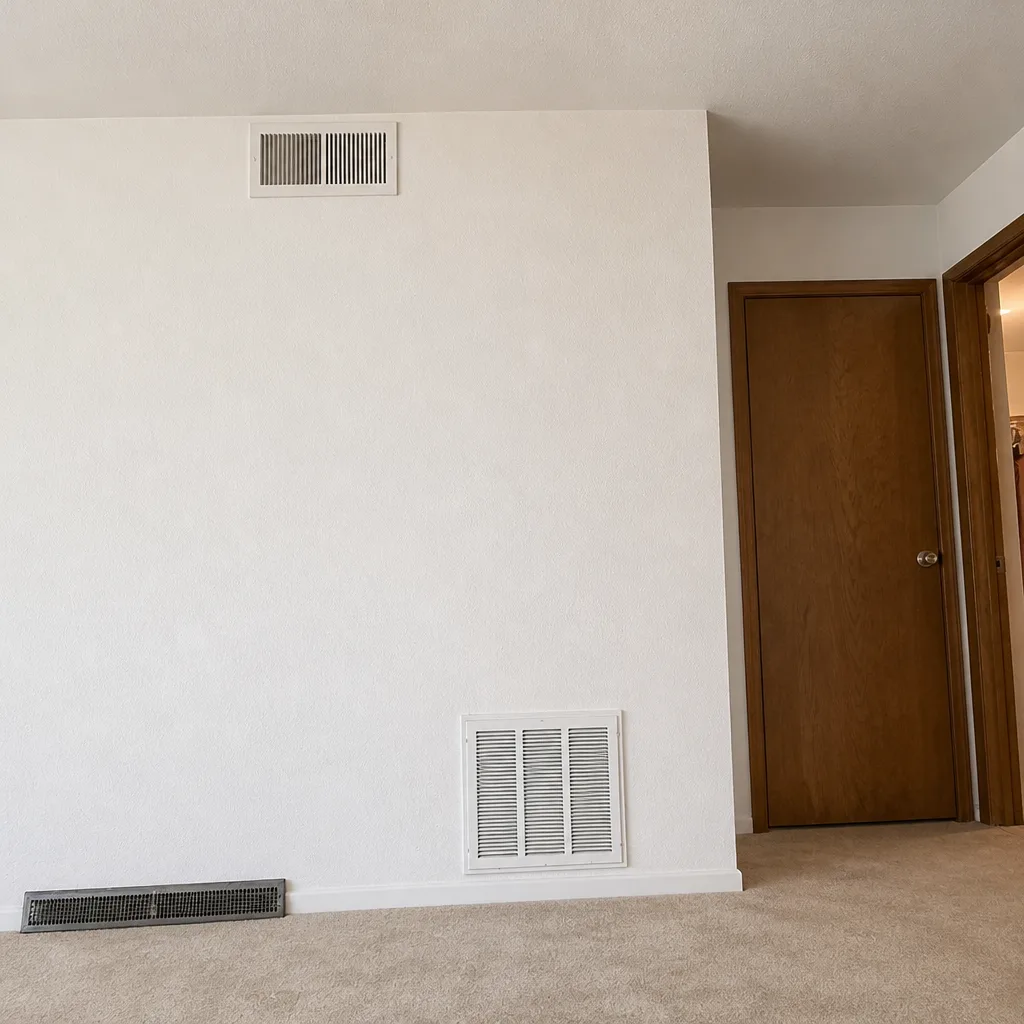 After
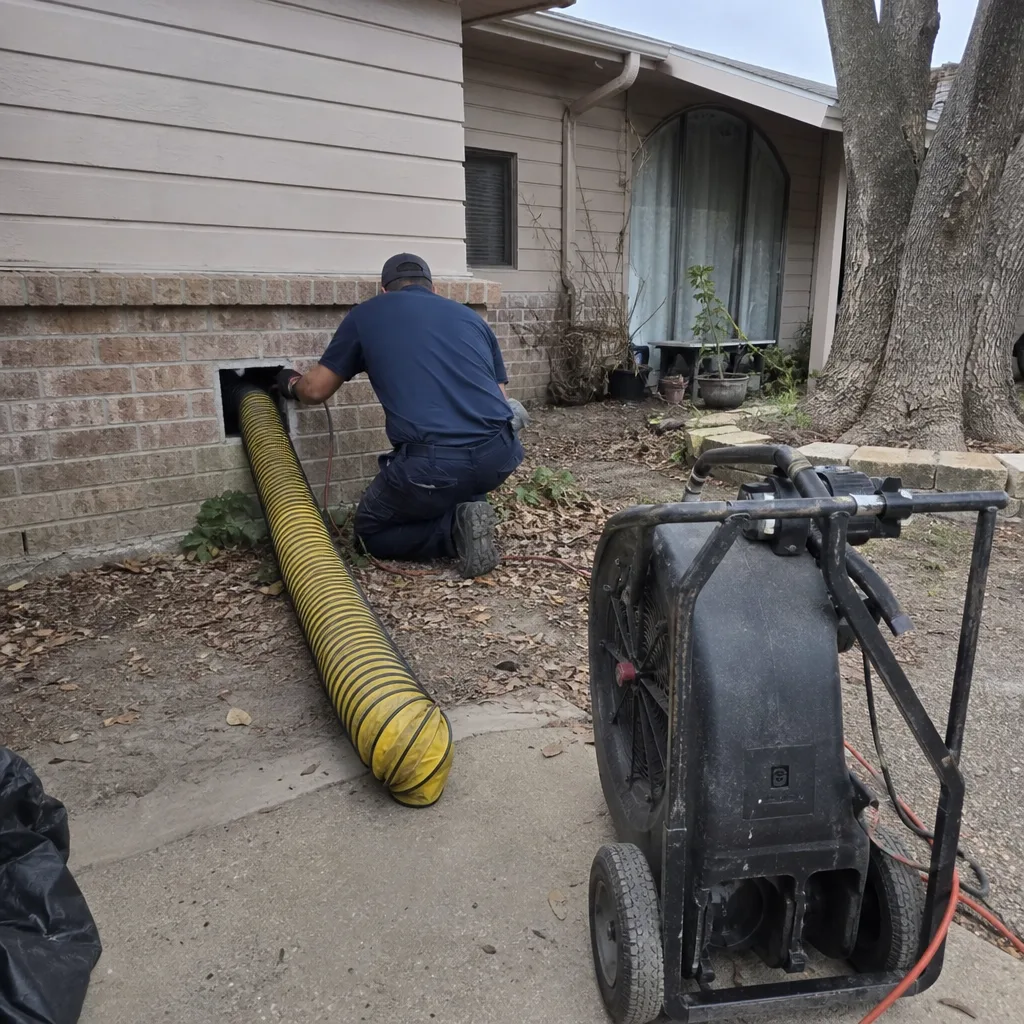 Before
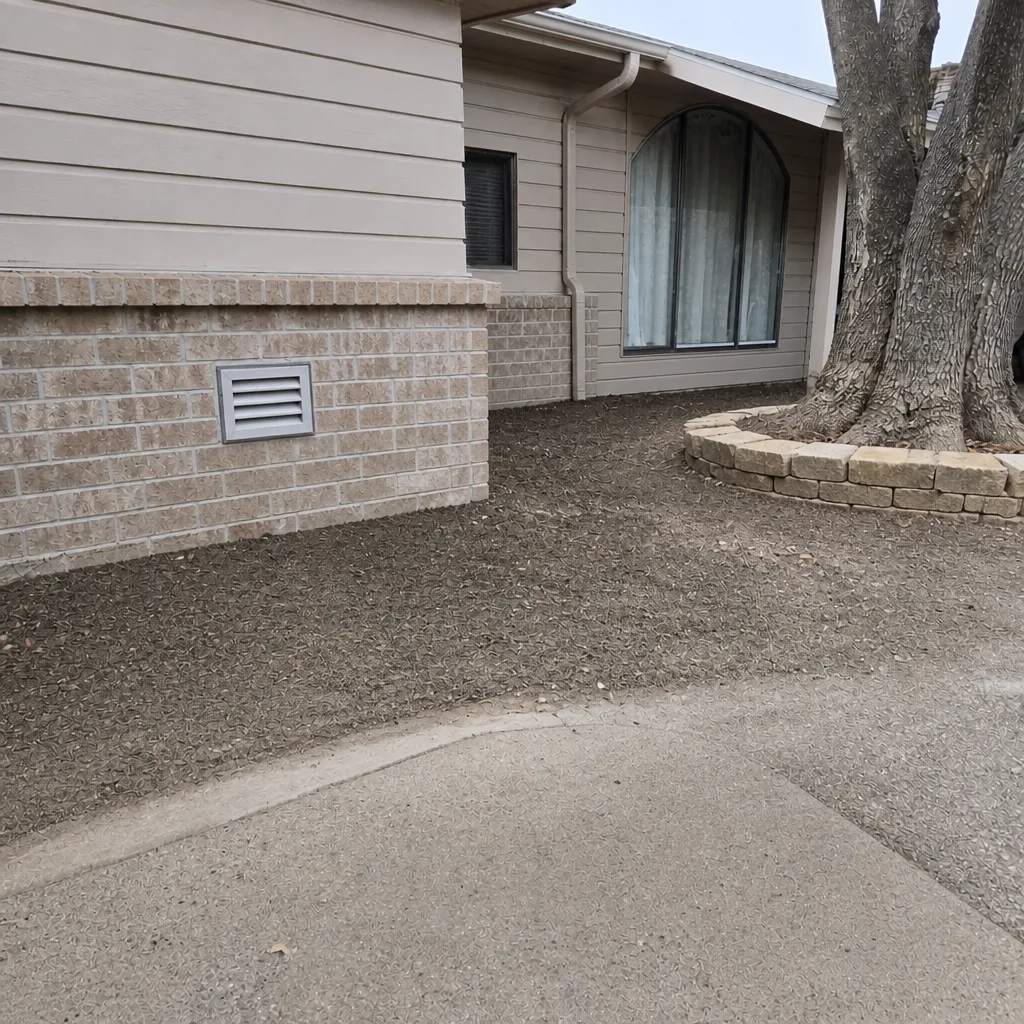 After
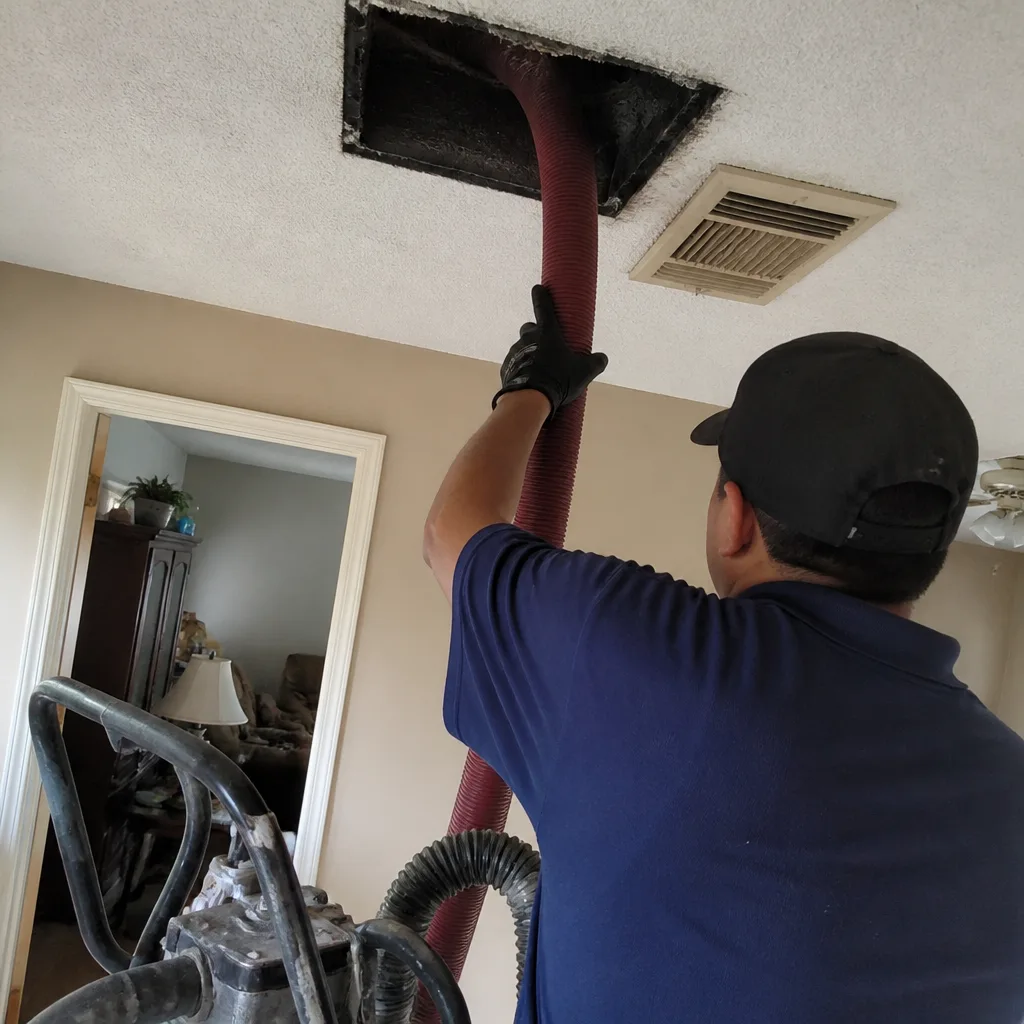 Before
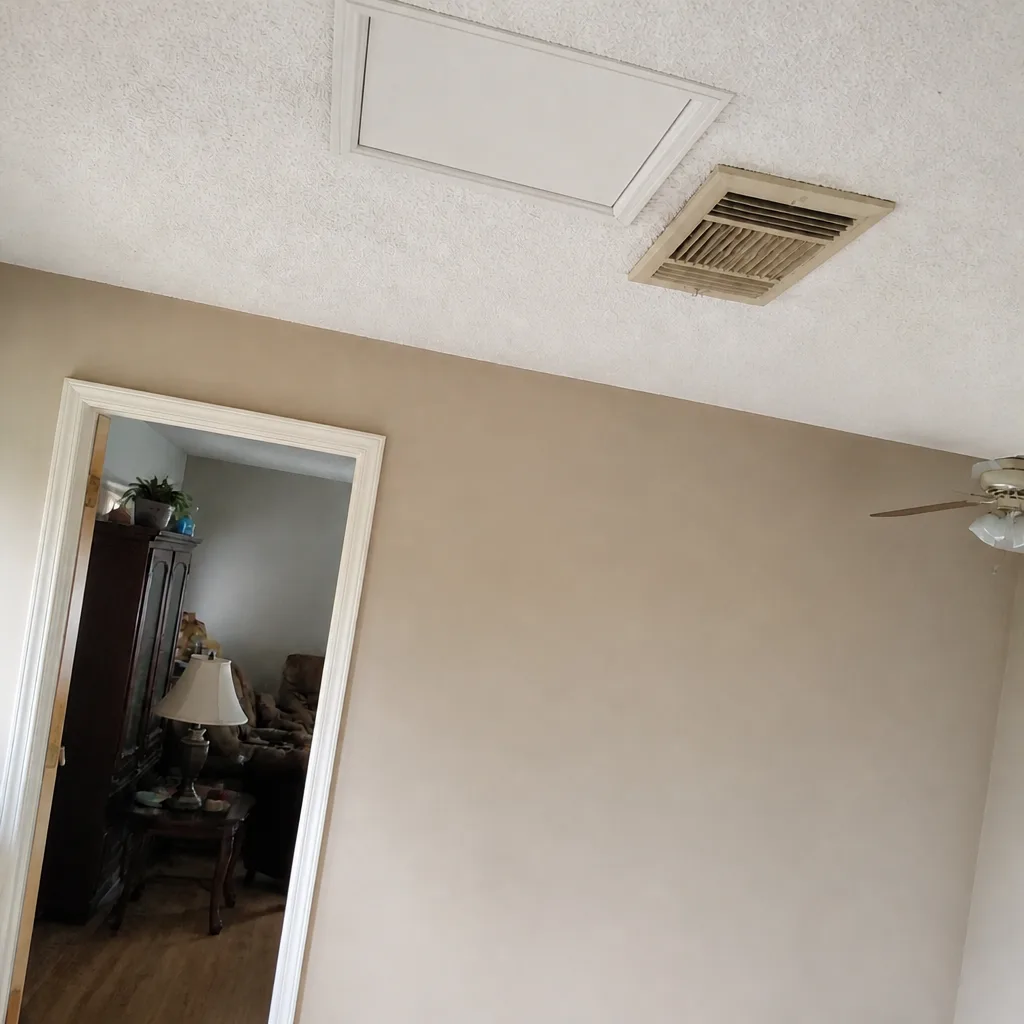 After
When to Call a Professional
Some duct situations call for a pro before you do anything else. Visible dust blowing from a register when the system kicks on, a persistent musty smell that doesn’t clear after filter changes, or a noticeable drop in airflow at certain vents are all signs the ductwork needs assessment. Water staining near the air handler, visible mold at a register, or a return pulling air from an attic or crawlspace are reasons to call quickly and describe what you’re seeing.
Recently purchased a home and unsure of the duct history? A cleaning and inspection is a good baseline. Scheduling a routine clean every few years is a reasonable habit for most Mesquite homes given the long cooling season and continuous system run.
Duct Cleaning Mesquite offers free estimates in Mesquite. Call (855) 360-8359. We answer 24/7. Fast dispatch from 7am to 7pm, Sunday through Friday. Same-day availability exists for scheduling, and a written estimate on one flat price per system is standard on every call.
Frequently Asked Questions
Whole-system duct cleaning in Mesquite typically runs from around $350 to $700 as an estimate, depending on system size, number of runs, and duct condition. The written estimate sets the final price, and it’s agreed before work begins. Call (855) 360-8359 for an exact quote – estimates are free.
Because they’re usually not the same service. A very low quote is typically a door-opener price that gets rebuilt on-site with add-ons, or a crew that vacuums the visible registers and skips the trunk line and branch runs entirely. In an unregulated state like Texas, nothing forces a cheap crew to actually clean the whole system. Compare quotes on scope and equipment, not on the headline number. Call (855) 360-8359 for a written, whole-system estimate.
You get before-and-after photos of your own ducts, taken with a camera pushed inside the runs, plus a written report of what was found and what was cleaned. A verbal “all done” is not proof. Ask for documentation before you book, and confirm the photos will be of your system specifically. Call (855) 360-8359 to ask what documentation our team provides on every job.
Most Mesquite homes do well with cleaning every few years, though the right interval depends on the system, the filter being used, pets, and whether renovation work has kicked dust into the ductwork. Homes with allergies, recent renovations, or a noted airflow problem may want it sooner. There’s no fixed rule, so an inspection is the honest starting point. Call (855) 360-8359 for a free estimate.
No. Texas does not license air duct cleaning as a trade, so the burden of verifying training and equipment falls on the homeowner. Voluntary certifications like NADCA ACR and ASCS are the clearest signals of a trained crew, along with willingness to show equipment and documentation. Ask before you book.
Often, yes, but repair is quoted separately as its own written estimate so you know what you’re paying for. Cleaning and repair living in one contractor relationship means damage found during cleaning can be addressed in the same visit by the same crew. Call (855) 360-8359 to discuss what your system needs – estimates are free.
The Bottom Line
Hiring a duct cleaning contractor in Mesquite comes down to a few concrete checks in a state that offers none by default. Verify training and insurance. Ask about negative pressure, brush system type, and camera capability. Insist on a pre-cleaning inspection and a written, whole-system estimate on one flat price per system – never a per-vent quote or a coupon figure. Request before-and-after photos of your own ducts. And confirm whether the crew can repair duct damage, not just clean around it.
Clean ducts are only half the story. Equipment and process are the other half, and both are what separate a professional job from a surface clean. If you’re ready to compare, Duct Cleaning Mesquite offers free estimates in Mesquite. Call (855) 360-8359. We answer 24/7. Fast dispatch from 7am to 7pm, Sunday through Friday.
Written by the team at Duct Cleaning Mesquite.