
Last updated November 15, 2026
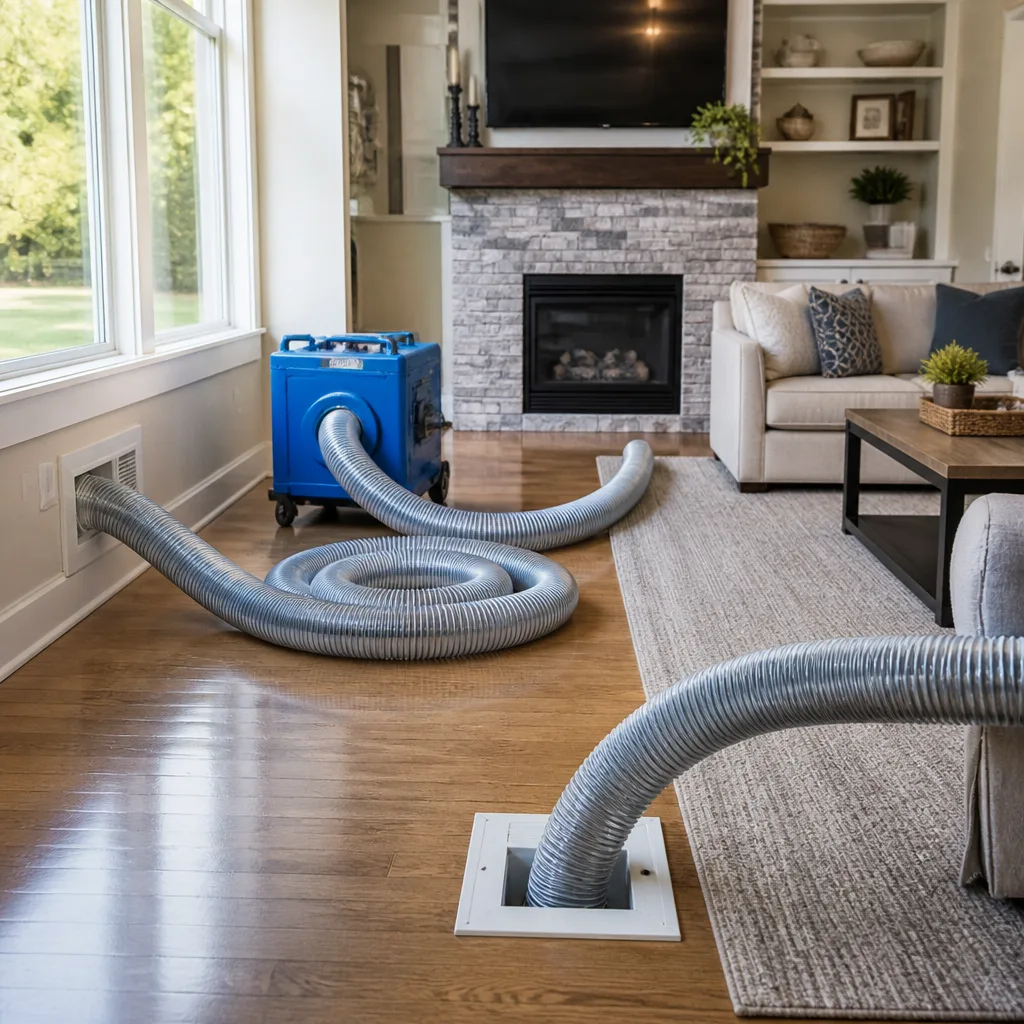 Whole-home duct cleaning
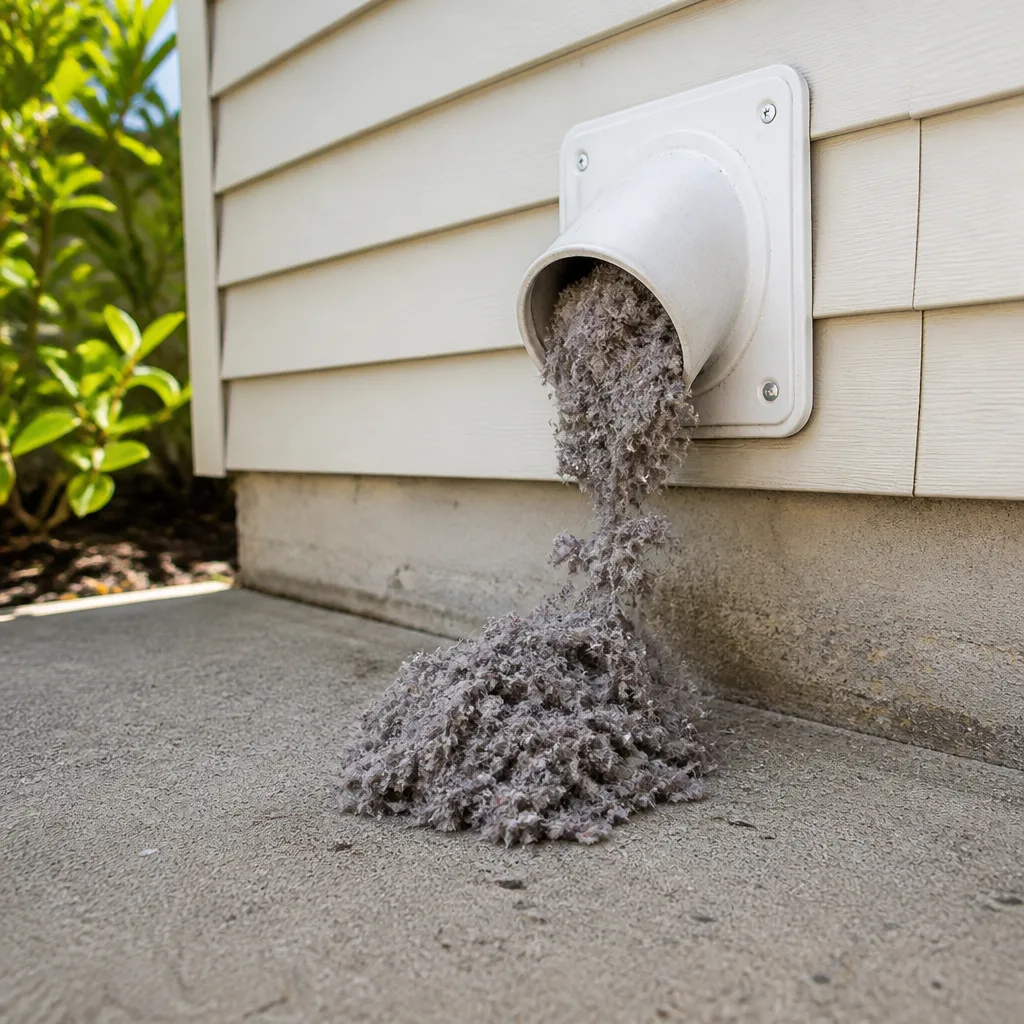 Dryer vent cleaning
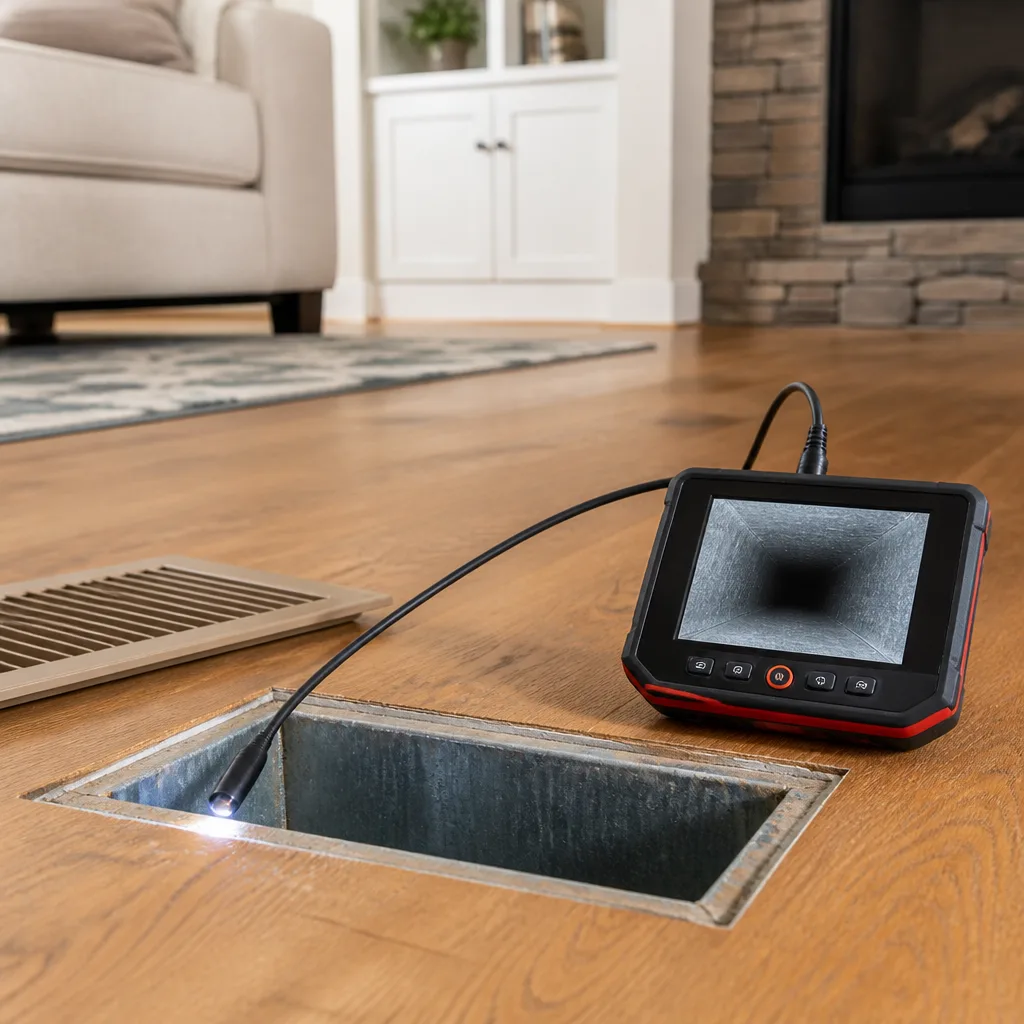 Camera inspection
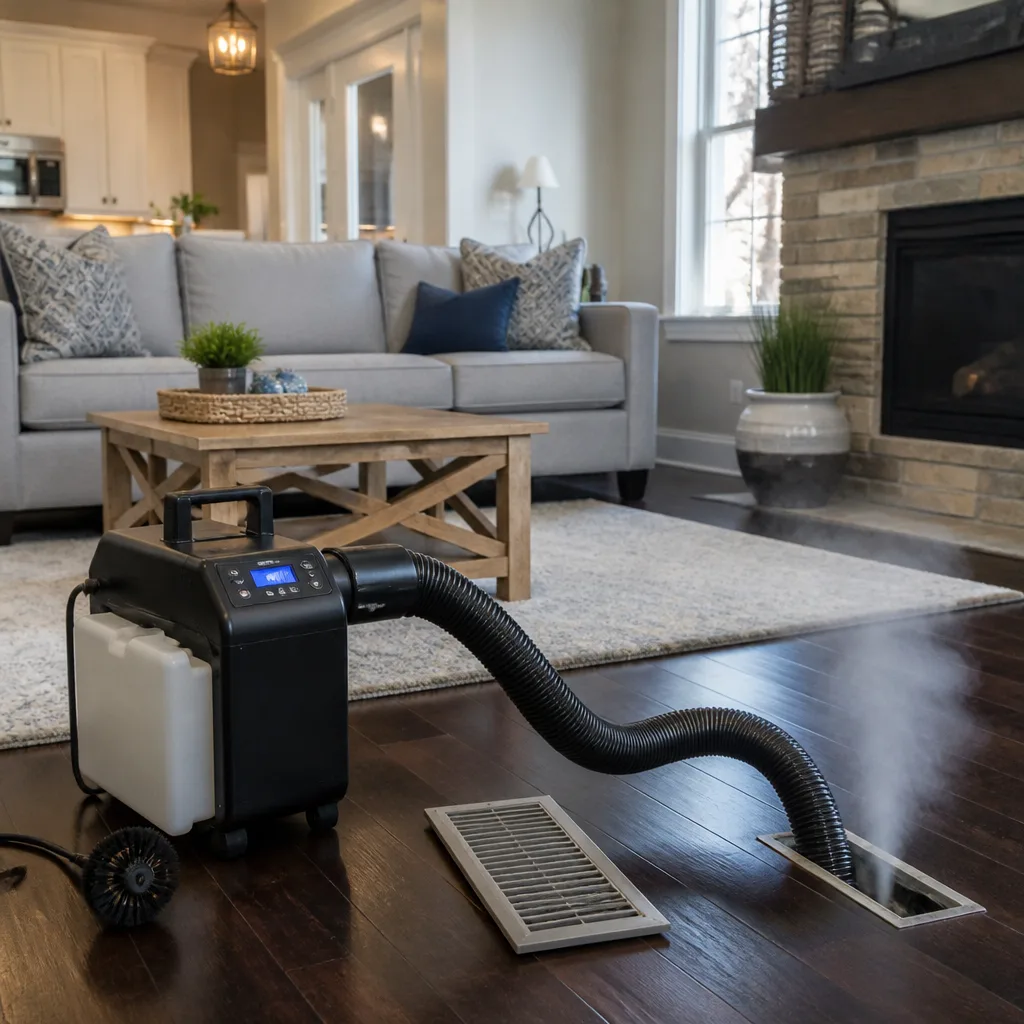 Sanitizing & deodorizing
Whole-system duct and dryer vent check with before-and-after photos - you see exactly what came out of your vents
That "$99 whole-house special" is a bait ad - the real number appears once they are in your hallway, or the "clean" is a shop-vac at the register. We photograph the inside of your ducts before and after instead.
DIY vs Professional Air Duct Cleaning: The Mesquite Homeowner’s Decision Guide
Here’s the part most DIY guides skip: a rented rotary brush kit and a shop vac will pull out the debris sitting within about 18 inches of your register openings. A commercial-grade negative-pressure system with a truck-mount unit north of 4,000 CFM pulls what’s inside the full trunk line, the plenum chamber, and the air handler cabinet. Those are not the same job. In a high-dust North Texas environment like Mesquite, the difference lands exactly where most of the contamination lives. This guide doesn’t tell you DIY is dangerous or that you must hire someone. It gives you an honest, mechanical breakdown of what each approach can actually reach, and a decision framework for figuring out which one your home needs.
Quick Answer
DIY air duct cleaning is worth doing for surface register cleaning and dryer vent lint removal, and it’s a false solution for anything deeper than the first foot or two of duct. Professional equipment reaches the trunk lines, plenum, and air handler surfaces where the bulk of contamination collects in Mesquite homes, and it lets a trained technician identify liner damage or disconnected sections that probe-based DIY tools can turn into a worse problem. Use the decision matrix further down to sort your own home into one camp or the other.
Styles & brands we work with
- Whole-home duct cleaning
- Dryer vent cleaning
- Camera inspection
- Sanitizing & deodorizing
Table of Contents
- What DIY Tools Physically Reach Inside Your Duct System
- The Three Contamination Zones That Matter Most
- When DIY Air Duct Cleaning Actually Works in Mesquite
- Where DIY Creates a False Sense of Completion
- The Risk of DIY on Damaged or Deteriorating Ductwork
- Your Decision Matrix: Five Inputs, One Answer
- What Professional Air Duct Cleaning Actually Involves
- DIY vs Professional: The Honest Cost Comparison
- Common Mistakes to Avoid
- When to Call a Professional
What DIY Tools Physically Reach Inside Your Duct System
Residential duct systems are built around a central trunk that branches out to individual registers through runs of flex duct or rigid pipe. The trunk is typically 8 to 12 inches in diameter and runs the length of the attic or crawlspace. A shop vac hose is 1.25 to 2 inches. A hand brush kit reaches 3 to 6 feet into a run, at best. A leaf blower, which is the most commonly recommended hack in DIY videos, produces high volume at almost no static pressure, meaning it blows a small amount of surface dust around the system without dislodging anything bound to the duct wall.
Here’s what each tool can realistically touch:
- Shop vac: the register grille, the first few inches of visible duct, and loose debris directly below the boot. Anything past the first bend is out of reach.
- Rotary brush kit (rented): the first 3 to 6 feet of each branch run, working back from the register. It will not reach the trunk, the plenum, or the air handler cabinet.
- Leaf blower: generates airflow but no containment. It recirculates dust into the room and pushes some material deeper into the system instead of removing it.
- Compressed air: dislodges surface dust within reach but has no way to capture what it moves. Whatever you loosen stays in the air or lands back on the duct walls.
None of these tools create negative pressure – the constant suction that professional systems use to pull the entire duct network into one collection point while a technician agitates the walls. That combination of agitation and vacuum is what makes a real cleaning job a full-system job rather than a register wipe-down. For a closer look at what the professional version of the process involves, see our air duct cleaning service.
Mesquite’s attic temperatures run hot from May through September, and the HVAC system cycles hard through that stretch. That heat cycling loosens dust and dander that had been sitting on the duct walls, so the contamination load in a Mesquite home tends to build faster than in a milder climate. That’s part of why the “deep” contamination zones fill up faster here, and why a register-only cleaning goes stale quickly.
The Three Contamination Zones That Matter Most
Most of the airborne dirt, dander, and microbial material in a residential system collects in three places. None of them are accessible from a register opening.
1. Main trunk lines
The trunk carries the entire system airflow and is the first place dust settles once it drops out of the airstream. In a Mesquite home with a typical 20 to 30-foot trunk run, the inside of that trunk can hold a substantial accumulation that no brush kit reaches. When the system cycles on, that material gets disturbed and re-sent into the living space. Trunk cleaning requires either a negative-pressure setup with an access point tapped into the trunk, or a rotary whip fed through a properly opened port.
2. Plenum chambers
The plenum sits on top of the furnace or air handler and is where the airflow transitions from the equipment into the duct system. It’s often the dirtiest single component in the whole network because it acts as a settling chamber. It’s also completely sealed off from any register. No homeowner tool reaches the plenum without disassembling part of the equipment cabinet.
3. Coil surfaces and the air handler cabinet
Dust bonded to the evaporator coil degrades cooling performance and is a common hidden cause of reduced airflow in Mesquite homes. Cleaning the coil requires either chemical treatment or controlled low-pressure air combined with a drain pan flush. A brush kit doesn’t touch it. A shop vac reaching into the cabinet from the return-side opening is riskier than useful, because the fins on the coil bend easily and can be crushed.
Professional cleaning covers all three zones with negative pressure containment. Abatement Technologies equipment, which we deploy on jobs with heavier particulate loads, adds a level of filtration beyond a standard cleaning setup. That matters in Mesquite homes near the Mesquite Metro Airport corridor or along the I-635 corridor, where exterior particulate load is higher than in the city’s quieter residential pockets.
When DIY Air Duct Cleaning Actually Works in Mesquite
There are real, honest cases where DIY is the correct answer. Here’s the short list:
- Surface register cleaning. If the grilles are dust-filmed and the visible duct throat is grimy but the system was professionally cleaned within the last three to five years, a wipe-down and vacuum of the registers is fine. Remove the grille, vacuum the visible throat, wash the grille in the sink, dry it fully, and reinstall.
- Dryer vent lint removal from the transition duct. The short duct between the dryer and the wall is accessible and worth clearing yourself if you can see it’s lint-packed. Disconnect the dryer, vacuum out what you can reach, and reinstall the flex. What’s past the wall cavity needs a proper dryer vent cleaning – that’s where the fire risk concentrates. Our dryer vent cleaning page covers the full vent run.
- Filter changes and return grille care. The most underrated DIY step. A clogged filter loads the system with back-pressure, and in a dusty Mesquite summer, a filter can load in four to six weeks instead of the label’s three months.
- Keeping the return throat clear. Vacuuming pet hair and dust off the return grille throat every month is genuinely useful and prevents the first layer of contamination from building up.
In these cases, DIY doesn’t save you from a professional job – it just delays one, cleanly and honestly, until the system actually needs the full service. That’s a real decision and a reasonable one.
Where DIY Creates a False Sense of Completion
The risk with DIY duct cleaning isn’t injury – it’s completionism. The homeowner cleans the visible registers, sees improvement in the room, and concludes the job is done. Six weeks later the dust is back, because the trunk and plenum are still loaded. Here’s where that pattern shows up most clearly in Mesquite homes:
- Homes with pets or smokers. Pet dander binds to duct walls with more tenacity than ordinary dust, and smoke residue is a fine-particle problem that settles into the plenum and coil. Surface cleaning doesn’t reduce either.
- Homes post-renovation. Drywall dust from a kitchen or bathroom remodel coats the entire system, not just the registers. It migrates into the trunk within hours of the first system cycle and stays there. DIY cleaning reaches maybe ten percent of that load.
- Homes with a recent move-out or vacancy. Property managers in Mesquite deal with this constantly – a unit sits unused for a month, and the ducts collect dust and odor that a cleaning appears to fix. If the cleaning doesn’t include the plenum and coil, the smell returns.
- Homes with recurring allergy symptoms. If two occupants are sneezing more in one room and the register in that room has been cleaned repeatedly, the problem is upstream. DIY can’t reach it.
Here’s the awkward part. When DIY is done on a loaded system, it disturbs material that had settled and pushes a portion of it into the airstream. The homeowner ends up with a room that feels dustier for a few days, cleans again, feels a bit better, and repeats. The mechanical explanation is simple: you moved the material around the system instead of removing it. Professional cleaning removes it under negative pressure and captures it outside the duct system, so the same load isn’t recirculating.
If you want the deeper version of this logic, we walk through it on our Duct Cleaning Mesquite service page.
The Risk of DIY on Damaged or Deteriorating Ductwork
This is the section most DIY guides leave out, and it’s the one that matters most for older Mesquite homes. Flex duct has an internal liner that can delaminate with age. Rigid duct with taped joints can separate. When either of those conditions exists, probe-based DIY tools – brushes, whips, powered augers – can convert a small problem into a collapsed run.
Here’s what we mean mechanically. A rotary brush run into a section of flex duct with a deteriorating inner liner will catch the loose liner material, twist it, and tear it further. Similarly, a powered probe pushed past a taped joint can pop the connection loose entirely. Neither failure is visible from the register. What the homeowner notices is a sudden drop in airflow to one room, or a whistling noise from a duct run, and assumes the equipment has failed.
How to check for this before doing anything with a probe tool:
- Look inside each register with a flashlight. If you can see the silver inner liner peeling or crinkled along the duct run, that run needs repair, not cleaning – and no DIY tool should go into it.
- Check visible duct runs in the attic for gaps at joints, sagging, or tape that has lost adhesion.
- Listen to the system after a normal cycle. If you hear a whistle at a register or a rattle from the attic, there’s a leak or a loose joint somewhere.
- If the duct run was installed over fifteen years ago, assume liner condition is uncertain until someone has looked at it.
This is where the “cleaning alone doesn’t fix everything” reality shows up in a Mesquite home. Duct damage isn’t solved by cleaning. It needs repair. That’s the reason we offer air duct repair as a standalone service rather than treating it as an add-on to cleaning.
Your Decision Matrix: Five Inputs, One Answer
Here’s the framework that actually answers the DIY-vs-pro question for a specific home. Score yourself on each input. Two or more “pro” answers, and DIY cleaning is not going to fix the problem.
Input 1: Home age
- 0-15 years: Ductwork is likely intact. DIY surface care is reasonable.
- 15-30 years: Flex duct liner condition is uncertain. Have it inspected before any DIY probing.
- Over 30 years: Assume corrective attention is due. Often the system has had partial retrofits over the decades and there’s no consistent duct material throughout.
Input 2: Last professional cleaning date
- Within 3-5 years: DIY surface care fine.
- 5-10 years: Due for professional cleaning.
- Never or unknown: Professional cleaning is the correct starting point.
Input 3: Pets or smokers in the home
- Neither: Dust load is ordinary.
- Pets or smokers: Contamination accumulates faster. DIY intervals shorten to months, not years, and professional cleaning is due more often.
Input 4: Recent renovation
- No recent work: Dust load ordinary.
- Renovation in the last 12 months: Drywall dust has already migrated. Professional cleaning is due once the renovation is closed out.
Input 5: Allergy symptoms tied to specific rooms
- No specific pattern: DIY surface care is fine.
- Symptoms worsen in one room: Problem is upstream. Professional inspection.
- Symptoms across the whole home: Professional cleaning, plus coil inspection.
A note on Mesquite specifically. The city’s residential stock runs from mid-century homes in neighborhoods like Clay Mathis and Seabourn to newer construction along the eastern edge near I-30 and Belt Line. Homes from the middle of the last century are the ones most likely to answer “pro” on two or three inputs at once, and homes from the last fifteen years are the ones where DIY surface care is genuinely adequate. Neighborhood doesn’t determine the answer. The five inputs do.
What Professional Air Duct Cleaning Actually Involves
The professional process is worth understanding even if you decide to DIY this time, because it tells you what to look for when you do hire someone. Here’s how a full service runs:
- System evaluation. A technician checks duct condition throughout – flex runs, joints, the plenum, the air handler cabinet – before starting, because collapsed or damaged sections change the process.
- Negative pressure setup. A high-powered vacuum is connected to the main trunk through an access port, pulling the entire system into a single collection point for the duration of the job. That’s what keeps the dust from landing back in the living space.
- Agitation. Rotary brushes and air whips, driven by the equipment, work through each run and the trunk to break contamination loose from the duct walls. This is the step where commercial equipment reaches what a rented kit can’t.
- Coil and plenum cleaning. Evaporator coil surfaces and the plenum chamber are cleaned with controlled equipment. Coil fin condition is checked during this step.
- Register and grille cleaning. Each register cover is removed, cleaned, and reinstalled.
- Sanitizing and finishing. Guardsman products are used to treat the duct interior after cleaning, and a final system check confirms airflow. Before-and-after photos inside the duct give you a visual record of the work.
For the professional version we run, we use both Rotobrush and Nikro systems so the job is matched to the duct configuration. Abatement Technologies equipment comes out when particulate load is heavy enough to warrant containment-grade filtration, and we work with Honeywell and Aprilaire products when a homeowner wants to add whole-home filtration or purification as part of the same service call.
DIY vs Professional: The Honest Cost Comparison
DIY duct cleaning costs whatever the rental and supplies cost – typically under a hundred dollars for a rented rotary kit and shop vac. Professional air duct cleaning in Mesquite runs as a whole-system job, not a per-vent price, so the estimate depends on the number of runs, the size of the system, and whether the job includes coil cleaning and repair. The estimate we give is one flat price per system, agreed before work starts, and the written estimate sets the final price.
What you’re actually buying with the professional version is containment: negative pressure, full-access equipment, and a technician who can spot damage and stop the job if a run needs repair first. DIY “saves” the service cost but delivers a fraction of the mechanical result. The two aren’t comparable jobs at the same price point, they’re different jobs at different scopes.
The honest summary is this: for a recently cleaned home with no pets, no renovation, and no allergy pattern, DIY surface care covers the gap between professional services. For a home that answers two or more “pro” inputs on the decision matrix, DIY ends up as a maintenance interval for dust reduction, not a replacement for cleaning.
Common Mistakes to Avoid
- Running a rotary brush into flex duct that hasn’t been inspected first. Liner delamination can be present without any visible sign from the register. A brush can tear the liner further and restrict airflow to that run permanently.
- Using a leaf blower to “blow out” the system. It pushes dust into the room and deeper into the system, with no containment to capture it. It usually makes the dust problem worse for a week.
- Cleaning the registers and calling the system done. The most common completionist mistake. The visible register throat is the smallest contamination zone in the whole network.
- Spraying commercial sanitizer into the duct without cleaning first. Sanitizer sprayed onto a loaded duct wall bonds dirt in place instead of removing it. Cleaning has to come first, then finishing.
- Neglecting the coil for years. Dirty coils are one of the top hidden causes of reduced cooling performance in Mesquite homes, and no register-based cleaning touches them.
- Treating dryer vent lint removal as optional. The transition duct lint that every homeowner can see and clean is the easy part. The full vent run behind the wall is where accumulated lint becomes a fire-hazard problem, and it’s not accessible without proper equipment.
- Skipping filter changes during high-pollen months. Mesquite’s spring pollen season runs heavier than the rest of the year along the I-635 corridor, where exterior airflow keeps load high. Filters clog faster during that stretch.
If you’re working through that list and more than a couple of items match, see our Mesquite service page before you spend any more on rental tools.
When to Call a Professional
Call a professional for any of these: the system has never been cleaned or you can’t remember when it last was; you’ve had a renovation in the past year; there are pets or smokers in the home; someone in the household has a recurring allergy pattern tied to specific rooms; the ducts are over 15 years old and haven’t been inspected; or the dryer vent hasn’t been cleaned within a few years and the outside flap has visible lint accumulation. Call Duct Cleaning Mesquite at (855) 360-8359 for a free estimate – we work in Mesquite and throughout the surrounding area, and every job is one flat price per system, quoted in writing before we start. Our technicians have up to 10 years of experience, and we bring professional-grade Rotobrush and Nikro equipment, so the job you hire is a whole-system job.
See the difference
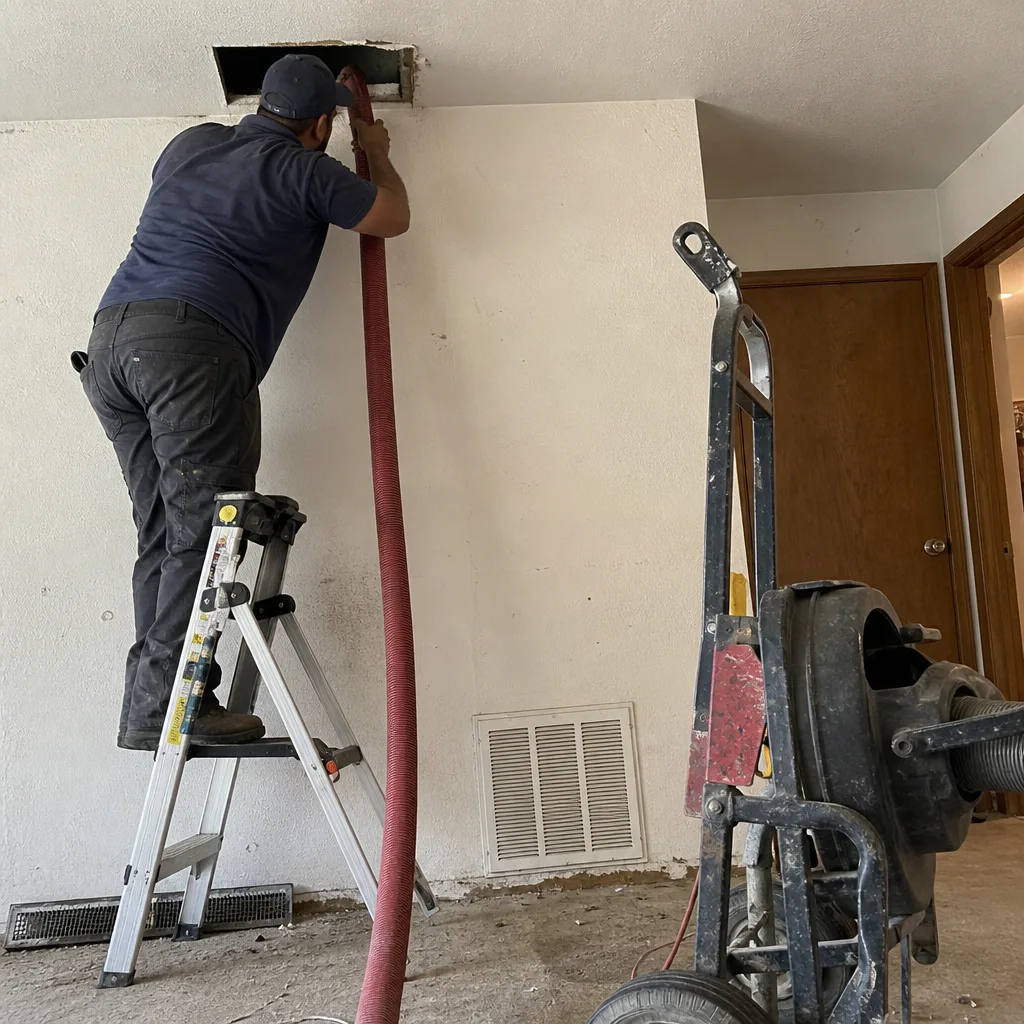 Before
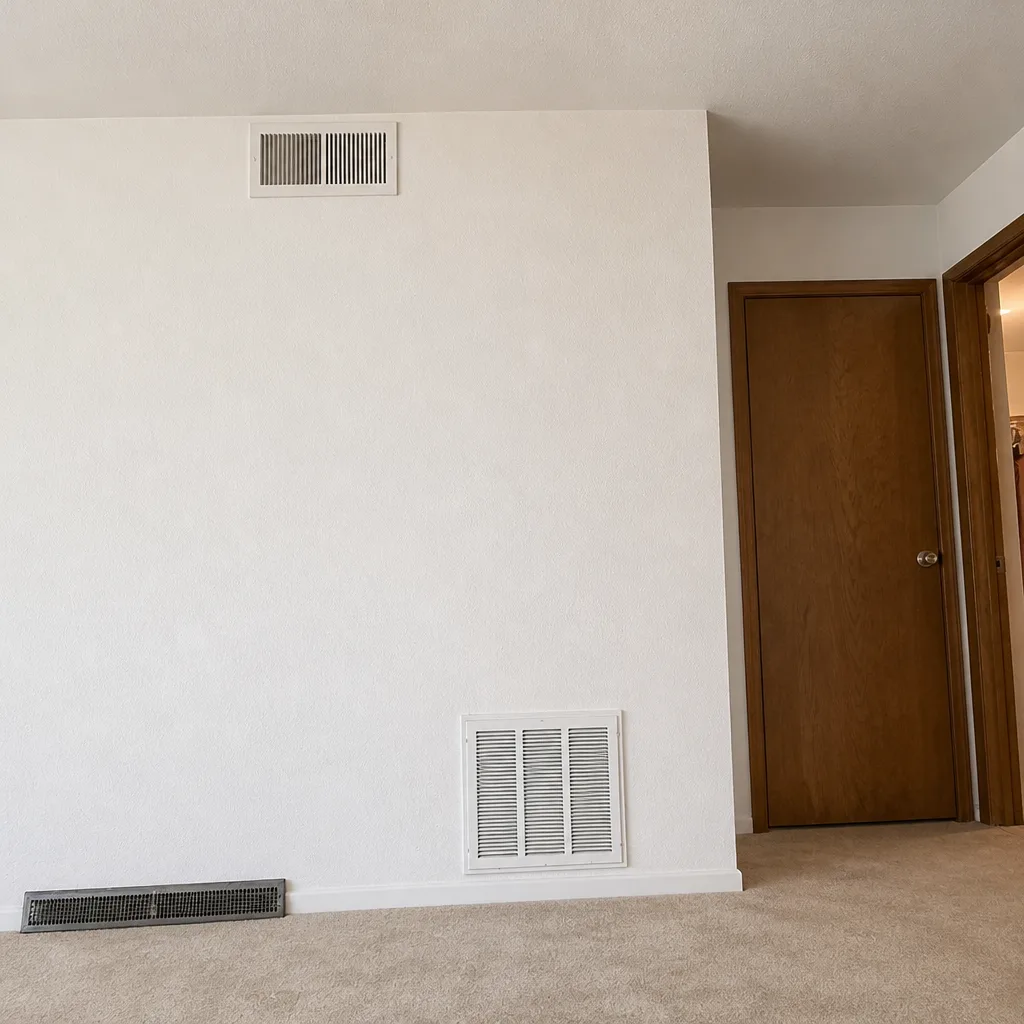 After
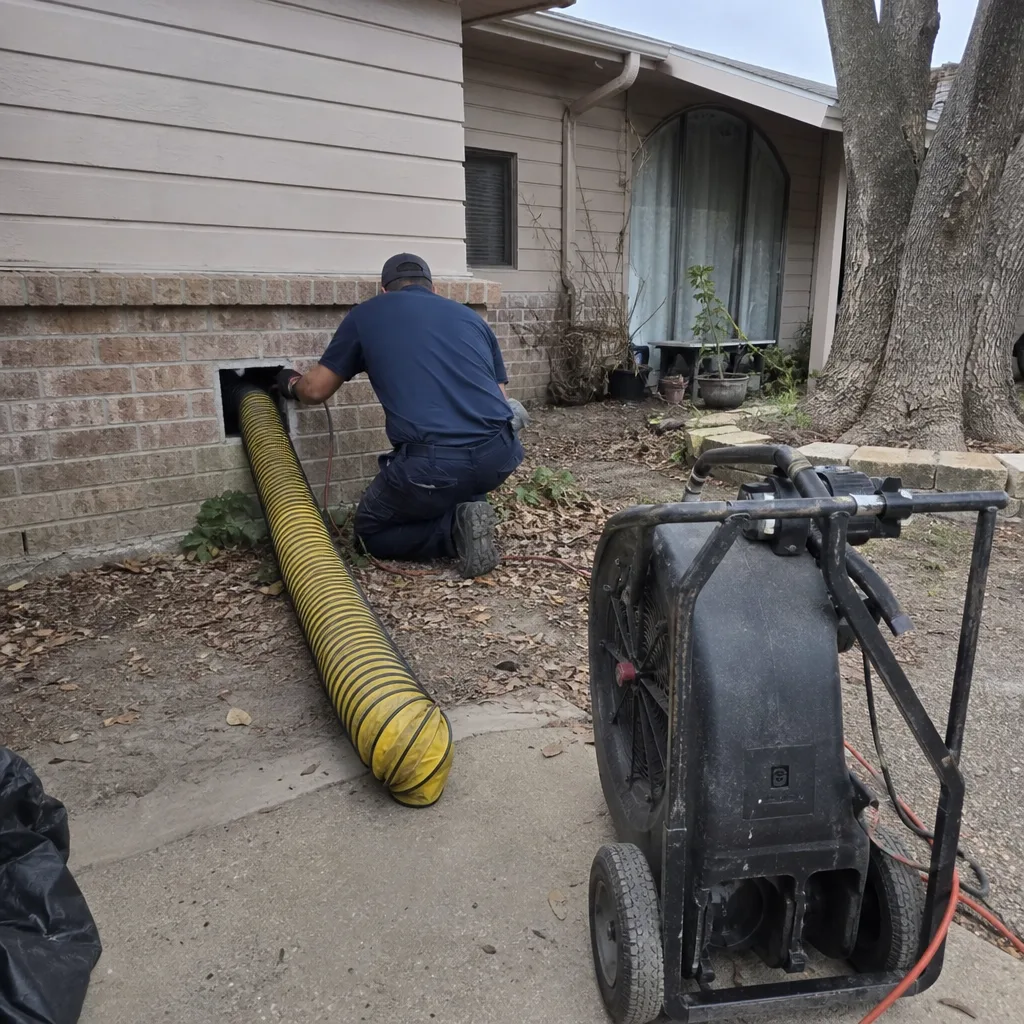 Before
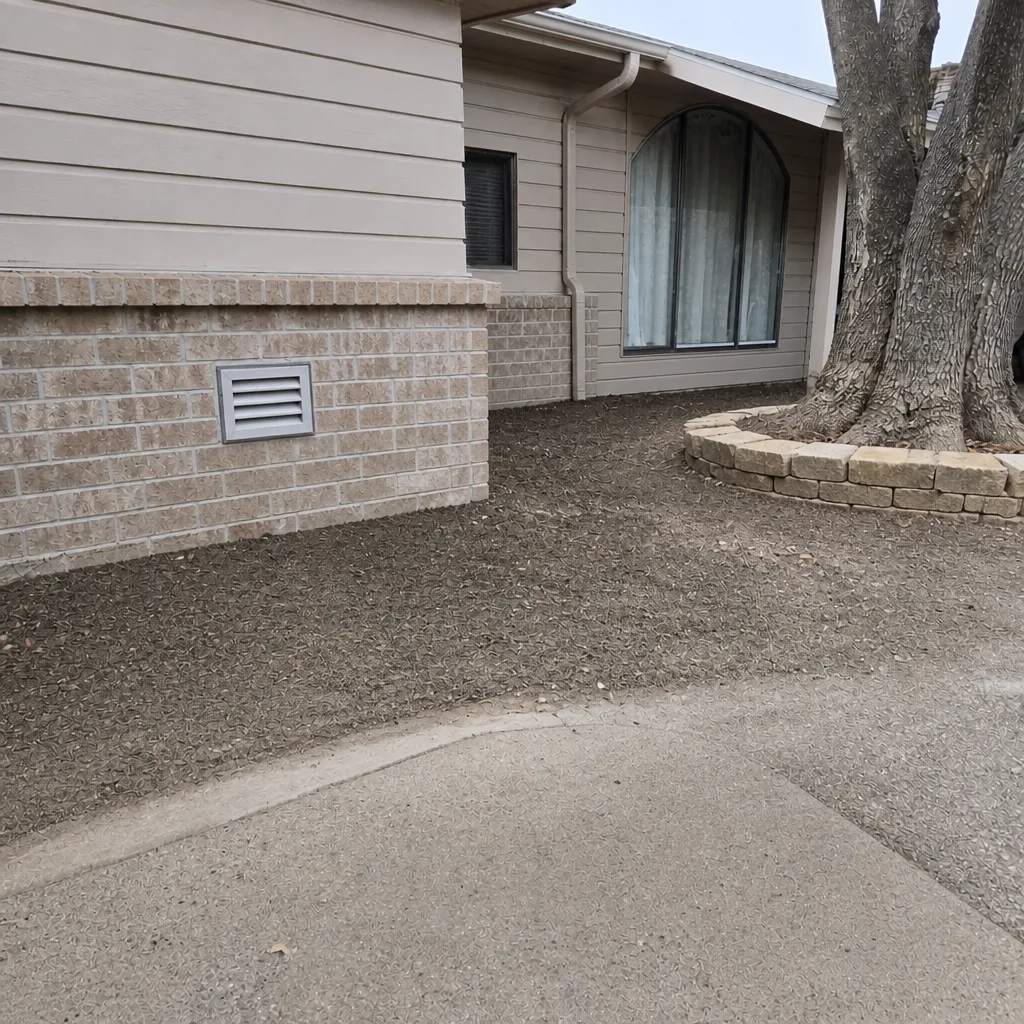 After
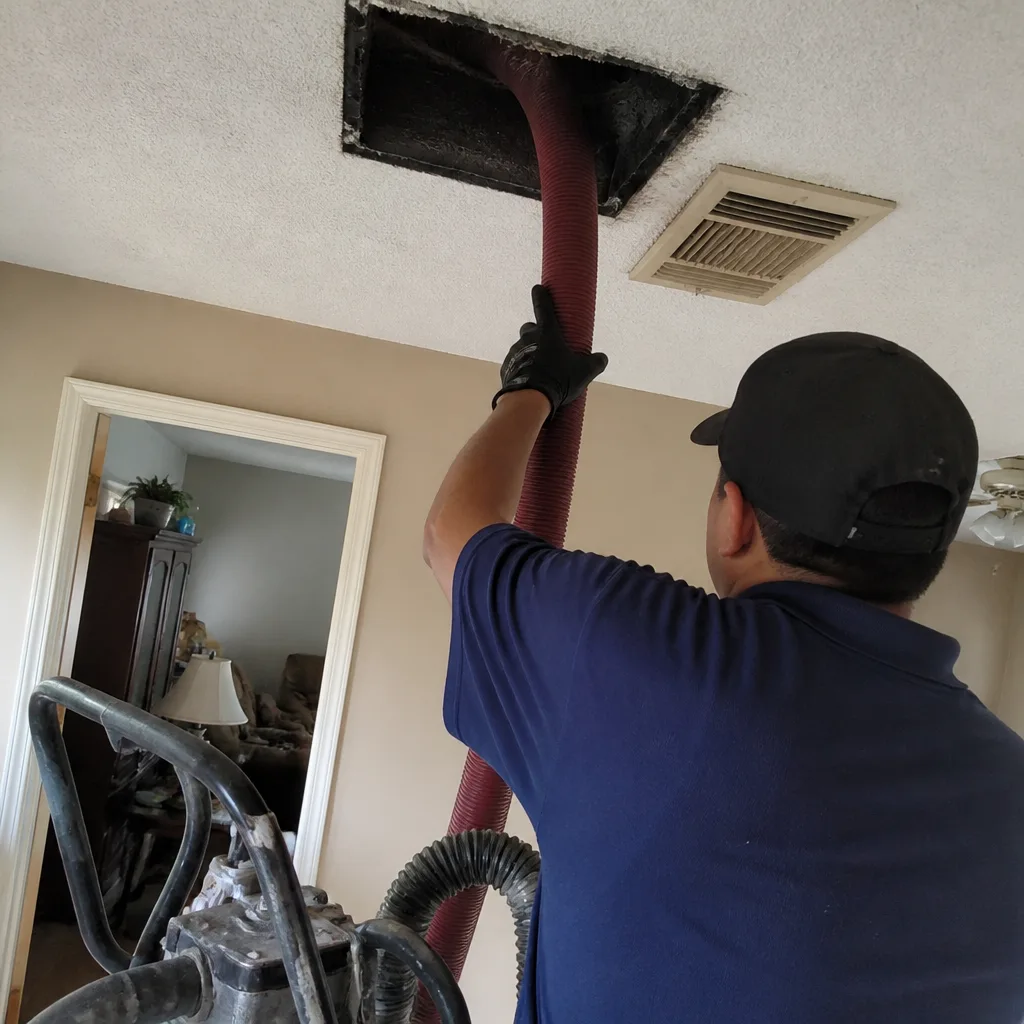 Before
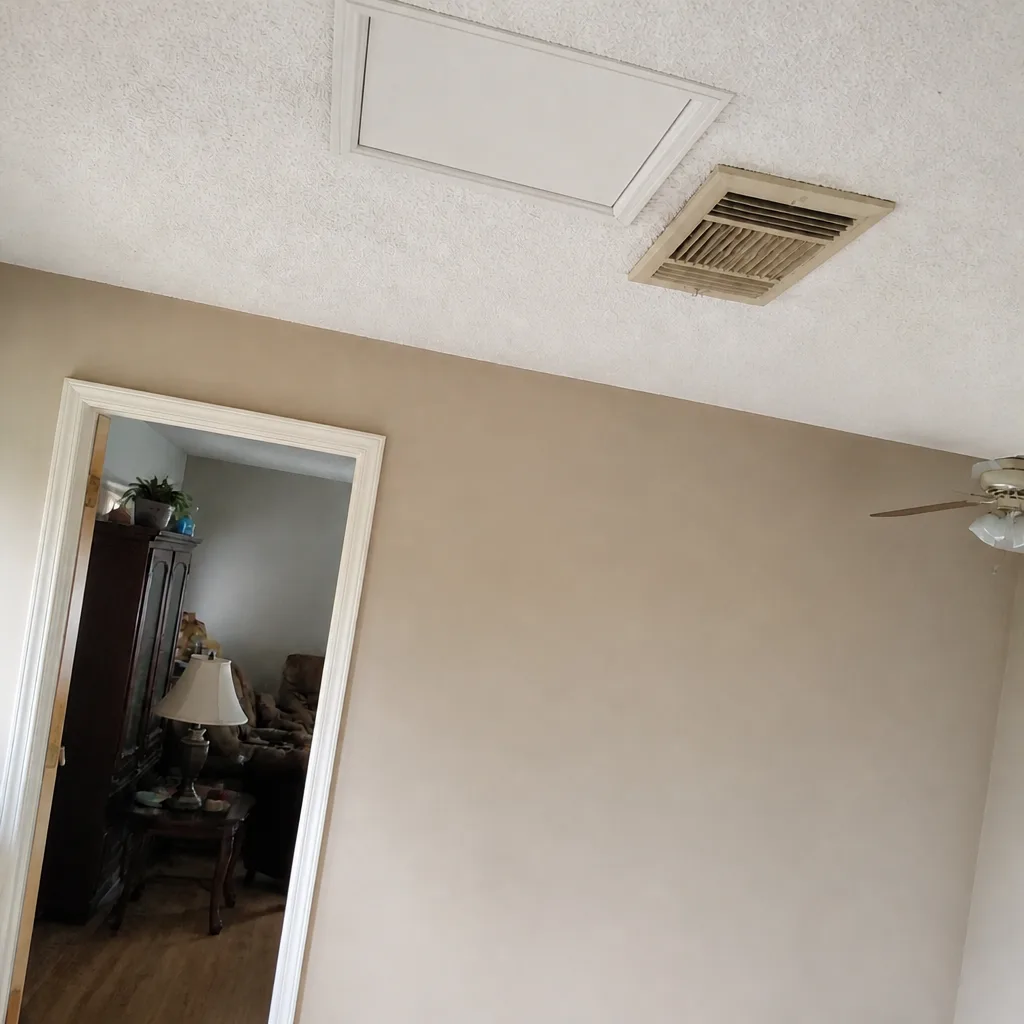 After
Frequently Asked Questions
Yes, for surface register cleaning and dryer vent transition-duct lint removal. It’s enough only when the system was professionally cleaned within the last three to five years, has no pets or smokers, and has had no recent renovation. Any of those conditions change the answer.
Professional air duct cleaning in Mesquite is priced per system, not per vent, so the estimate depends on the number of runs, system size, and whether coil cleaning or repair is included. The written estimate sets the final price, and it’s agreed before work starts. Call (855) 360-8359 for a free estimate.
Because they aren’t for the same job. A low quote often means register-only cleaning with entry-level equipment, no plenum or coil access, and no containment. Ask what equipment is used and whether the plenum and coil are included. Those two questions separate real quotes from headline prices. Call (855) 360-8359 if you want a quote that spells this out.
You should see before-and-after photos from inside your own ducts, not stock photos. Ask for images of the trunk, plenum, and at least one branch run. We photograph every job for exactly that reason. Call (855) 360-8359 to talk through what your job would include.
Every three to five years for a home with no pets, smokers, or allergic occupants. Shorter intervals – often two years or less – for homes with pets, smokers, recent renovations, or allergy patterns. Never-cleaned systems should be inspected now regardless of how the home looks. Call (855) 360-8359 for a professional assessment.
It can if the flex duct liner is already deteriorating or a joint has separated. A rotary brush can catch and tear loose liner, and a powered probe can pop a taped joint. Look inside the ducts with a flashlight first. If the liner is peeling or the duct runs look damaged, call (855) 360-8359 for inspection before touching it.
The Bottom Line
DIY air duct cleaning cleans the first foot or two of the ductwork and helps keep surface dust in check. Professional cleaning reaches the trunk, plenum, and coil, which is where most of the actual contamination lives in a Mesquite home. Use the decision matrix – home age, last cleaning date, pets or smokers, recent renovation, and allergy pattern – to figure out which side of the line your home sits on. For a recently cleaned home with none of the “pro” inputs, DIY surface care is a reasonable choice between professional cleanings. For everything else, the professional job removes what you can’t see from the register, and it lets a trained technician spot repair-needs before they become bigger problems. Call (855) 360-8359 for a free estimate. We answer 24/7, and fast dispatch runs 7am to 7pm, Sunday through Friday.
Written by the team at Duct Cleaning Mesquite.