
Last updated November 15, 2026
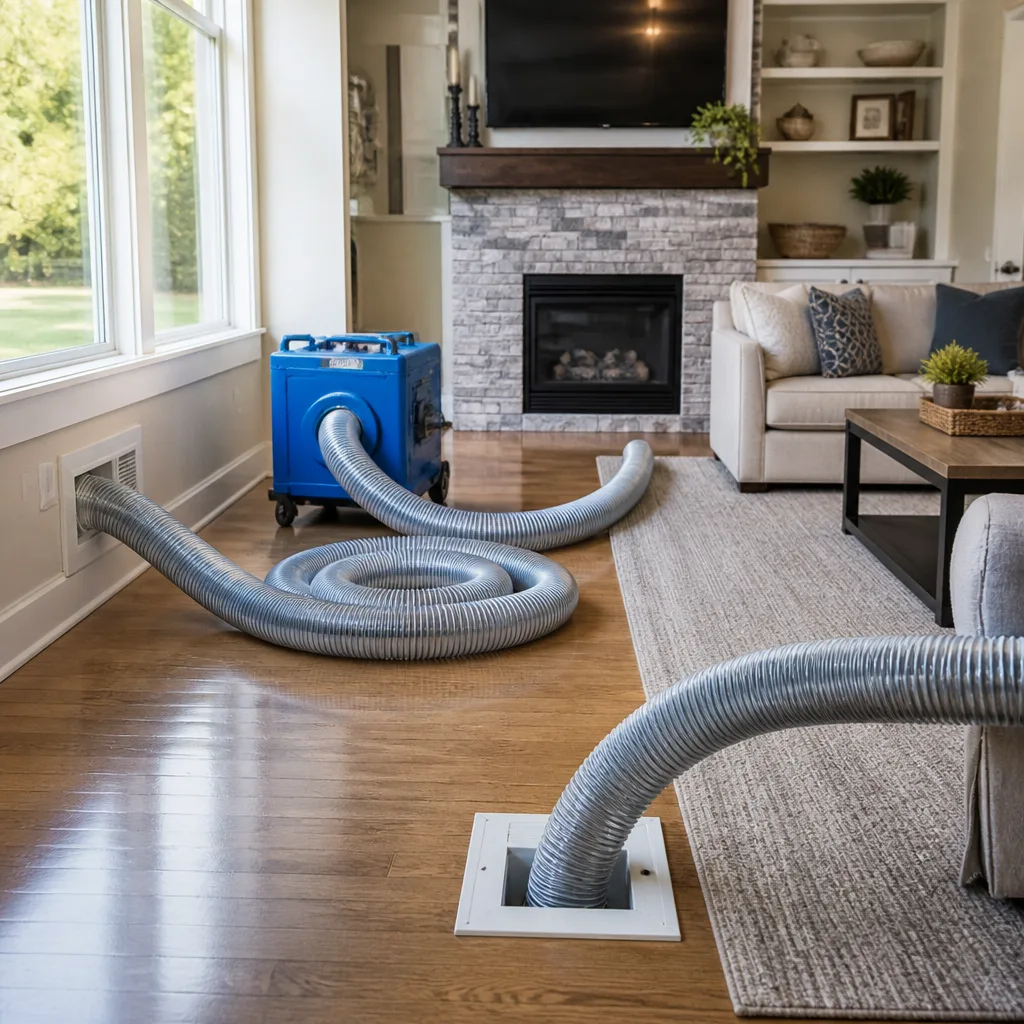 Whole-home duct cleaning
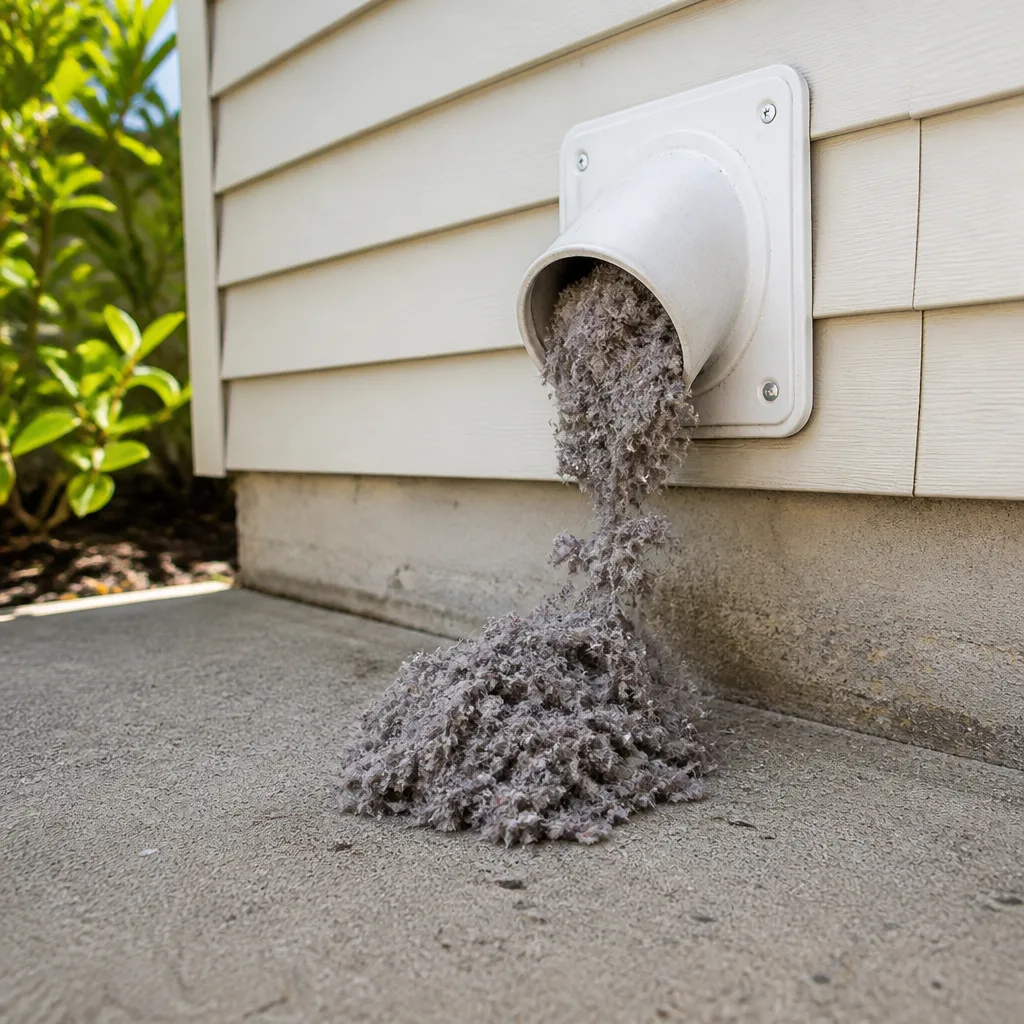 Dryer vent cleaning
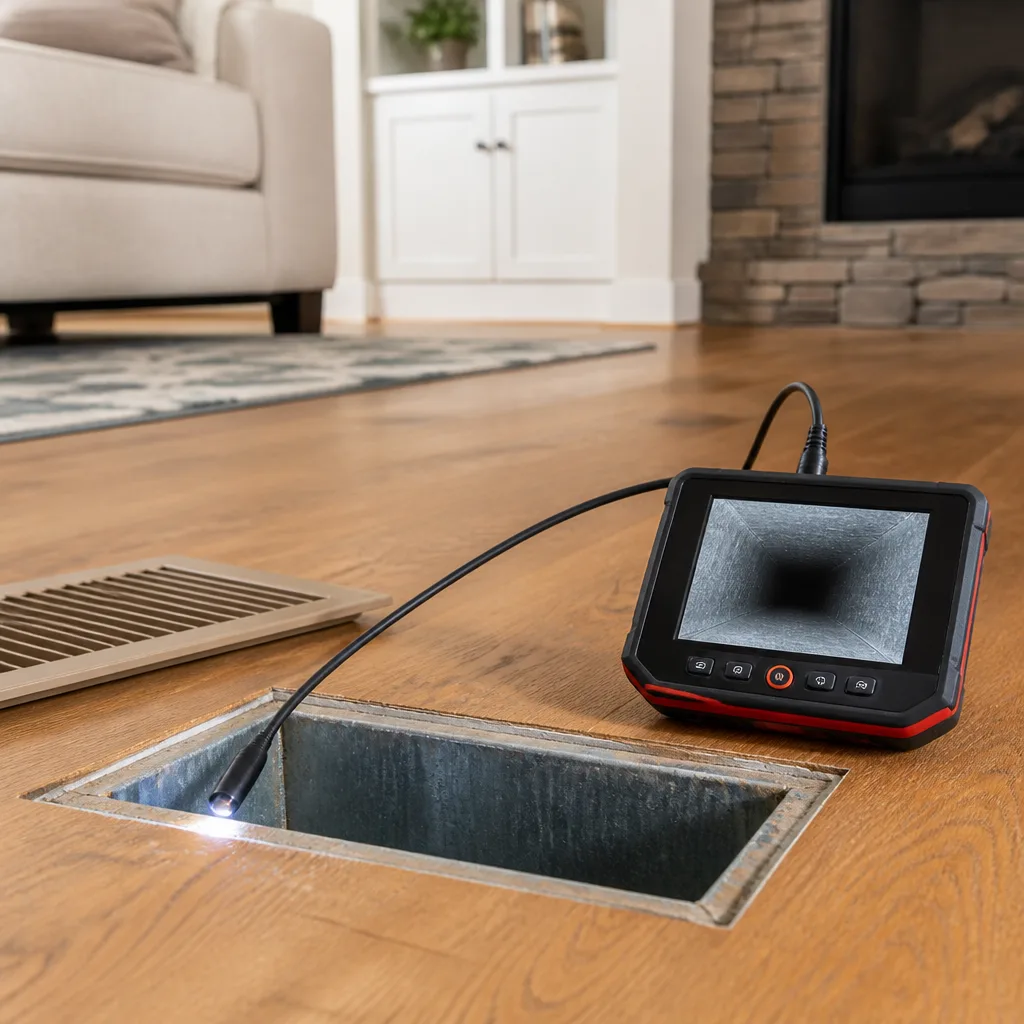 Camera inspection
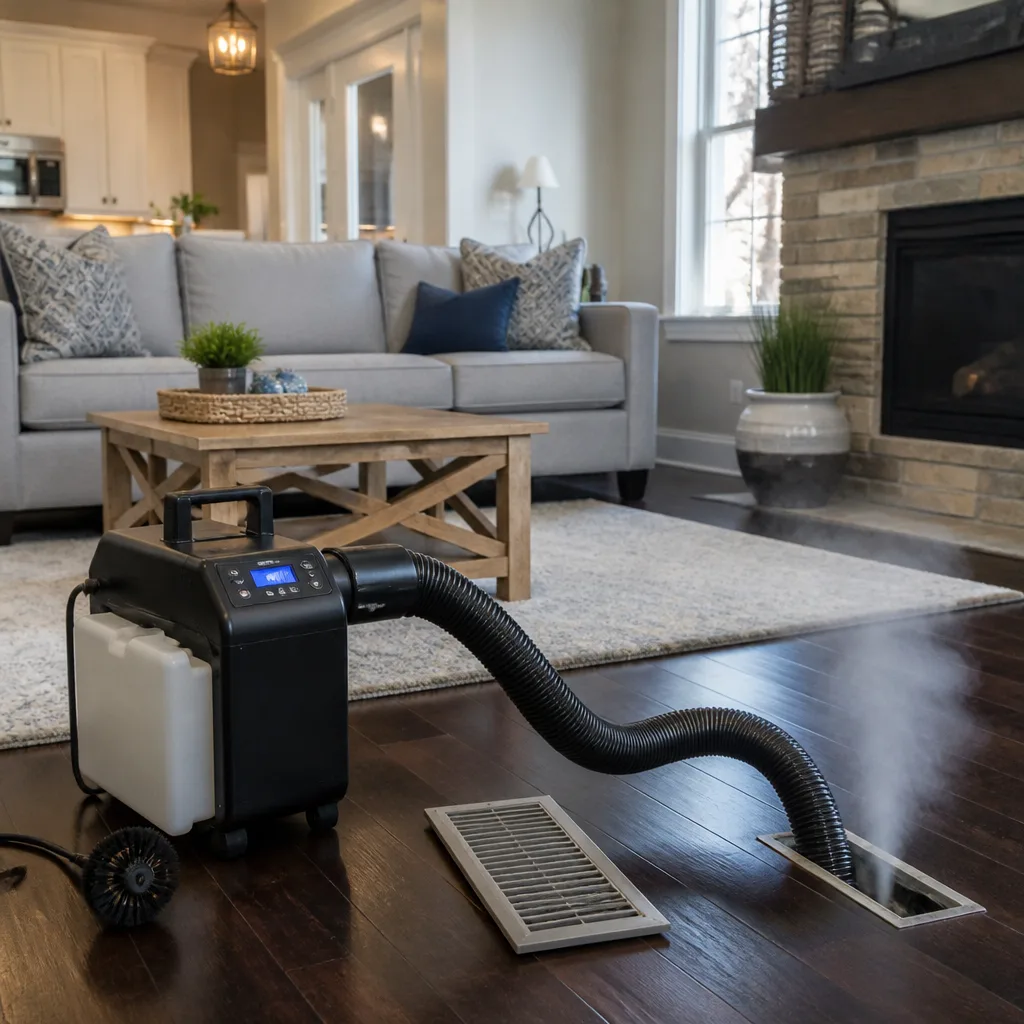 Sanitizing & deodorizing
Whole-system duct and dryer vent check with before-and-after photos - you see exactly what came out of your vents
That "$99 whole-house special" is a bait ad - the real number appears once they are in your hallway, or the "clean" is a shop-vac at the register. We photograph the inside of your ducts before and after instead.
Air Duct Cleaning Warning Signs: A Mesquite Homeowner’s Reference Guide
The duct problems that cost Mesquite homeowners the most money usually don’t announce themselves. They show up as a bedroom that’s always a few degrees off, a faint smell you’ve stopped noticing, or a power bill that crept up so gradually you blame the summer. And that’s exactly why they go unfixed for years. One room that never gets comfortable is the most commonly dismissed duct warning sign in North Texas, and most people re-route airflow with a fan and forget it. In our experience, that symptom often traces back to a disconnected or collapsed duct segment that is also dumping conditioned air into your attic while you pay to cool it. This guide connects each quiet symptom to the specific duct failure behind it, so you can tell the difference between normal and a real problem before it costs you another season.
Quick Answer
The main air duct cleaning warning signs in Mesquite are uneven room temperatures, visible dust or dark streaking around registers, musty or burning odors when the system runs, energy bills that climb without explanation, and signs of rodent activity near ductwork. Any one of these points to a duct integrity or contamination issue that cleaning, repair, or both can address. Two or more together usually mean it’s time for a professional inspection.
Styles & brands we work with
- Whole-home duct cleaning
- Dryer vent cleaning
- Camera inspection
- Sanitizing & deodorizing
Table of Contents
- The One Uncomfortable Room That Points to a Duct Problem
- What Your Registers Are Telling You
- Odor Diagnostics: Mapping the Smell to the Source
- Reading Your Energy Bill as a Duct Diagnostic
- Pest and Rodent Indicators in Your Ductwork
- Dust, Allergens, and the Indoor Air Quality Clue
- When It’s a Cleaning Job and When It’s a Repair Job
- Common Mistakes to Avoid
The One Uncomfortable Room That Points to a Duct Problem
When a single room runs hot or cold while the rest of the house feels fine, the thermostat is almost never the culprit. Neither is the air conditioner. Uneven temperatures across a Mesquite home usually point to a duct integrity issue: a supply run that has come loose, a flexible duct that has collapsed on itself, or a joint that was never sealed properly to begin with. The equipment is doing its job. The air just isn’t arriving where it’s supposed to.
Here’s the mechanism. A disconnected or crushed duct segment stops delivering conditioned air to the room it serves. That same segment is often leaking that cooled air into the attic instead, where it does nothing for you and everything for your electric bill. The room stays uncomfortable, and the system runs longer trying to satisfy a thermostat that will never catch up.
Before you assume it’s the ducts, rule out the simple stuff:
- Check the register in that room. Is air coming out at all? Weak flow versus no flow tells you different things.
- Walk the house and compare airflow at several registers with the system running. One weak vent with strong flow elsewhere is a classic single-run problem.
- Look at the return nearest the room. A blocked or undersized return starves the whole zone.
- Check the filter. A clogged filter chokes the entire system, though it usually affects every room, not just one.
If the room is consistently off while others are comfortable, and the filter is clean, that’s your cue. This is the kind of problem a proper inspection catches quickly. It’s also the reason we treat air duct cleaning as a diagnostic visit as much as a cleaning one: the inspection often finds a disconnected run long before the homeowner would have found it any other way.
What Your Registers Are Telling You
Pull the grille off a supply register and look at the metal and the surrounding drywall. What you see there is a record of what’s been moving through your ducts, and the pattern matters more than the fact that there’s dust at all.
Gray dust rings are normal. Every home collects dust, and registers are where it settles first because that’s where the air enters the room. A soft, even gray film that wipes away easily is housekeeping, not a warning.
Black streaking is different. Dark, sooty streaks radiating from the register, or black staining on the surrounding drywall, suggest one of two things. In some cases it’s mold growth feeding on moisture and organic dust inside the duct. In others it’s combustion bypass: exhaust or soot finding its way into the airstream, which is a safety concern and not something to ignore. Black streaking around a register in a Mesquite home should trigger a professional inspection before anything else.
Rust or water staining near a register points to condensation or a leak somewhere along the run. In a warm, humid North Texas summer, a duct that sweats in an unconditioned attic can feed mold growth for months without anyone noticing.
Lint or fiber buildup at the boot or the register collar often means the duct’s inner lining is breaking down and shedding into the airstream. That’s a materials failure that cleaning alone won’t cure.
Pattern recognition here is worth more than a quick wipe-down. When we inspect registers on a job, the color and pattern tell us whether we’re looking at routine dust, a moisture problem, or a duct that needs repair. Our technicians use Rotobrush and Nikro equipment to clean the system properly, but the assessment comes first. If you’re seeing black streaking and want a straight answer about what it means, that’s a conversation worth having before the next cooling season.
Odor Diagnostics: Mapping the Smell to the Source
Your nose is a surprisingly good diagnostic tool, provided you pay attention to which smell you’re dealing with and when it shows up. The trick is that the same duct system can produce very different odors depending on what’s actually going on inside it.
Musty or “damp basement” smell. This is the classic sign of mold or mildew growth in the ductwork or the air handler. In Mesquite, the combination of high summer humidity and cool metal surfaces creates condensation, and condensation plus dust equals a growth medium. Musty odor that’s strongest when the system first kicks on is a strong signal of microbial growth somewhere in the run.
Burning or “hot dust” smell. A faint burning smell when the heat first comes on after months of disuse can be harmless dust burning off the heat exchanger. If it persists or intensifies, stop and call for service. A persistent burning smell can indicate an overheating component or, in the worst case, combustion gases in the airstream. That’s a safety issue, not a cleaning issue, and it warrants immediate professional attention.
Chemical or solvent smell. This one usually points to a refrigerant leak or an off-gassing material, and it’s worth ruling out before you assume it’s the ducts. Refrigerant has a distinct sweet, chemical edge to it.
Dead animal or rank smell. Pests that get into ductwork leave behind contamination that no amount of surface cleaning will resolve. This is the one smell that almost always means professional remediation rather than a standard clean.
Odor is a starting point, not a diagnosis. What it does is tell you which part of the system to look at first. If any of these smells has become background noise in your house, that’s your cue to have the ductwork inspected properly rather than masked with an air freshener.
Reading Your Energy Bill as a Duct Diagnostic
Your billing history is one of the most underused diagnostic tools a homeowner has. Duct leakage doesn’t show up on a bill as a single dramatic jump. It shows up as a slow climb, season after season, that you eventually attribute to rate increases or a hotter summer. In Mesquite, where cooling season runs long, that slow climb can add up quietly.
Here’s a rough way to use your bills as a diagnostic input. Pull the same month from three years back and compare it to now. If your usage has climbed steadily while your habits, your equipment, and the number of people in the house haven’t changed, the ducts are a likely suspect. A well-sealed duct system delivers most of the air it’s given; a leaky one can lose a meaningful share of it into the attic before it ever reaches a room.
Three things to look for in the numbers:
- Usage trending up, not just cost. Rates go up and down, so compare kilowatt-hours used, not just dollars paid. Rising usage with stable habits points to the system working harder than it used to.
- Seasonal surprise. A summer bill that spikes harder than the temperature does suggests the system is losing efficiency exactly when it’s working hardest.
- Room-by-room account. One room costing you money to keep comfortable while another stays hot means that room’s ducts aren’t delivering, so you’re paying for air that never arrives.
What you can’t get from a bill is where the leak is or how bad it is. That takes an inspection. Our technicians have up to 10 years of experience reading these systems, and we use Rotobrush and Nikro equipment to clean them properly once we know what we’re dealing with. Call (855) 360-8359 for an exact quote. Estimates are free, and a written estimate sets the final price per system before any work starts.
Pest and Rodent Indicators in Your Ductwork
Rodents and insects treat ductwork as prime real estate: warm, sheltered, and connected to the whole house. The problem is that once animals get into your ducts, standard cleaning is no longer enough. You’re dealing with contamination, not just dust.
What entry points actually look like:
- Gaps at the foundation and exterior walls where duct runs pass through. Mice need only a small opening, and these penetrations are often unfinished.
- Torn or disconnected flexible duct in the attic or crawlspace. An exposed run is an open door.
- Cracked boots and collars at registers, especially in older Mesquite homes where the ducting is the original installation.
- Open returns near the floor or in utility areas where nothing blocks access.
The signs inside the house are often clearer than the entry points. Droppings near registers or on top of the air handler. Scratching or scurrying sounds when the system runs. A rank, ammonia-like smell. Chewed insulation or nesting material visible around a duct boot. Grease marks or rub stains along duct surfaces near a wall.
What rodents leave behind inside ducts isn’t limited to droppings. Rodent hair, urine, nesting debris, and the pathogens they carry settle into the duct lining and can circulate every time the system runs. A standard vacuum-and-brush clean may knock down visible debris but doesn’t address the contamination load or the damaged insulation that keeps the problem active. This is where proper remediation equipment makes a real difference. We bring Abatement Technologies equipment for jobs that involve contaminants, so an animal intrusion gets the level of response it needs rather than a surface clean. Our dryer vent cleaning work follows the same discipline: full removal of debris, proper restoration, before-and-after photos so you know it was actually done.
Dust, Allergens, and the Indoor Air Quality Clue
You vacuum, you dust, and the shelves are dusty again by the end of the week. Some of that is normal. Dust that returns faster than it should, or that lands in a visible film on furniture within a day or two of cleaning, points to a source inside the system. The ducts are recirculating what should have been filtered out.
An air quality clue worth taking seriously: if allergy symptoms get worse indoors and better when you’re away, the ducts are a likely contributor. That’s especially true in a Mesquite home during the warmer months, when the system runs constantly and any dust or growth in the ductwork gets pushed through every room.
Here’s the sequence we walk through when indoor air quality is the complaint:
- Check the filtration first. A MERV rating that’s too low lets fine particles through, and one that’s too high for the blower can strangle airflow. The right filter is matched to the system.
- Inspect the ductwork. Dust returning quickly usually means a source inside the run or a leak pulling attic air in.
- Clean the system properly using professional-grade equipment rather than an entry-level tool. Rotobrush and Nikro systems are built for whole-system cleaning, which is what recirculating dust requires.
- Consider an air quality upgrade. Once the ducts are clean, whole-home filtration and purification make a bigger difference. We work with Honeywell and Aprilaire products for exactly this reason: the equipment integrates with the system you already have.
Air quality starts at the source. Clean ducts are only half the story; filtration and a sealed system complete it.
When It’s a Cleaning Job and When It’s a Repair Job
Most homeowners assume every duct problem is a cleaning problem. It isn’t. Some duct issues are contamination, best solved by cleaning. Others are structural failure, where cleaning alone does nothing because the duct itself is damaged. Knowing which one you’re facing saves money and fixes the actual problem.
It’s a cleaning job when:
- Dust and debris have built up visibly inside the runs.
- Odors are musty but trace to dust and mild microbial growth, not decay.
- Registers show even gray dust, not black streaking or water damage.
It’s a repair job when:
- A room has weak or no airflow and the run tests as disconnected or crushed.
- Flexible duct in the attic has torn, collapsed, or come loose at a collar.
- Duct insulation is failing and shedding fiber into the airstream.
- Animal intrusion has damaged duct materials, not just contaminated them.
- Joints are unsealed and leaking conditioned air into the attic.
Most duct-cleaning companies only clean. They’ll vacuum a system with a disconnected run and hand you an invoice for a job that doesn’t fix the discomfort. Air duct repair as a standalone service is a different animal, and it’s a service we offer specifically because cleaning alone can’t fix a structural failure. You get cleaning and repair from the same relationship, so a torn run gets fixed rather than vacuumed around. Guardsman protective finishing after the work helps keep the system in good shape once it’s clean.
Common Mistakes to Avoid
- Blaming the thermostat for one uncomfortable room. A thermostat controls the whole system, not a single run. If one room is off while the others are fine, look at that room’s ducts before you touch the thermostat.
- Ignoring black streaking around a register. Gray dust is normal; black streaking is a warning. Treat it as a reason to inspect, not a reason to wipe.
- Assuming cheap quotes mean the same work. A low quote that only knocks dust off the visible ducts, with entry-level tools and no inspection, leaves the actual problem in place. Ask what equipment is used and what the inspection covers.
- Skipping the repair after animal intrusion. Cleaning a duct that a rodent has chewed through doesn’t address the entry point. The animal comes back and the contamination returns.
- Treating the energy bill as a rate problem. Rising usage with stable habits is a system problem. Look at the ducts before you blame the utility.
- Assuming a filter change fixes everything. A clean filter is the minimum. It can’t fix a disconnected run or remove contamination already inside the ductwork.
- Leaving the dryer vent off the list. A clogged dryer vent is a fire hazard, and it’s often the same homeowner who has duct problems. Have it checked on the same visit.
See the difference
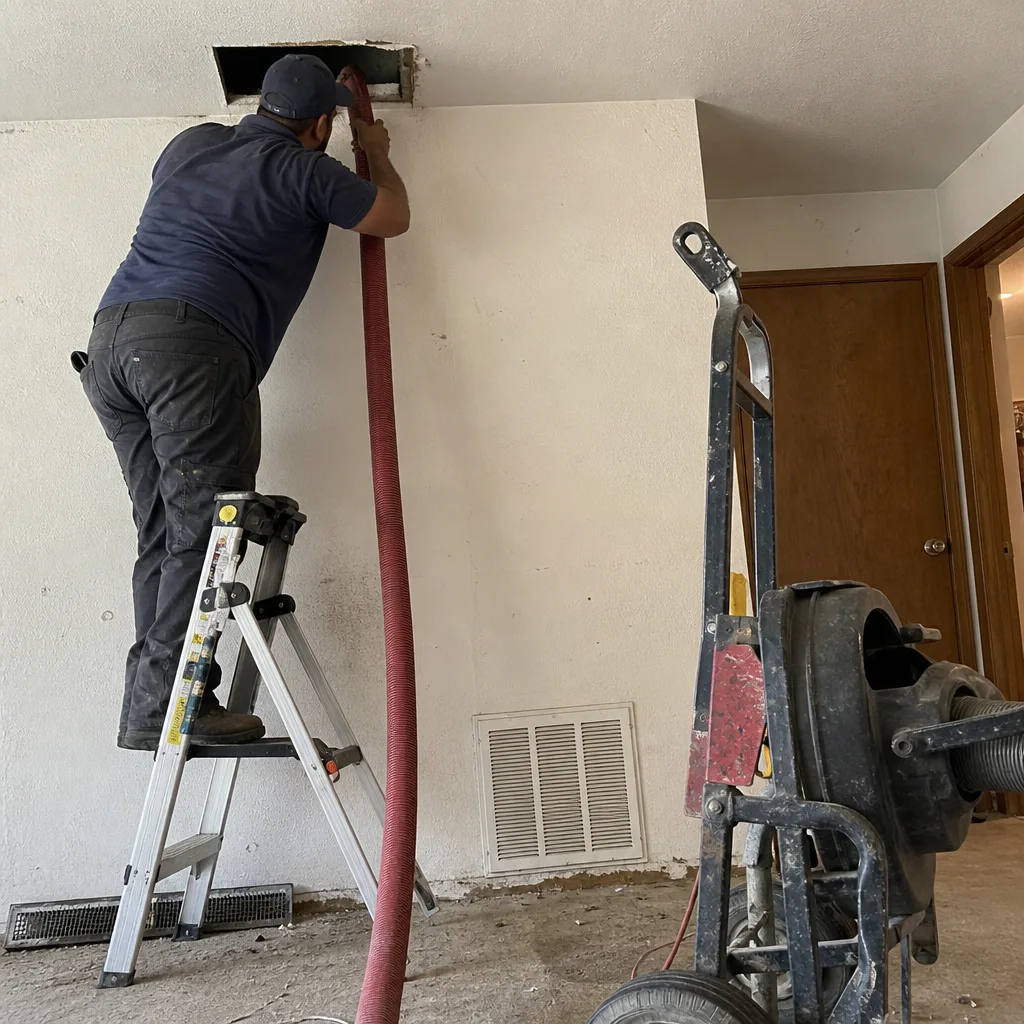 Before
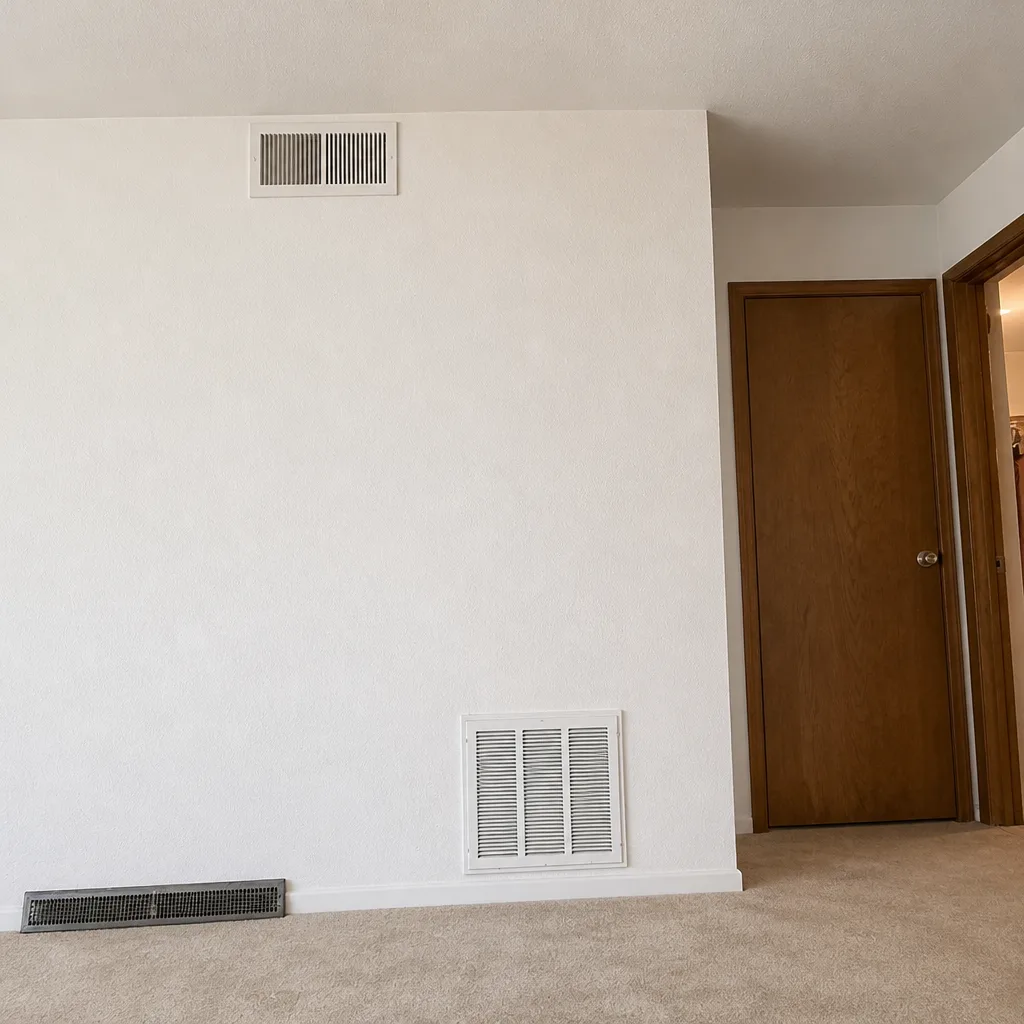 After
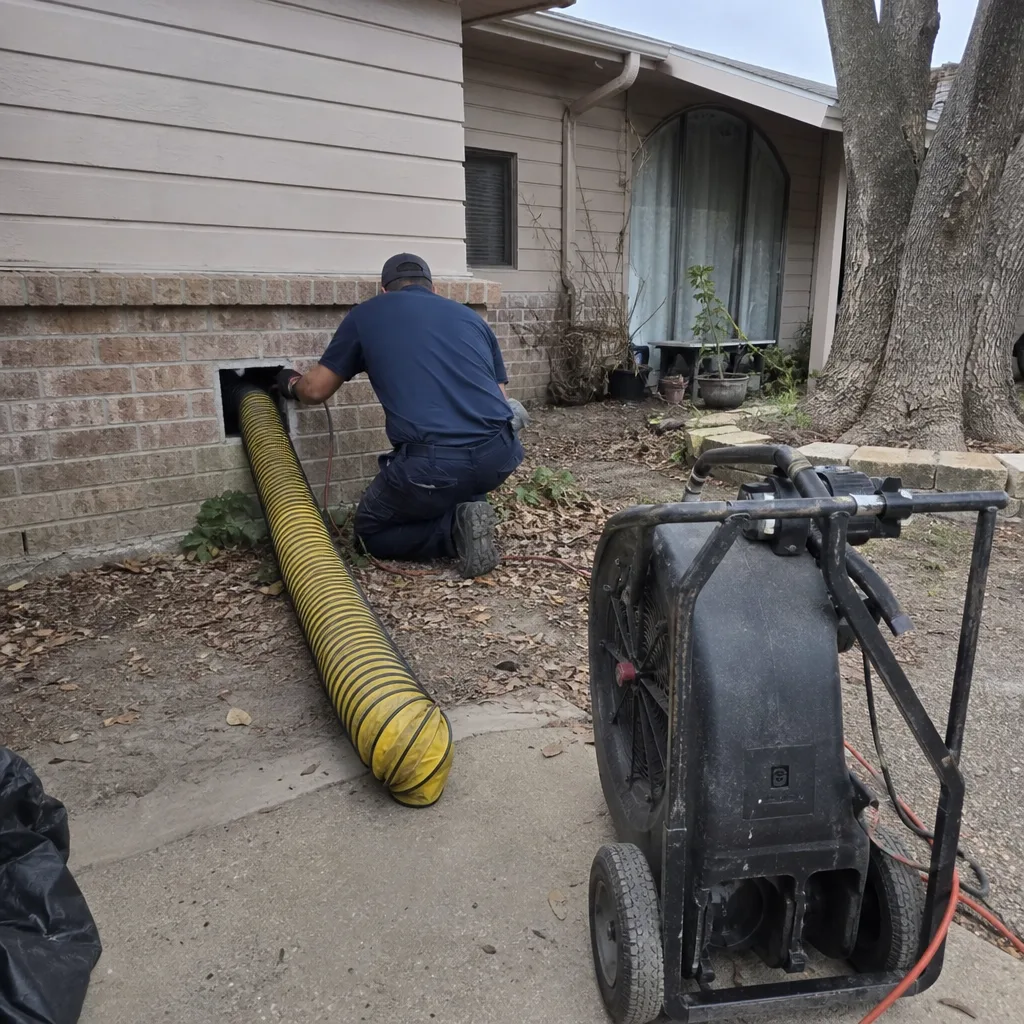 Before
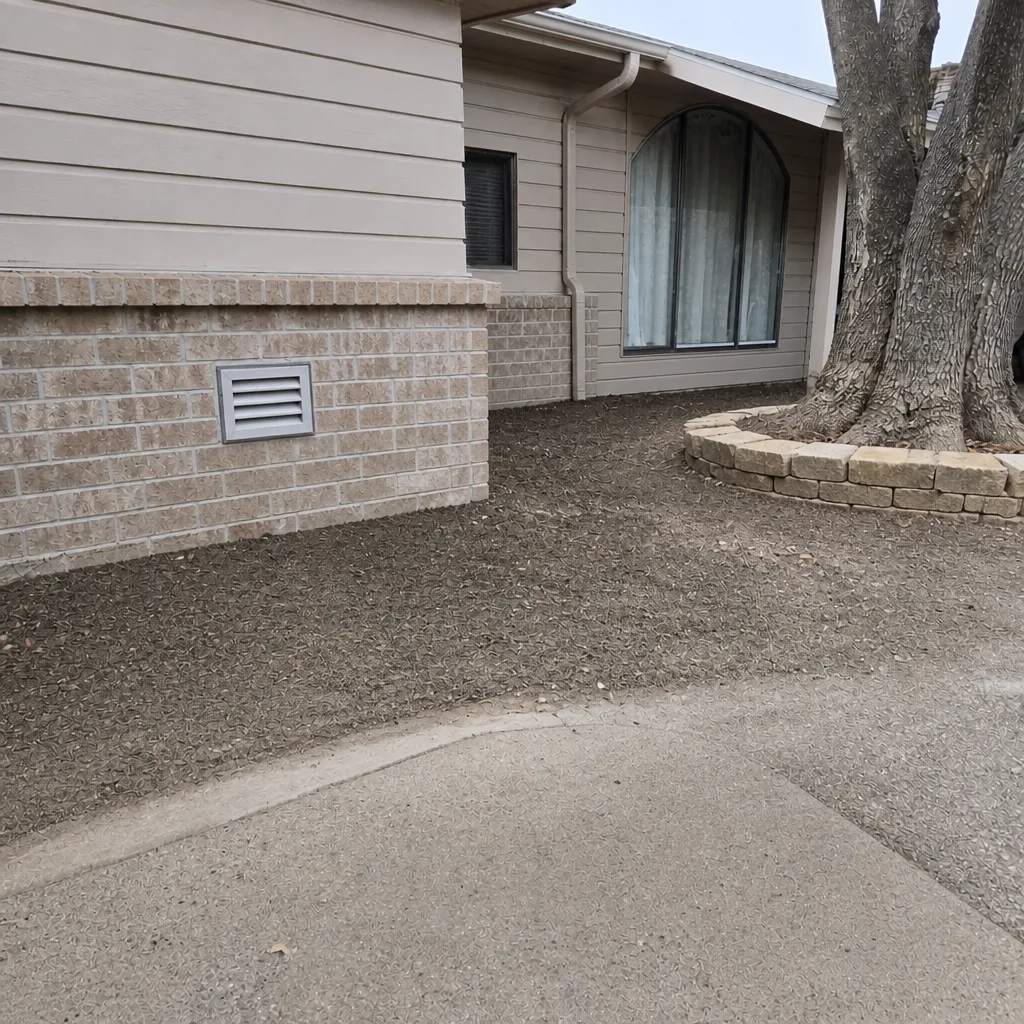 After
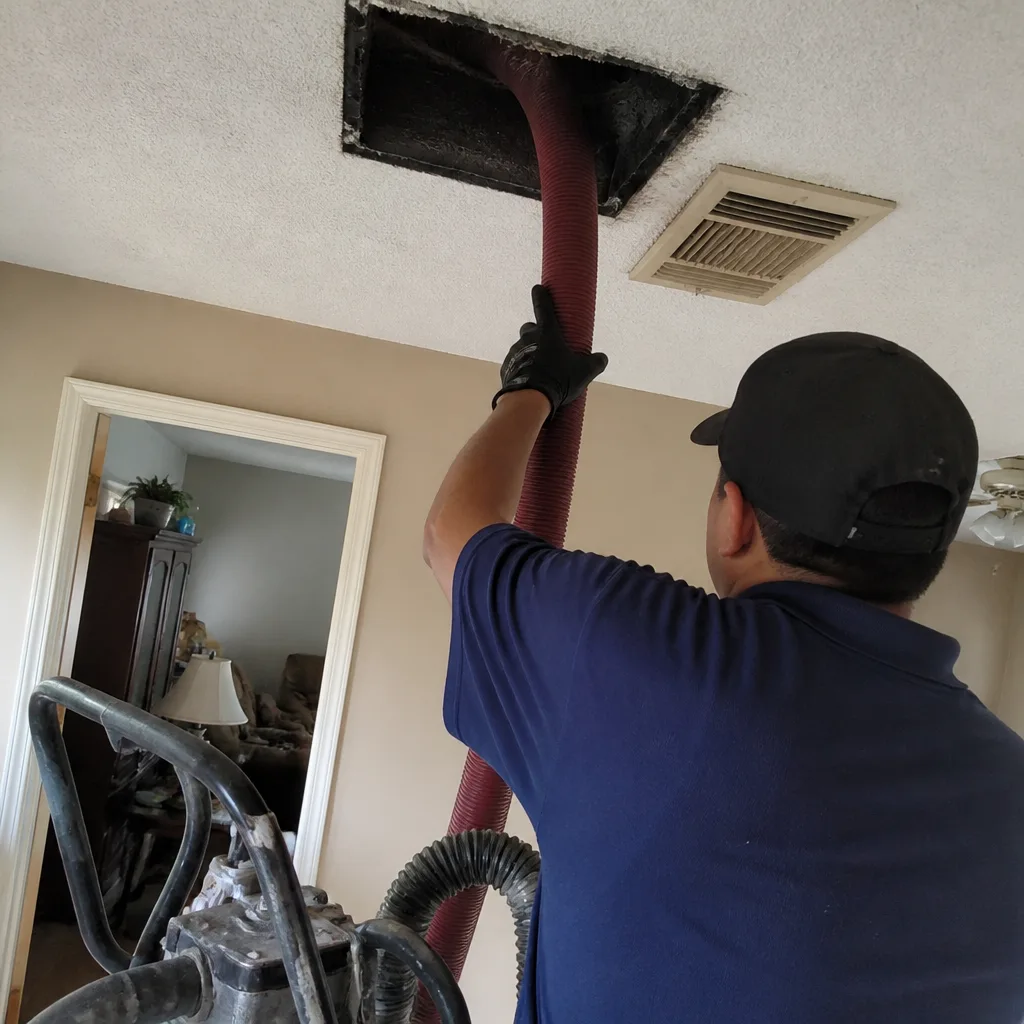 Before
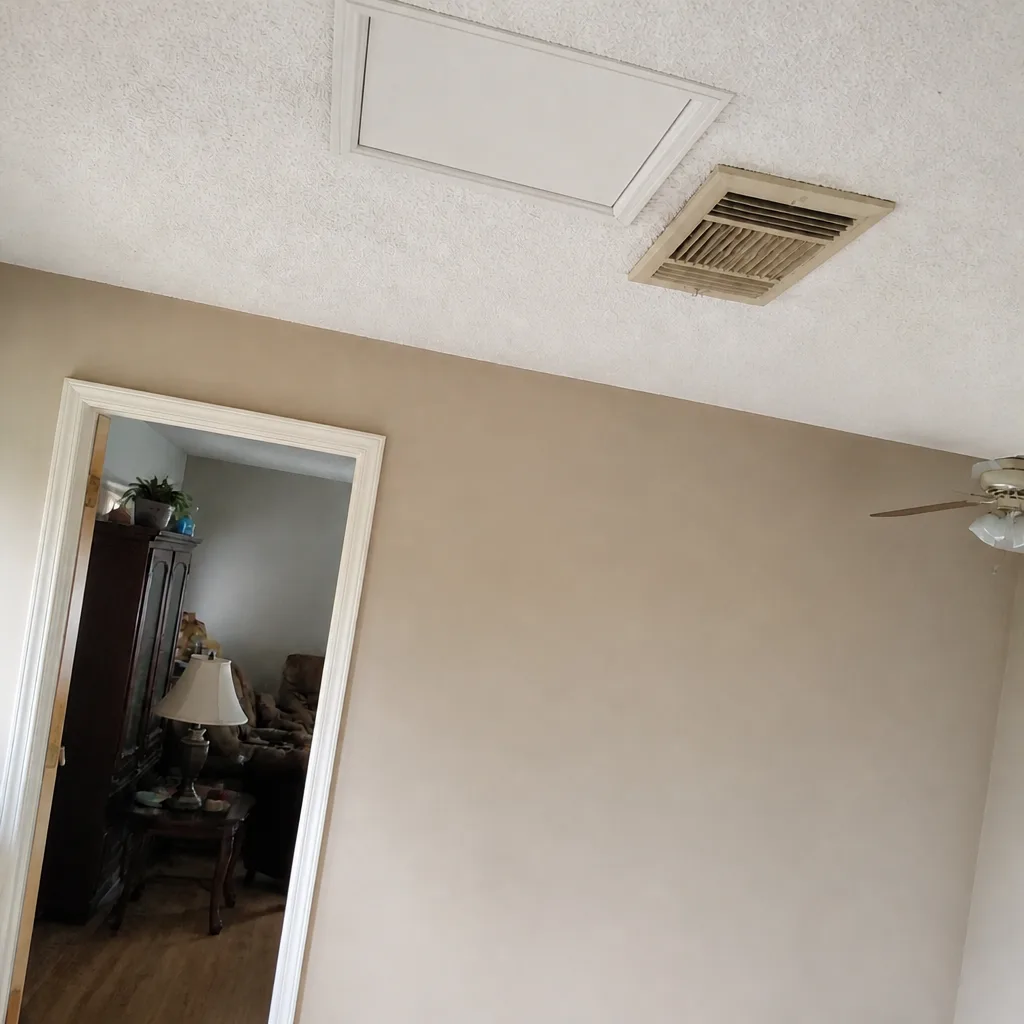 After
When to Call a Professional
Some duct issues are worth watching. Others need a professional inspection now. Call if a single room stays uncomfortable while the rest of the house is fine, if you see black streaking or water staining around registers, if a musty or burning smell persists when the system runs, or if you’ve found signs of rodents near the ductwork. The same goes for energy bills that climb with no change in habits, visible dust returning within a day of cleaning, or a dryer that takes far longer than it used to dry a load. Each of these points to a problem that surface cleaning won’t solve. Duct Cleaning Mesquite offers free estimates in Mesquite: call (855) 360-8359. We answer 24/7. Fast dispatch from 7am to 7pm, Sunday through Friday, closed Saturday. Our technicians have up to 10 years of experience and bring commercial-grade equipment to every job.
Frequently Asked Questions
The most common warning signs are uneven room temperatures, visible black streaking or water staining around registers, musty or burning odors when the system runs, unexplained energy bill increases, and signs of rodent activity near ductwork. Each points to a duct integrity or contamination issue. If you notice two or more together, visit Mesquite services to see how we evaluate a system. Call (855) 360-8359 for an exact quote. Estimates are free.
Cost depends on the size of the system, the number of runs, and whether repair work is needed alongside cleaning. Reputable providers give a flat price per system, agreed before work starts, not a per-vent figure. The written estimate sets the final price. The cheapest quote is often the one that leaves the problem in place, so look at what equipment and inspection are included rather than the number alone. Call (855) 360-8359 for an exact quote. Estimates are free.
A cheap quote usually means less work: an entry-level tool, no proper inspection, and no follow-up repair when the ducts turn out to be damaged. Professional-grade equipment like Rotobrush and Nikro systems costs more and does more, and a real inspection finds problems a quick vacuum never sees. A cheaper quote can end up costing more when the underlying issue goes unfixed. Call (855) 360-8359 for an exact quote. Estimates are free.
Ask for before-and-after photos of your own ducts. Any provider doing real work should be able to show you what changed. A provider that can’t produce visual proof of the work is asking you to take it on faith. We take photos on every job, and you get an inspection of the system along with the clean. Call (855) 360-8359 for an exact quote. Estimates are free.
Most homes don’t need duct cleaning on a strict schedule. The right interval depends on the home, whether pets or allergies are involved, and whether there’s been water damage or pest intrusion. A good rule is to have the system inspected when you notice warning signs rather than on a calendar. Signs like black streaking, musty odors, or one room that never gets comfortable are a reason to inspect. Call (855) 360-8359 for an exact quote. Estimates are free.
Cleaning alone won’t fix uneven temperatures if the cause is a disconnected, crushed, or leaking duct run. In that case, the fix is air duct repair rather than cleaning. The right first step is an inspection to identify whether the problem is contamination or a structural failure in the run. We offer cleaning and repair as separate services, so the diagnosis guides the work. Call (855) 360-8359 for an exact quote. Estimates are free.
The Bottom Line
The duct problems that cost Mesquite homeowners the most don’t arrive as loud emergencies. They arrive as one uncomfortable room, a smell you’ve stopped noticing, a bill that crept up. The value of this guide is in connecting each quiet symptom to its cause: uneven temperatures to a failing run, black streaking to moisture or combustion bypass, odors to their source, rising usage to leakage, and pest signs to contamination that cleaning alone won’t clear. When you know what you’re seeing, the next step is clear. Get a professional duct cleaning in Mesquite inspection and a written estimate before you spend another season guessing. Call (855) 360-8359. We answer 24/7. Fast dispatch from 7am to 7pm, Sunday through Friday, closed Saturday. A flat price per system is agreed before work starts, backed by before-and-after photos of your own ducts.
Written by the team at Duct Cleaning Mesquite.