
Last updated November 15, 2026
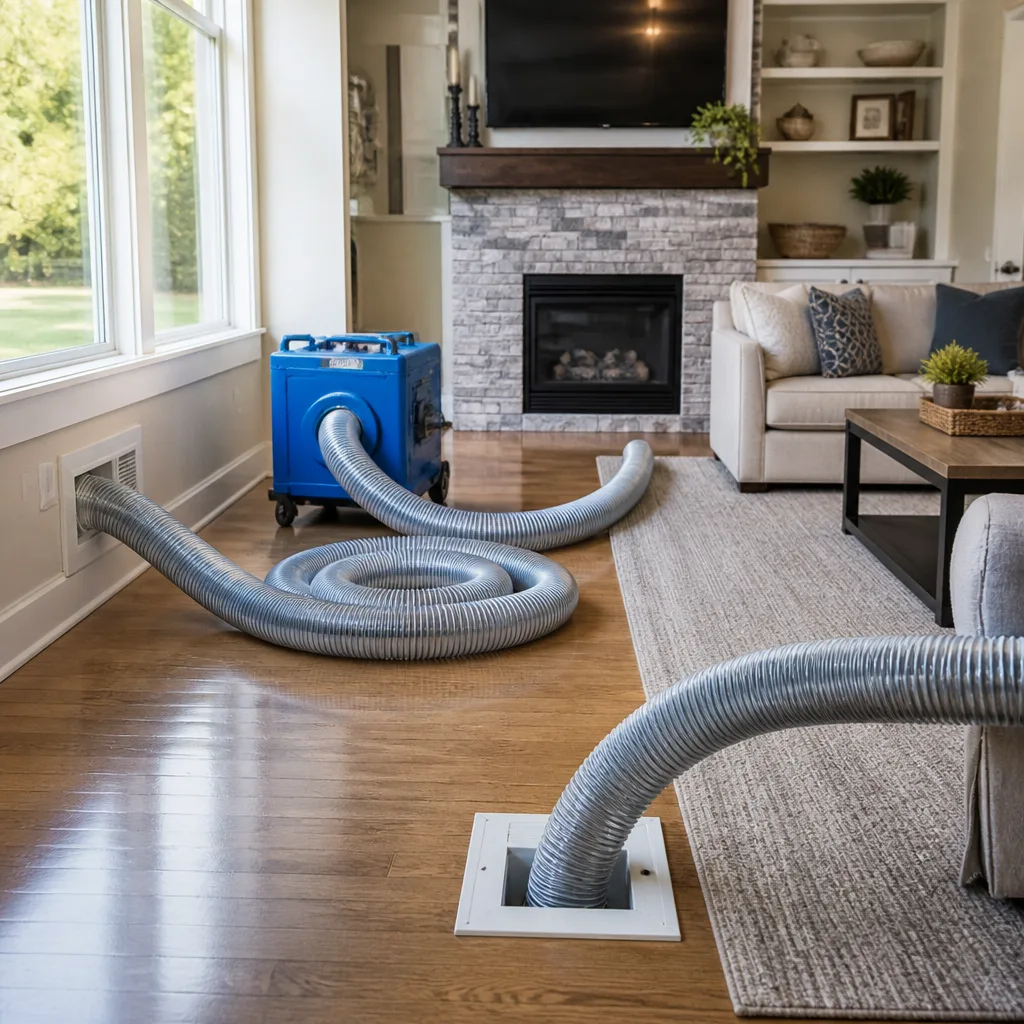 Whole-home duct cleaning
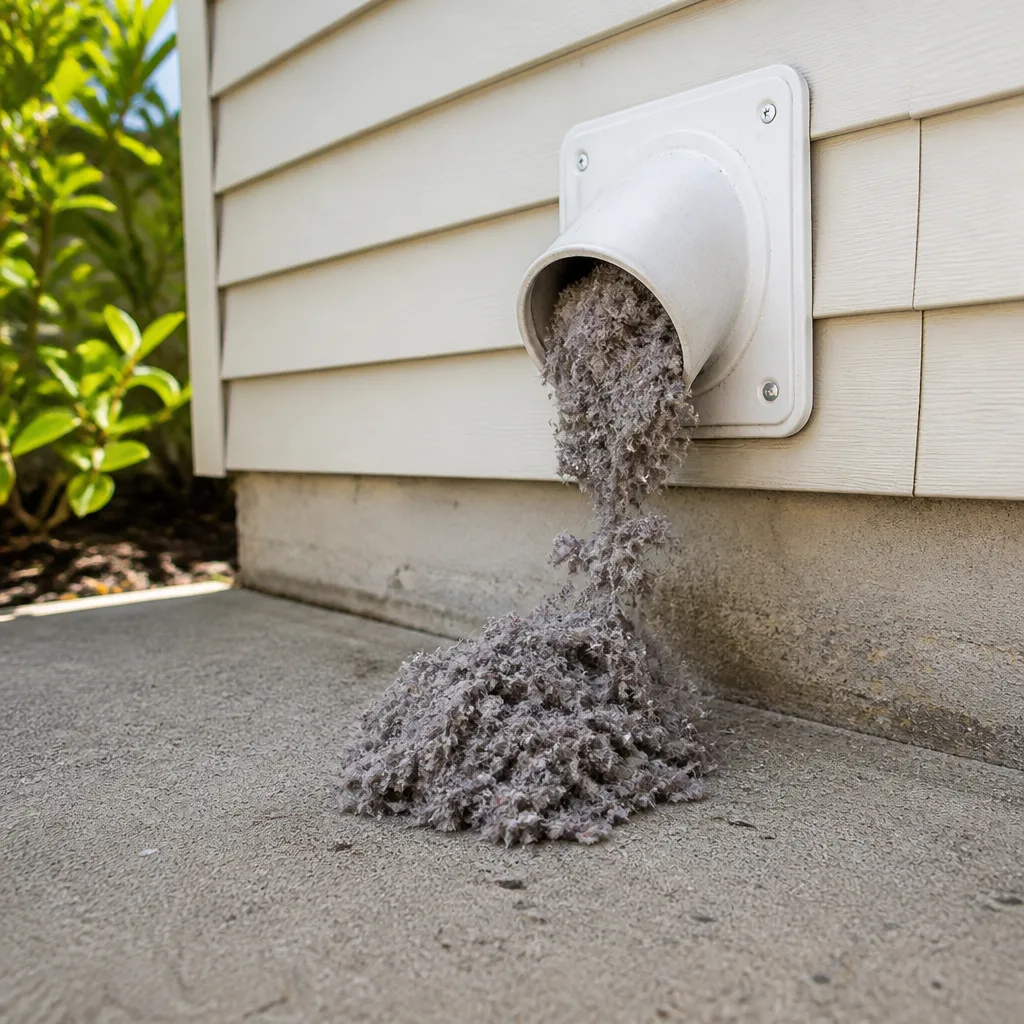 Dryer vent cleaning
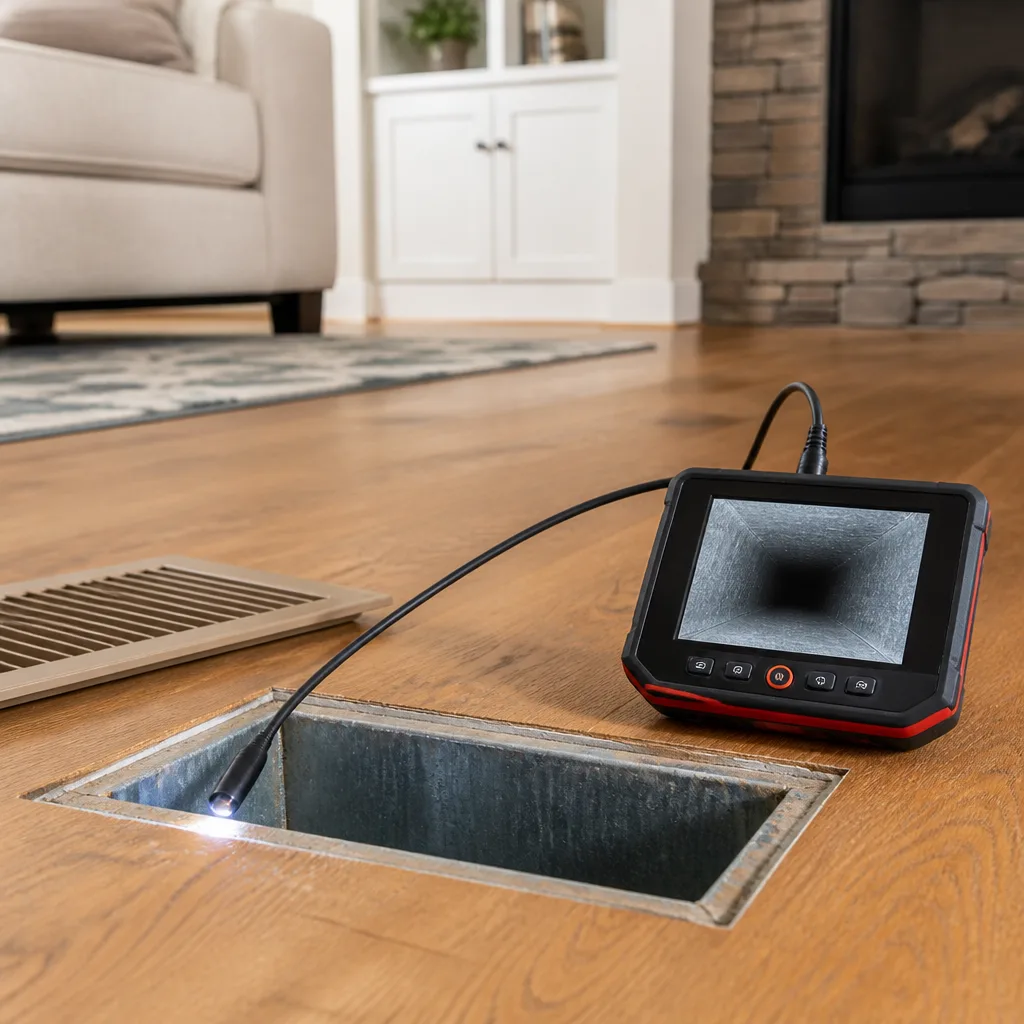 Camera inspection
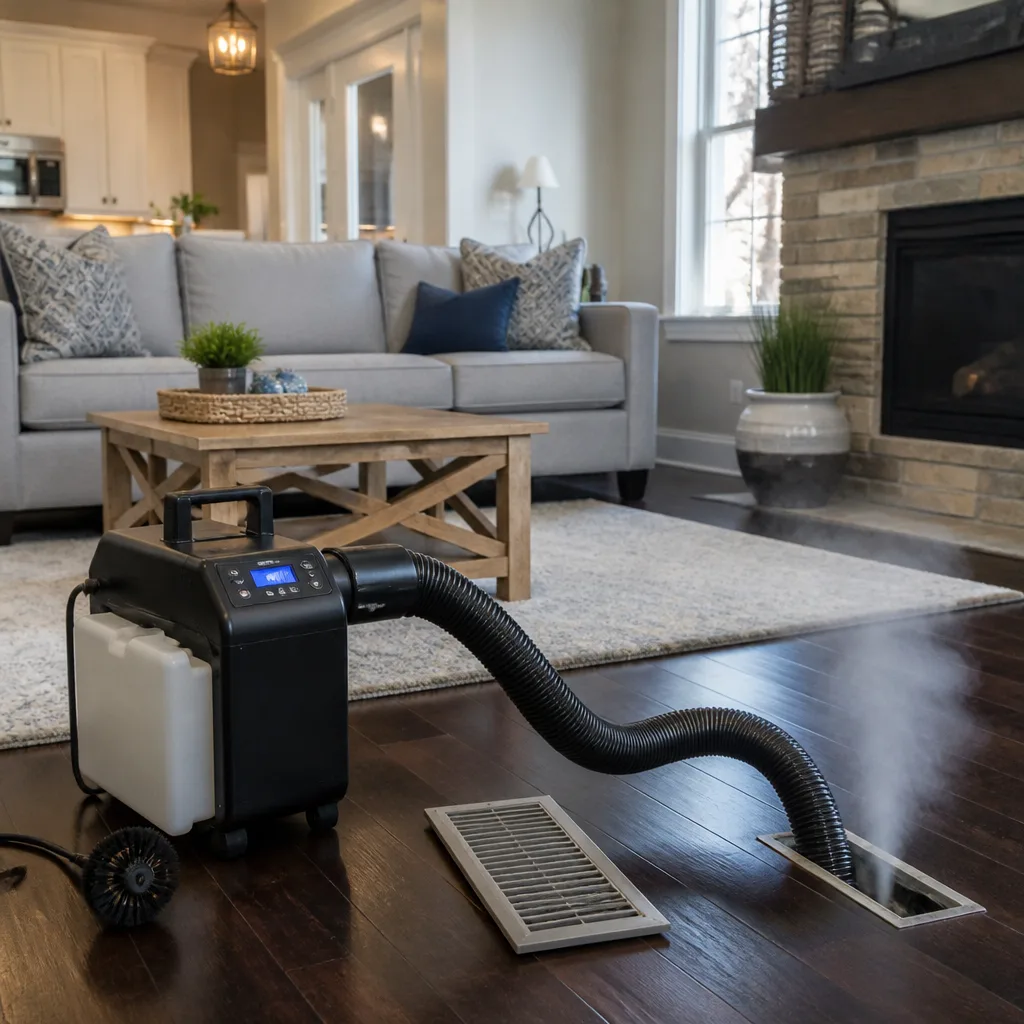 Sanitizing & deodorizing
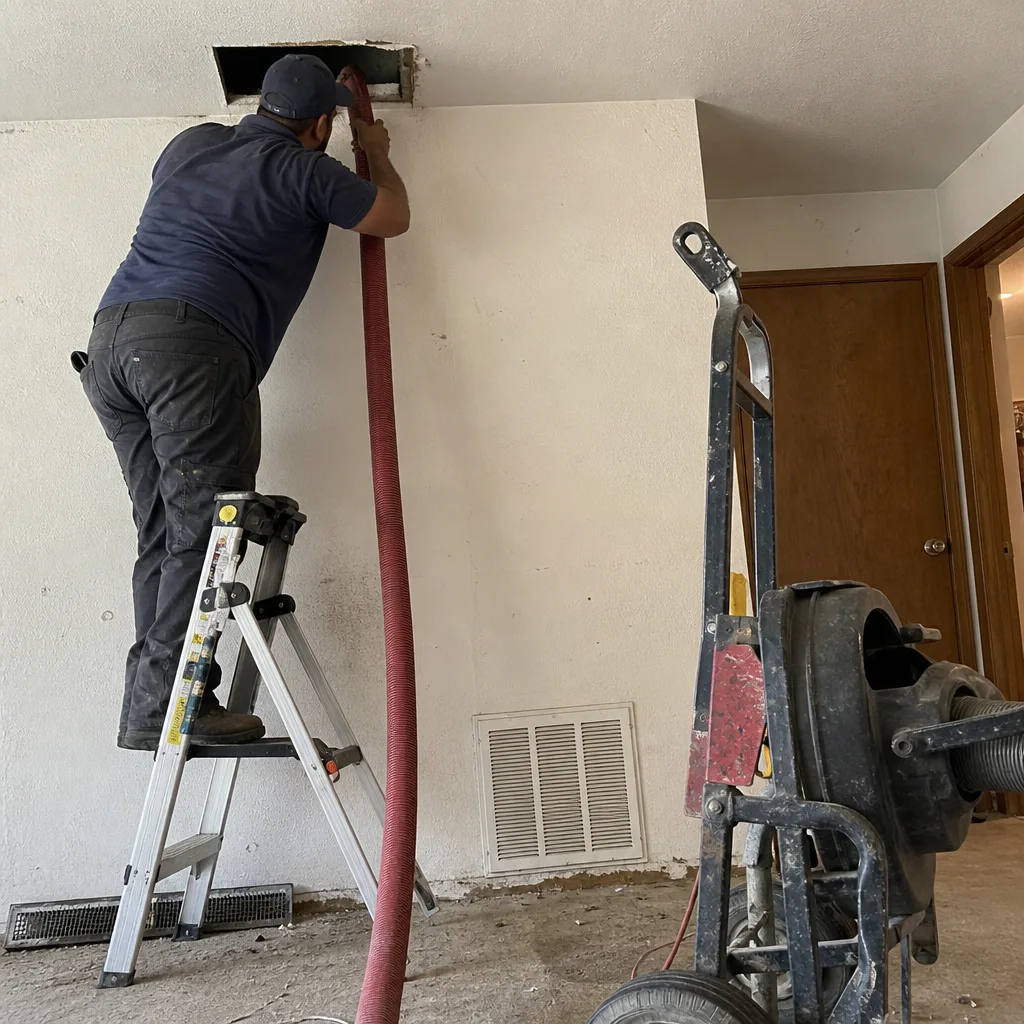
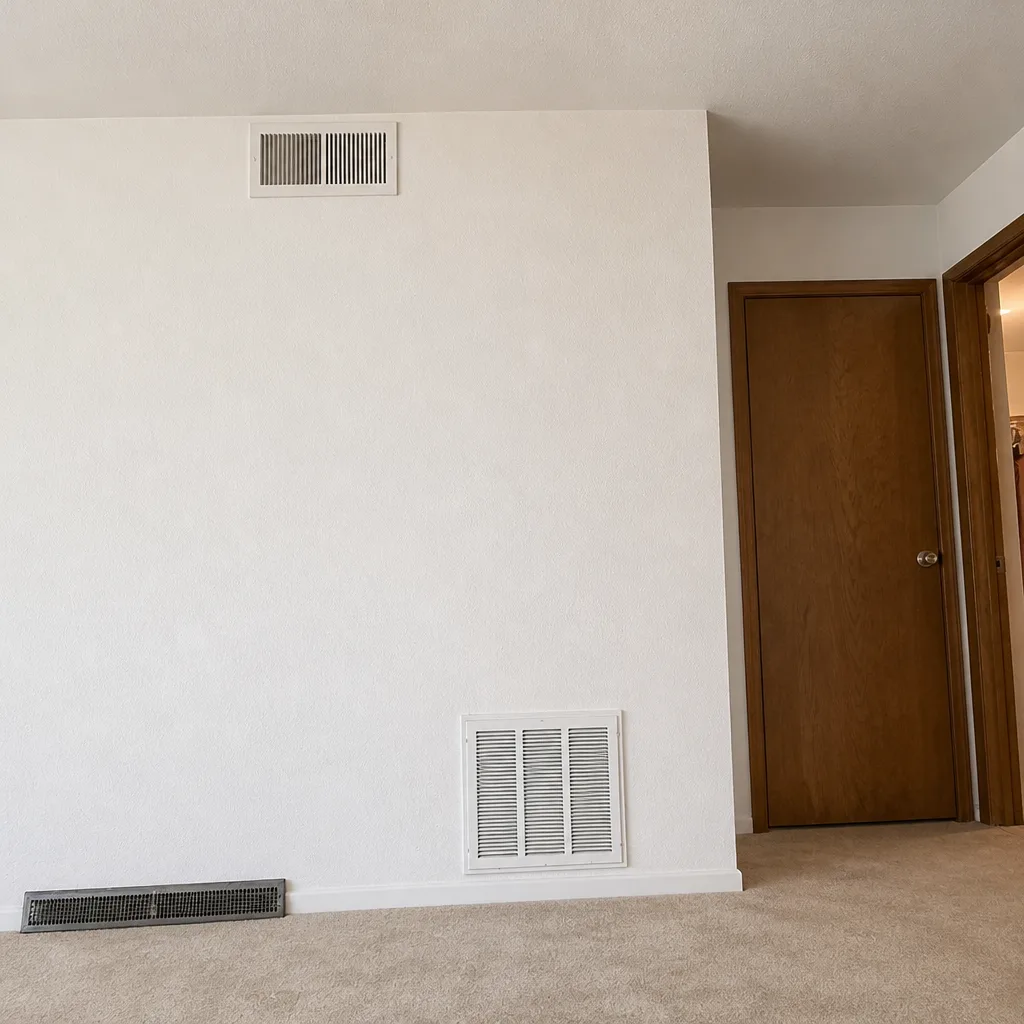
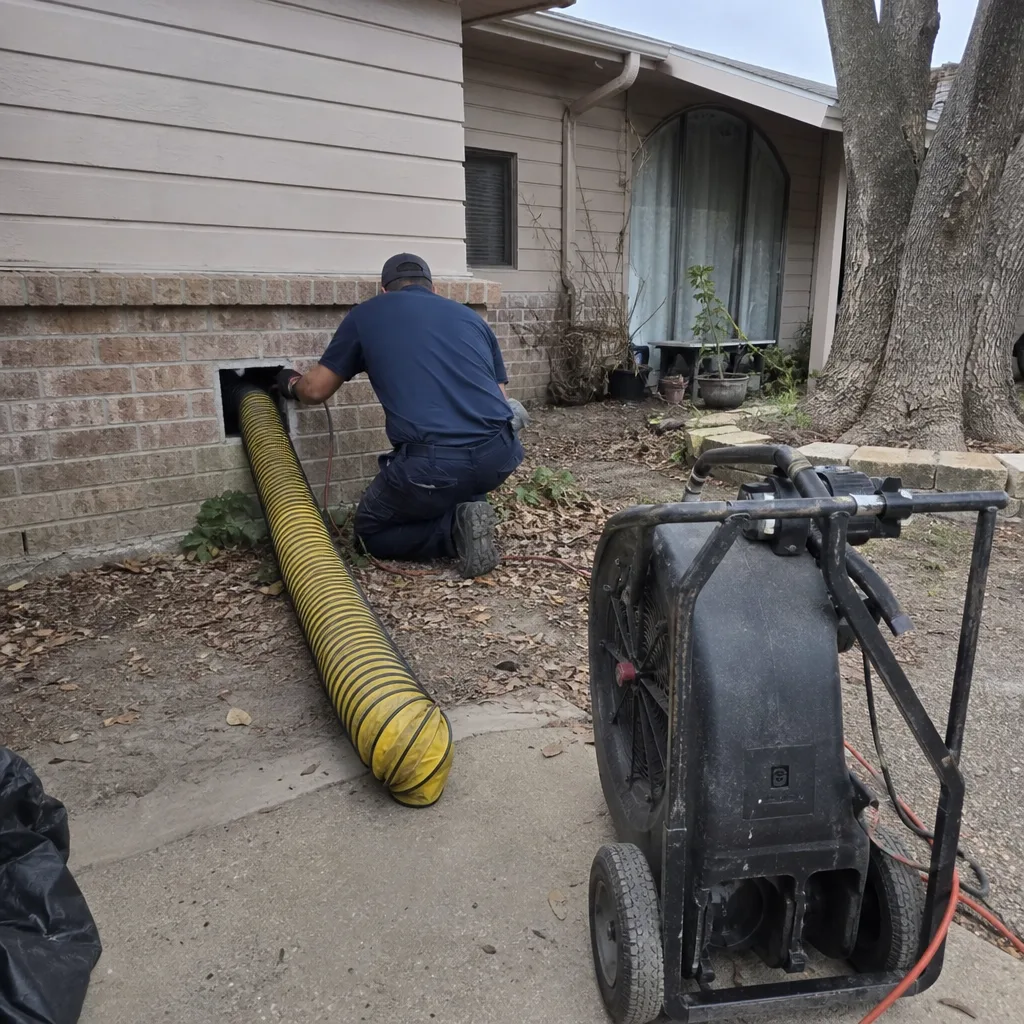
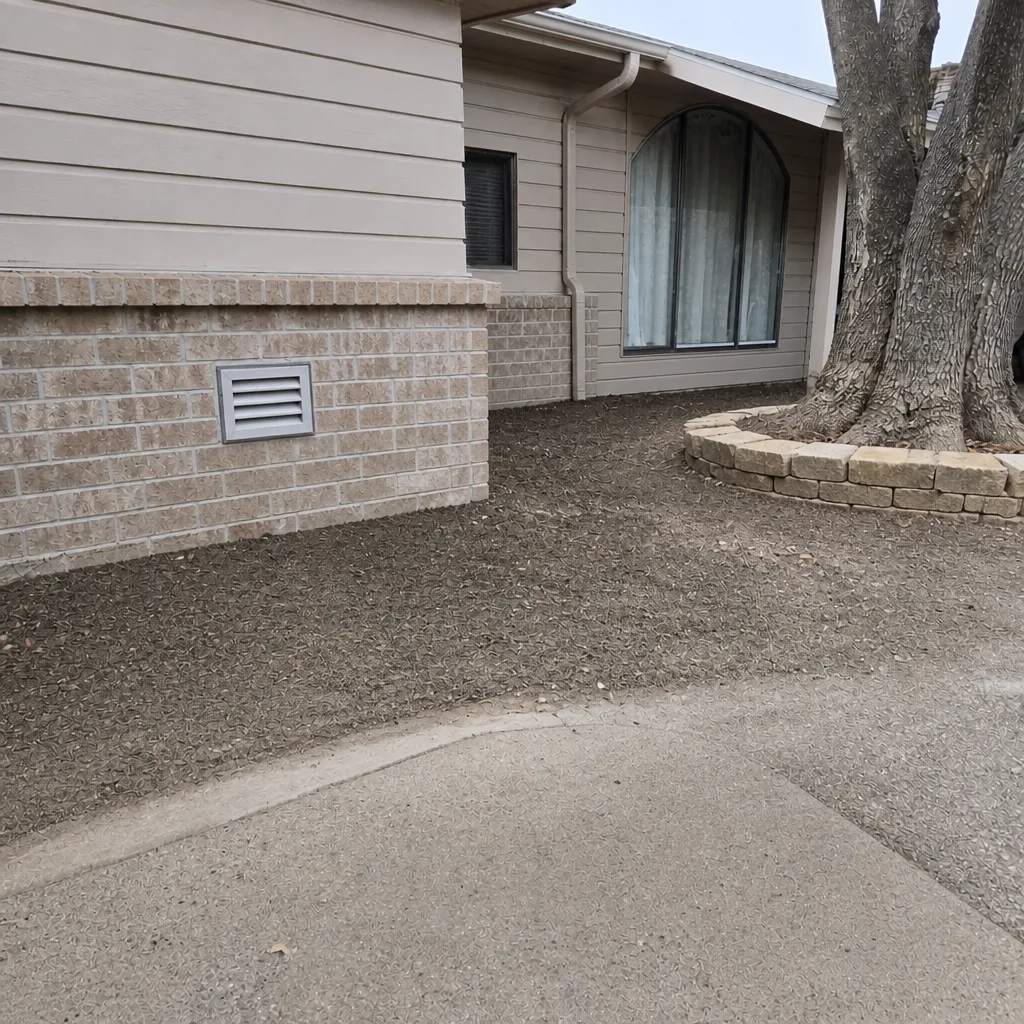
Whole-system duct and dryer vent check with before-and-after photos - you see exactly what came out of your vents
That "$99 whole-house special" is a bait ad - the real number appears once they are in your hallway, or the "clean" is a shop-vac at the register. We photograph the inside of your ducts before and after instead.
Air Duct Cleaning Troubleshooting in Mesquite: Common Problems and How to Fix Them
If one room in your Mesquite home is always five degrees hotter than the rest, your thermostat isn’t lying – your ductwork probably is. That temperature split is one of six diagnostic signals most cleaning crews never mention. Homeowners tend to blame the HVAC unit for uneven cooling, dust that settles within a day of cleaning, or musty smells that show up in the spring. In our experience, the duct system itself is broadcasting the problem long before the equipment fails. This guide walks through the most common duct problems we troubleshoot in Mesquite homes, how to read the symptom you’re already seeing, and when the fix is cleaning, repair, or a full air-quality upgrade.
Quick Answer
Most air duct problems in Mesquite come down to three root causes: debris buildup that restricts airflow, physical damage such as collapsed flex duct or disconnected joints, and moisture inside the ductwork that supports odor and mold growth. Cleaning resolves the first. Repair resolves the second. Abatement-grade equipment and targeted filtration resolve the third. Matching the symptom to the cause before you book anyone is the fastest way to avoid paying for the wrong service.
Styles & brands we work with
- Whole-home duct cleaning
- Dryer vent cleaning
- Camera inspection
- Sanitizing & deodorizing
Table of Contents
- The Six Signals Your Ductwork Is Already Sending
- How to Map Uneven Airflow Room by Room
- Why Musty Odors Appear After Cleaning, Not Before
- Debris Buildup vs. Mold: Distinguishing the Two
- Rattling Ducts: Disconnected Joint or Normal Expansion?
- When a DIY Register Brush Is Enough and When It Isn’t
- When the Problem Is Repair, Not Cleaning
- Common Mistakes to Avoid
- When to Call a Professional
The Six Signals Your Ductwork Is Already Sending
Duct problems rarely announce themselves all at once. They leave clues in temperature, dust patterns, sound, and smell. Before anyone sets foot in your attic or crawlspace, the system has usually already told you what’s wrong. Here are the six signals we look for first when troubleshooting ducts in Mesquite homes.
- A persistent temperature split between rooms. If the same room runs hot or cold regardless of season, the duct serving it is restricted, leaking, or disconnected.
- Dust settling within 24 to 48 hours of cleaning. Constant surface dust points to debris being pushed back into living space through leaks or loose joints rather than filtered out.
- A musty or stale smell that spikes when the blower starts. Odors that ramp up when the system kicks on point to a moisture or contaminant source inside the duct itself.
- Rattling or knocking during startup and shutdown. You’ll need to tell the difference between a disconnected joint and normal sheet-metal movement (covered below).
- Weak airflow at one or two registers only. A single weak vent usually means a blocked register or a branch line problem, not a whole-system issue.
- A noticeable rise in allergy symptoms indoors. When symptoms improve away from home and worsen indoors, the ductwork is a prime suspect worth ruling out.
Reading these signals accurately saves you from booking the wrong service. A cleaning appointment won’t fix a collapsed flex duct, and a repair visit won’t resolve years of accumulated debris. The point of troubleshooting is to match the symptom to the right service before authorizing any work.
How to Map Uneven Airflow Room by Room
The tissue test is the simplest diagnostic tool a homeowner has. Take a single square of tissue paper and hold it loosely against each supply register in your home for about ten seconds. The way it moves tells you more about your duct system than any thermostat reading.
Here’s how to run the test properly:
- Turn the HVAC system to fan-only so the blower runs without heating or cooling.
- Hold the tissue flat against each supply register, one at a time, and note whether it flutters strongly, waves weakly, or drops away.
- Compare the strongest register in the house to the weakest. A large gap between them points to a specific delivery problem.
- Repeat the test at the return registers to check whether the system is pulling air back the way it should.
- Write down the results room by room on a simple floor-plan sketch.
Three patterns tend to emerge. If a room has zero airflow, the register is likely blocked, the damper is closed, or the branch line has disconnected entirely. If a room has weak airflow relative to others, a collapsed flex duct or a partially crushed section is the usual culprit. If the whole house feels weak, the problem sits closer to the main trunk line or the air handler itself, and a leaking trunk line becomes a real possibility. In Mesquite homes with long attic runs and single-story ranch layouts, the weak-room pattern shows up most often in bedrooms on the far end from the air handler. Mapping the pattern before calling anyone means the technician starts with the right question instead of a full sweep.
Why Musty Odors Appear After Cleaning, Not Before
A smell that shows up after a duct cleaning is a warning sign, not a coincidence. Before cleaning, a layer of dust and debris often sits over the interior surfaces of the duct and masks the odor underneath. Once that layer is disturbed, the moisture problem below becomes detectable. In other words, a musty smell after cleaning tells you the cleaning revealed something it couldn’t remove.
The usual source is condensation. In Mesquite’s humid summers, cool supply air moving through ductwork in a hot attic creates a damp surface inside the duct, especially on insulated flex lines where the inner liner has been torn or compressed. Mold and mildew settle in, and routine vacuuming won’t reach it because the contamination is bonded to the liner, not sitting on top of it.
This is where the equipment matters more than the price. Resolving duct-level moisture calls for negative-pressure containment so spores aren’t blown into living space during the work, plus treatment beyond a standard surface pass. We use Abatement Technologies equipment on jobs where contamination and particulates are part of the picture, because a surface-level vacuum simply cannot handle that level of indoor air quality work. If you’re scheduling air duct cleaning and the ducts have a damp, musty edge, say so when you book. The team needs to arrive prepared for moisture, not just dust.
Longer term, the answer to recurring moisture is whole-home filtration and humidity control. We work with Honeywell and Aprilaire products to add filtration and purification to a home, so the duct system supports air quality rather than undermining it.
Debris Buildup vs. Mold: Distinguishing the Two
Debris buildup and mold amplify different symptoms, and homeowners often conflate the two. Debris produces gradual loss – airflow softens over months, the house takes longer to cool, dust settles more quickly. Mold produces spikes – the smell ramps up sharply when the blower kicks on, and it tends to cycle with weather.
Here’s the simplest way to tell them apart:
- Debris buildup grows slowly. You notice it as a drop in efficiency and comfort over weeks or months, not hours.
- Mold growth spikes. The musty smell ramps up the moment the blower starts and fades when it stops.
- Debris shows up as dust settling behind furniture and dark staining on register grilles.
- Mold often shows as visible dark staining inside the register itself, on the supply side, near a wet spot in the duct liner.
- Debris responds to a full-system cleaning.
- Mold typically needs both cleaning and a moisture fix, and sometimes liner replacement, before it stops returning.
Getting the diagnosis wrong is expensive. Cleaning a mold problem without addressing moisture just gives it a clean surface to regrow on. Conversely, treating a debris problem as a mold problem can add cost with no real benefit. This distinction is why we ask about smell timing during intake. A five-second answer to “does the smell spike the moment the blower starts?” narrows the diagnosis quickly.
Rattling Ducts: Disconnected Joint or Normal Expansion?
A rattle is not automatically a repair job. Sheet-metal ducts expand and contract as they heat and cool, and a light metallic tick during startup or shutdown is often nothing more than normal movement in the trunk line. It’s the pattern and timing that separate normal from a real problem.
Use this quick classification:
- Normal expansion: light, even ticking that shows up briefly as the system starts and settles down within a minute or two.
- Disconnected joint: a sharper, uneven clatter or bang, often repeating through the whole run, and often accompanied by reduced airflow nearby.
- Loose flex duct: a soft flapping sound, usually tied to an uncompressed run that has sagged in the attic.
- Balancing damper rattle: a small clinking vibration from a damper that has come loose in its bracket.
If a rattle coincides with a weak register in the same part of the house, treat it as a disconnected joint until proven otherwise. That’s an air duct repair question, not a cleaning question. We can pull the register, inspect the joint, and confirm the source in a single visit. If the joint is intact and the rattle is expansion, we’ll say so and leave the system alone. There’s no upside to quoting a repair that isn’t needed.
When a DIY Register Brush Is Enough and When It Isn’t
A register brush is a real tool with a real use case, and it’s worth being honest about both. It handles visible surface dust at the vent opening. It does not handle anything past the first few inches of duct, and it does not touch the trunk line, branch runs, or the coil area.
The line is clear:
- DIY is fine when: you’re dusting the face of the register grille, removing visible lint from the return vent cover, or cleaning a small access point you can reach safely without tools beyond a screwdriver.
- DIY is not enough when: the problem is systemic (multiple weak registers), the problem is in the trunk line or a branch run, there’s any sign of moisture or odor, or the issue involves a repair to flex, sheet metal, or a joint.
Commercial-grade negative-pressure equipment matters most in the systemic cases. On a proper job, we connect a high-volume vacuum to the trunk line and use compressed air whips to loosen debris throughout the system while the whole run is under negative pressure, so the debris leaves the house instead of settling in living space. We use both Rotobrush and Nikro systems on jobs, not a single entry-level tool, because different duct materials and configurations respond differently. Also worth knowing: we finish with Guardsman products where the job calls for protective treatment after cleaning. None of that is replicable with a register brush.
One more rule to hold onto. If a problem involves an electrical component, an air handler, or anything inside the HVAC cabinet itself, leave it alone. Duct cleaning in Mesquite is our lane, and serious air quality abatement is our lane, but HVAC trade work isn’t, and we’ll tell you when something belongs to a different specialist.
When the Problem Is Repair, Not Cleaning
Clean ducts are only half the story. A duct system that delivers clean air through a collapsed branch line is still failing. Repair is a category of work cleaning crews often don’t offer, and it’s the reason so many problems come back after a cleaning visit.
Repair is the right call when you see:
- A branch line that’s disconnected from the trunk, common in attic runs where flex duct has sagged out of its collar.
- Crushed or collapsed flex duct from a heavy drop during an attic move or a remodel.
- Failing seals at joints, especially where tape has loosened with age and heat cycling.
- Torn inner liners in insulated flex that let cool air meet attic heat and create condensation.
We handle repair as a standalone service so the cleaning and the fix happen within the same relationship. That matters most when the repair itself is what’s causing a comfort problem. In our experience, a fair share of “our AC can’t keep up” complaints in Mesquite turn out to be a duct-side problem: a whole branch aimed at a bedroom that’s delivering half the air it should because the run has collapsed. Before any cooling equipment is called into question, the ducts deserve a look. dryer vent cleaning is a separate service from duct repair but follows the same discipline, and the same negative-pressure logic applies.
Common Mistakes to Avoid
- Booking a cleaning when the symptom calls for repair. A collapsed flex duct or an open joint won’t be fixed by cleaning. If one room is silent at the register, ask about repair first.
- Assuming a musty smell means mold you can see. Odor can come from moisture in the liner without any visible growth. Ask your technician to inspect the liner, not just the interior surface.
- Ignoring a rattle that coincides with weak airflow. Normal expansion is even and brief. A sharp, repeating rattle paired with a weak register is almost always a joint problem.
- Treating a register brush as a whole-system fix. It reaches the first few inches. Everything past the register needs equipment that can pull the whole system under negative pressure.
- Skipping the attic or crawlspace in Mesquite summers. The heat and humidity in an unconditioned attic is exactly where flex duct fails and moisture takes hold. If nobody has looked in the attic, nobody has diagnosed your ducts.
- Assuming the air handler is at fault before the ducts are checked. Comfort problems often start in the delivery system, not the equipment. Confirm the ducts are sound before a tech is called out for cooling equipment.
- Putting off the dryer vent as a separate worry. A dryer vent is a leading household fire hazard when it’s clogged. It’s its own service and deserves its own appointment, not a shrug.
When to Call a Professional
Call a professional when the symptom is systemic, when you can’t safely inspect the duct run, or when the problem reappears after a cleaning. Specific situations that warrant a call:
- A room has zero or near-zero airflow at the register, and the grille is clean and the damper is open.
- You’ve spotted a disconnected or crushed run in the attic and want it evaluated.
- A musty smell spikes when the blower starts and doesn’t clear.
- Dust settles heavily within a day of cleaning, suggesting debris is being pushed back indoors.
- You’re in a Mesquite home with a long duct run to the far side of the house, and the comfort gap has widened over time.
Duct Cleaning Mesquite offers free estimates in Mesquite – call (855) 360-8359. We answer 24/7. Fast dispatch from 7am to 7pm, Sunday through Friday. We bring professional-grade equipment, and we can inspect for repair needs as well as cleaning needs in the same visit.
See the difference
 Before
 After
 Before
 After
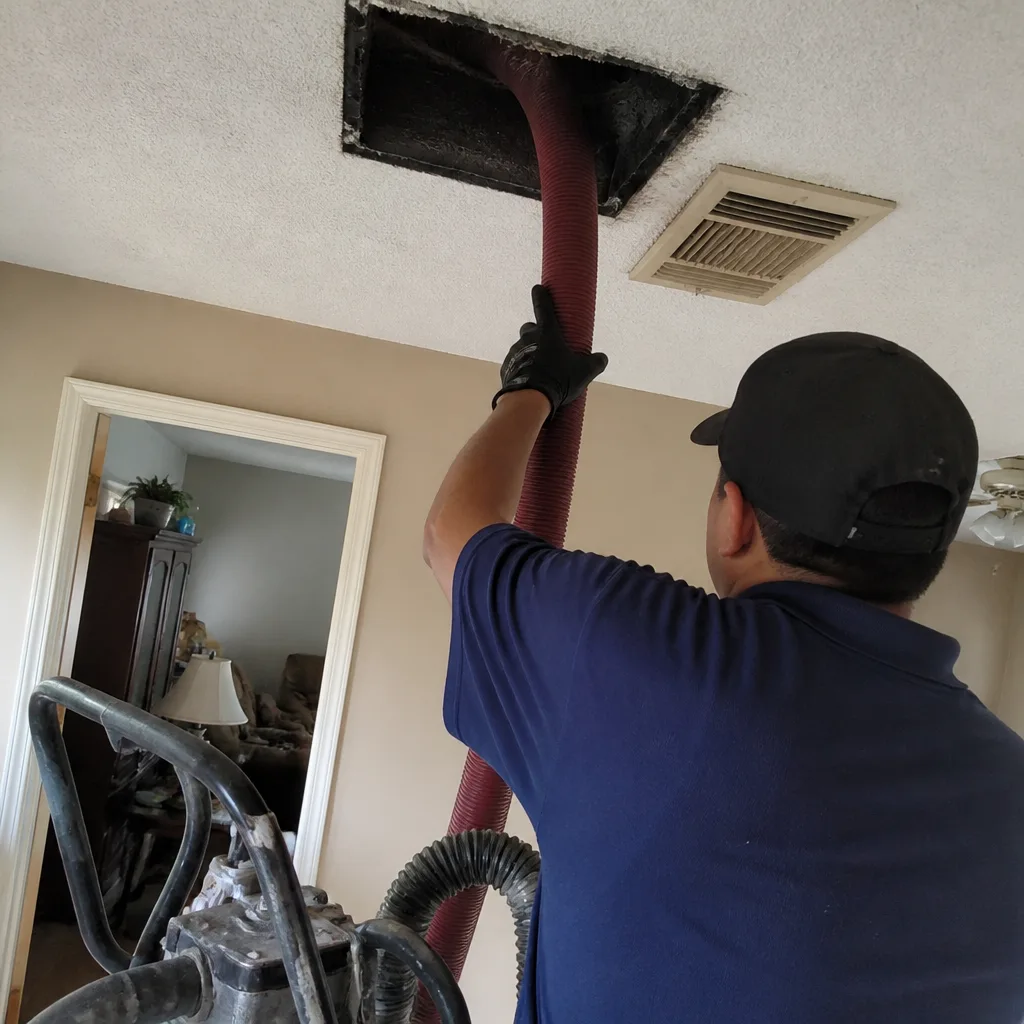 Before
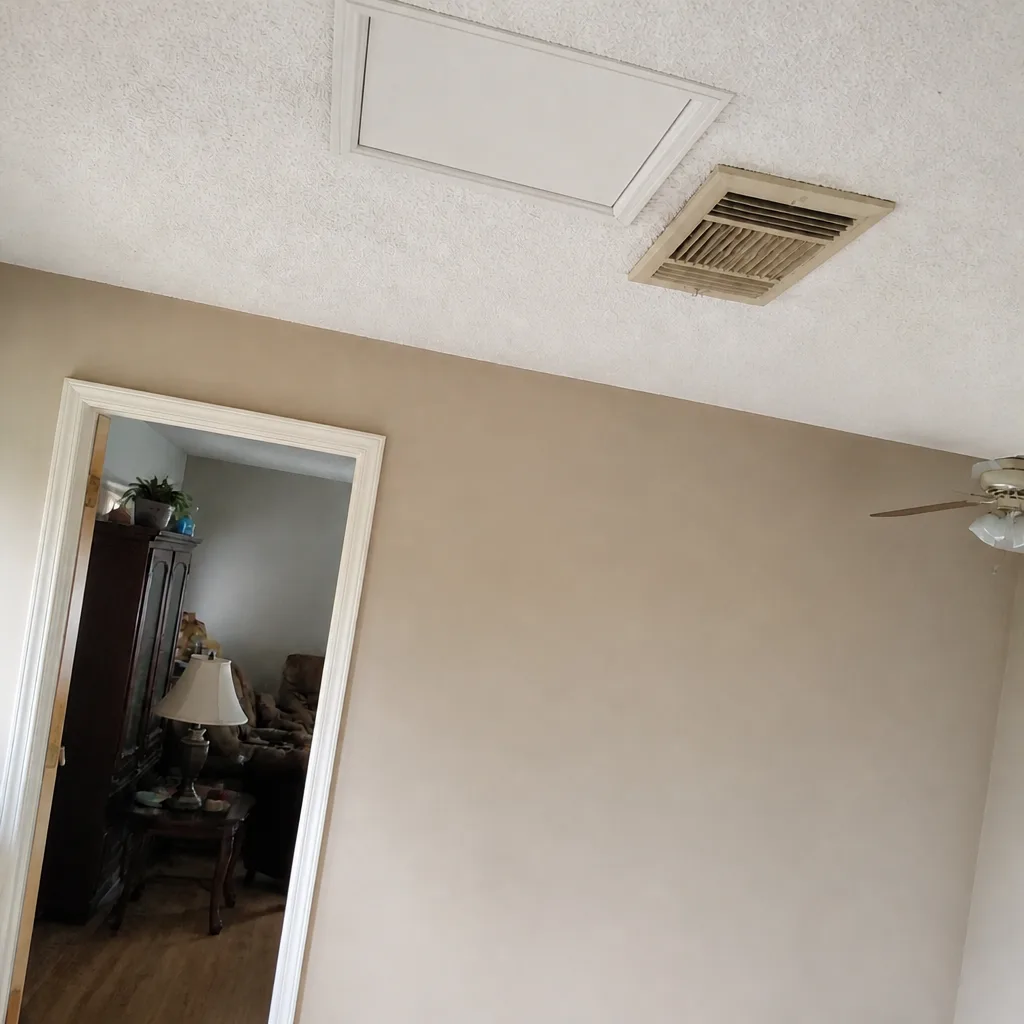 After
Frequently Asked Questions
Air duct cleaning in Mesquite typically runs several hundred dollars for a full system, and we set the price per system by written estimate before any work begins – not by the vent. The estimate is free, and it’s based on the size and configuration of your duct system, not a coupon number that grows once the technician is on site. Call (855) 360-8359 for an exact quote.
Cheaper quotes usually cover a surface pass with a single entry-level tool, and what they leave behind is the actual problem. A full system cleaning with negative-pressure containment and professional equipment takes longer and costs more to run because it actually removes the debris throughout the run. The price you’re comparing is often a different service. Call (855) 360-8359 for a written estimate that reflects the actual scope.
Ask for before-and-after photos of your own ducts, not stock images. A crew that can show you what the system looked like before and after has a real record of the work. We photograph the ducts we clean so you can see the difference. Call (855) 360-8359 to schedule a visit.
Most Mesquite homes benefit from duct cleaning every few years, and sooner if you’ve had a remodel, a pet addition, or visible debris blowing out of the registers. If anyone in the home has allergies or asthma, or if you’ve noticed a musty smell when the system runs, the interval shortens. Call (855) 360-8359 for a free estimate on your system.
Not necessarily. A musty smell that appears after cleaning usually means the cleaning surfaced a moisture problem in the duct liner that a surface pass can’t resolve. That calls for a moisture inspection and, in many cases, abatement-grade treatment – not another cleaning. Call (855) 360-8359 to book an inspection.
In many cases, yes. A single collapsed run or disconnected joint can usually be repaired in place without touching the rest of the system. We offer air duct repair as a standalone service for exactly that reason. Call (855) 360-8359 to have the run inspected.
The Bottom Line
The duct system tells you what’s wrong before the equipment fails, and reading those signals accurately is the difference between a cleaning, a repair, and a full air-quality upgrade. Uneven airflow, musty odors that spike with the blower, a rattle paired with weak delivery – each points to a different fix. Cleaning handles debris. Repair handles damage. Abatement-grade containment and filtration handle contamination and moisture. For Mesquite homeowners coping with humidity and long attic runs, the right diagnosis is worth more than a cheaper cleaning. When your ducts are sending a signal you can’t read, that’s what the call is for.
Contact Us for a Free Estimate
If the symptoms above match what’s happening in your home, the next step is a real look at your system – not a guess from a phone script. Duct Cleaning Mesquite handles cleaning, repair, and air quality work using professional-grade equipment, including Rotobrush, Nikro, and Abatement Technologies systems, and Honeywell and Aprilaire products where filtration upgrades make sense. Our technicians have up to 10 years of experience in the trade. Call (855) 360-8359 for a free estimate. We answer 24/7. Fast dispatch from 7am to 7pm, Sunday through Friday.
Written by the team at Duct Cleaning Mesquite.