
Last updated November 15, 2026
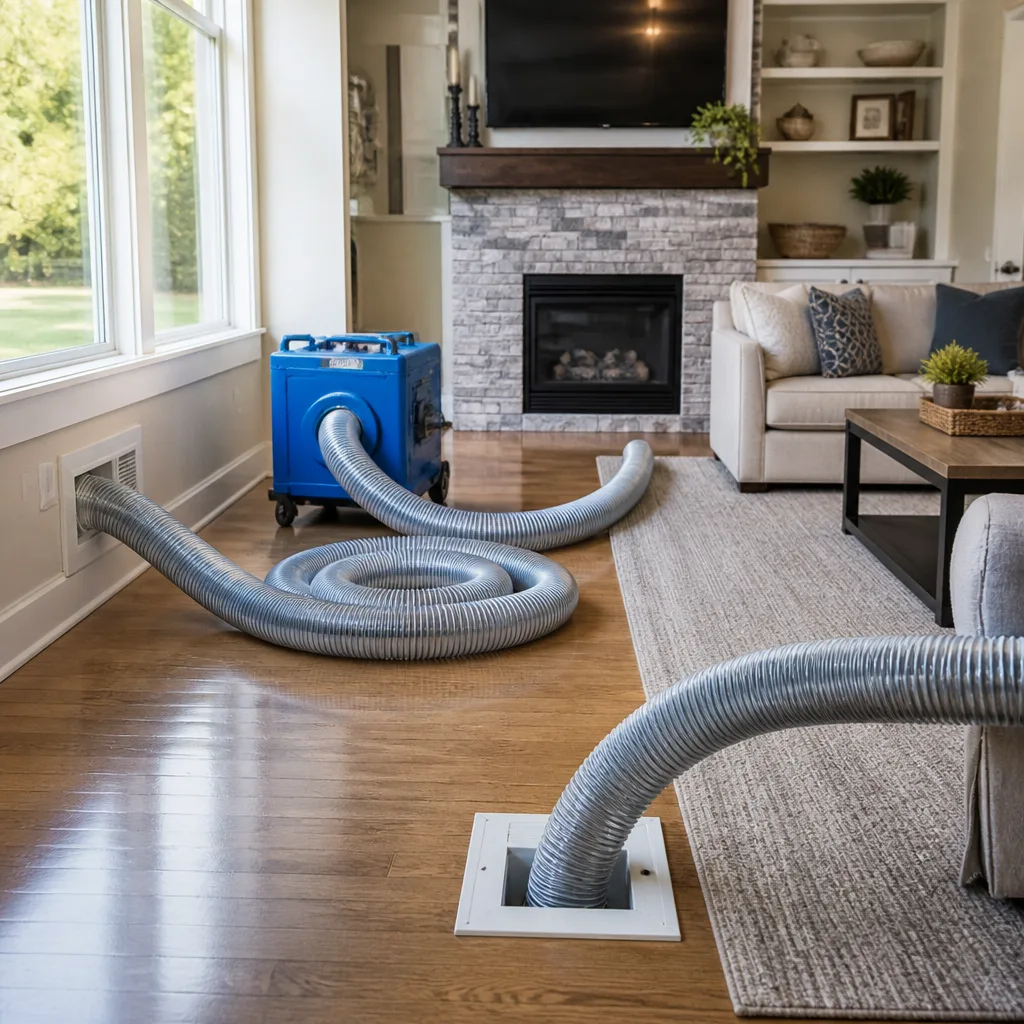 Whole-home duct cleaning
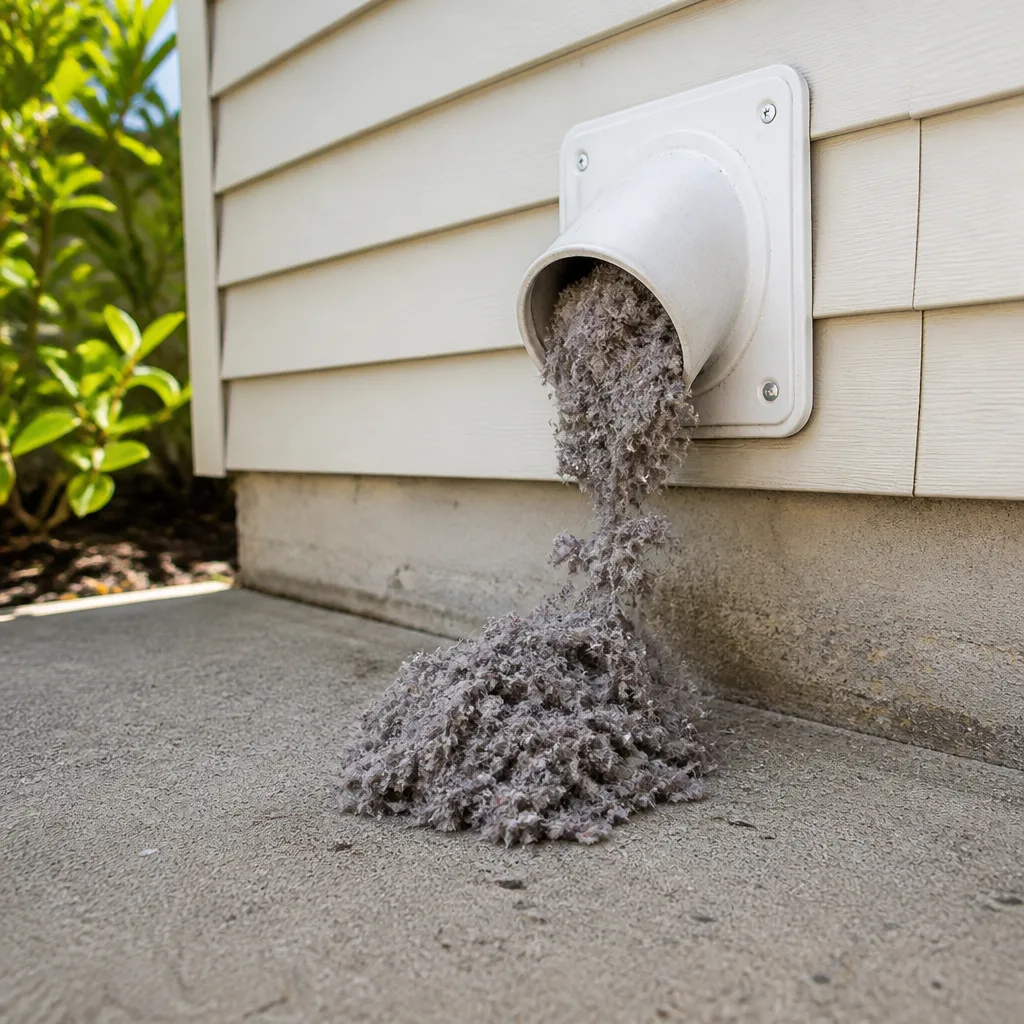 Dryer vent cleaning
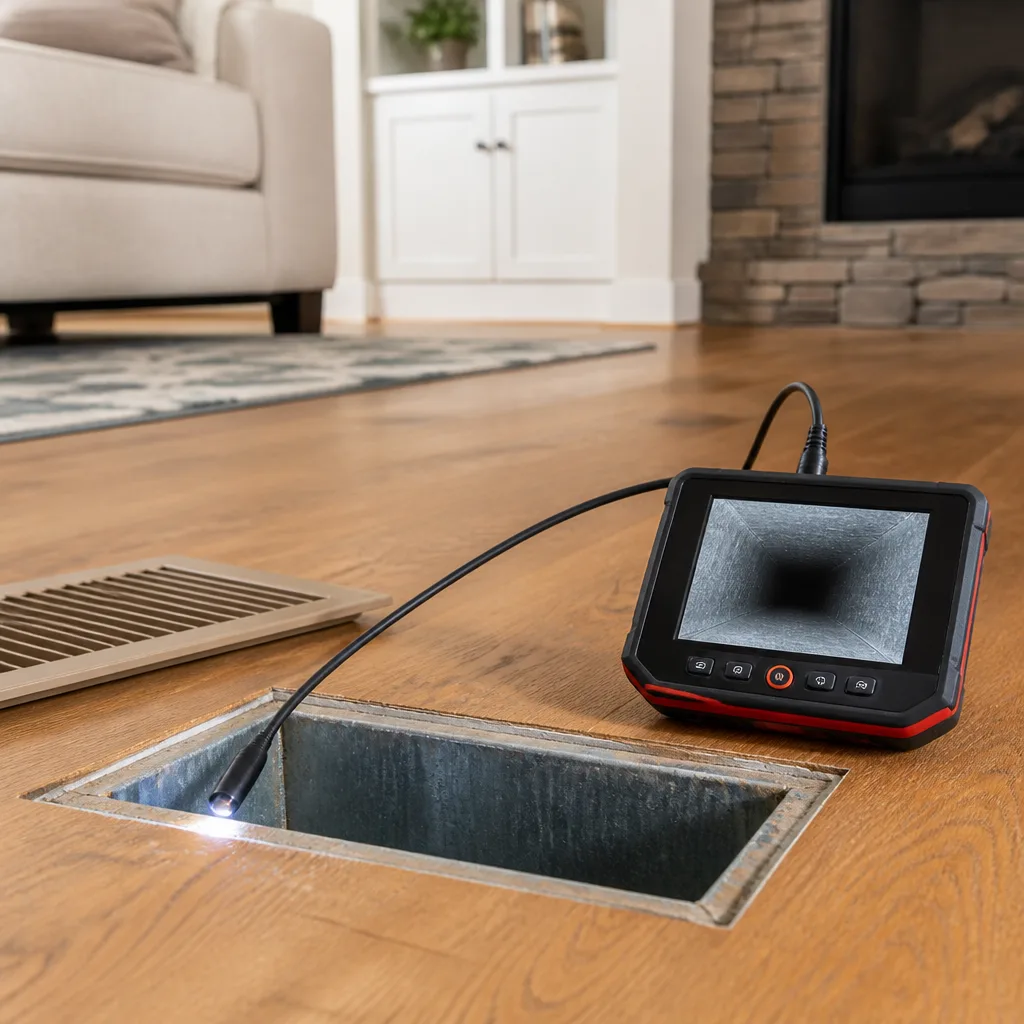 Camera inspection
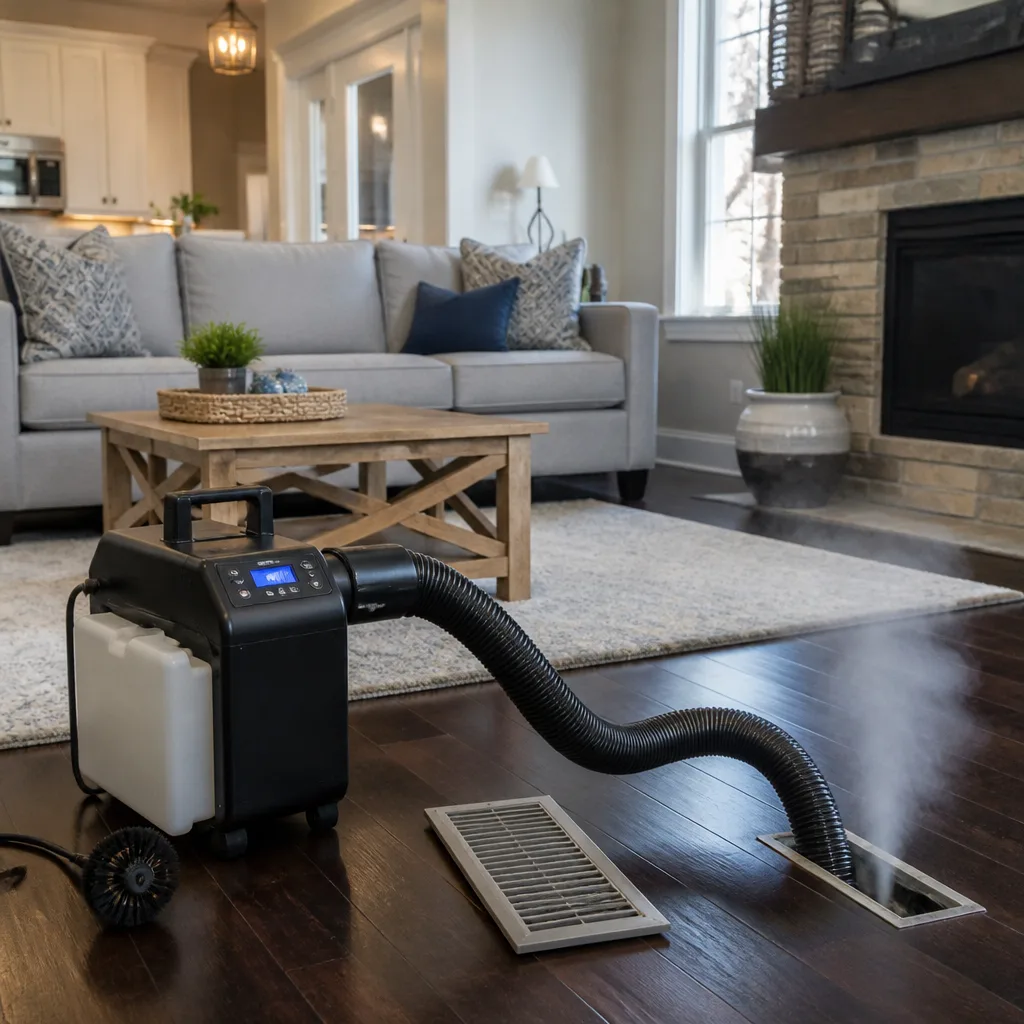 Sanitizing & deodorizing
Whole-system duct and dryer vent check with before-and-after photos - you see exactly what came out of your vents
That "$99 whole-house special" is a bait ad - the real number appears once they are in your hallway, or the "clean" is a shop-vac at the register. We photograph the inside of your ducts before and after instead.
Air Duct Cleaning Emergency Preparedness Guide for Mesquite Homes
Most homeowners treat duct cleaning as routine maintenance, something to schedule when the dust on the furniture gets annoying. That framing misses the moments when ductwork matters most. When a severe storm tears through North Texas, when wildfire smoke blankets the region for days, or when a contractor finishes a remodel, the HVAC system can take in a concentrated load of contamination in a matter of hours. The ducts then hold it and redistribute it every time the system runs. This guide walks through what to do with your HVAC and ductwork before, during, and after those events in Mesquite. You’ll get a clear protocol for storms, smoke, water intrusion, and renovation dust so the next emergency doesn’t leave residue cycling through your home for months.
Quick Answer
After a storm, smoke event, water intrusion, or major renovation in Mesquite, don’t restart your HVAC and expect the filter to handle it. Shut the system down, check the ducts and attic runs for damage or moisture, and have the ductwork professionally cleaned and inspected before normal operation resumes. The first 24 to 48 hours decide whether cleaning is enough or whether contaminated sections need repair or replacement.
Styles & brands we work with
- Whole-home duct cleaning
- Dryer vent cleaning
- Camera inspection
- Sanitizing & deodorizing
Table of Contents
- Post-Storm Protocol: What to Do Before You Turn the System Back On
- Wildfire and Smoke Events: When Filters Aren’t Enough
- Water Intrusion and the 48-Hour Mold Window
- Post-Renovation Air Quality Recovery
- Pre-Event Preparation: Settings and Filter Upgrades
- Dryer Vent Safety in an Emergency
- What a Professional Duct Assessment Involves
- Signs Your Ducts Already Absorbed an Event
Post-Storm Protocol: What to Do Before You Turn the System Back On
Mesquite sits in a corridor that sees hail, straight-line winds, and the occasional tornado warning, and the HVAC system is usually the last thing on anyone’s mind when the power comes back. That’s the problem. A system that restarts automatically or gets switched on by habit can pull attic insulation fibers, roof debris, and loose particulate straight into the return side before anyone has looked at the ducts.
Here’s the order that protects the system and the air in your home:
- Keep the system off. Don’t flip the thermostat back to cool or heat until you’ve inspected the accessible duct runs and the attic connection points.
- Look at the attic. If the storm damaged roofing, soffit, or gable vents, insulation and debris can settle into exposed duct joints. Any duct run that sagged, separated, or came loose at a collar needs to be seen before air moves through it.
- Check for duct integrity. Flexible duct that’s been crushed, torn, or disconnected will blow attic air into living spaces. That’s a repair issue, not a cleaning issue, and it’s the reason we offer duct cleaning in Mesquite alongside standalone duct repair.
- Replace the filter, but don’t stop there. A new filter catches what passes through it. It does nothing for what’s already sitting on the interior of the ducts.
- Schedule an assessment. A visual check and a camera inspection tell you whether the ducts need cleaning, repair, or both.
Roof leaks and wind-driven rain often announce themselves days later as a watermark on the ceiling. If you find one, treat the adjacent ductwork as wet until proven dry. That leads to the next section.
Wildfire and Smoke Events: When Filters Aren’t Enough
Smoke from distant wildfires or regional burns drifts into Mesquite regularly, and it doesn’t announce itself with visible haze. The smell is often the only cue. Homeowners typically respond by closing windows, running the system on fan, and swapping the filter. That’s a sensible first move, but it’s incomplete, and here’s why.
Smoke is not one thing. It’s a mix of fine particulate, combustion gases, and volatile organic compounds. A standard filter, even a decent one, captures a portion of the particulate and almost none of the gases. The VOCs are what linger. They adsorb onto surfaces, including the interior walls of your ductwork, and off-gas slowly for weeks. Every time the blower runs, it stirs that coating and pushes it back into the rooms.
How do you know whether smoke has reached the ducts? Look for these signals:
- A smoky or burnt smell that returns whenever the system runs, even after the outdoor air clears
- Visible soot or dark film on return grilles and around register faces
- Increased headaches, throat irritation, or coughing indoors while outdoor air quality has improved
- Dust that looks darker than usual on surfaces near supply registers
When those signs line up, filter replacement isn’t going to solve it. The ducts need extraction. We use air duct cleaning equipment from Abatement Technologies for jobs that involve combustion byproducts and fine particulate, plus a negative-pressure setup to keep contamination from migrating into living spaces during the work. That’s the difference between a shop-vac job and a proper abatement-grade extraction.
Water Intrusion and the 48-Hour Mold Window
Water and ductwork are a bad combination, and Mesquite homes see it in three main forms: roof leaks that drip onto attic duct runs, slab or plumbing leaks that soak a section of subfloor and the duct beneath, and burst supply lines that spray near a return chase. In every case, the clock starts the moment water contacts the duct.
Mold can begin colonizing damp organic material, including the paper-faced insulation inside many flexible ducts, within 24 to 48 hours. That window is the deciding factor between a cleaning job and a replacement job. Some guidelines to work by:
- If the duct interior stayed dry, and there’s no visible mold growth or musty odor, professional cleaning and drying is usually enough.
- If water entered the duct itself, and more than 48 hours passed before it was addressed, the affected sections are generally not salvageable. Porous duct material that’s been wet that long should be replaced, not cleaned.
- If the exterior of the duct is wet but the interior is dry, dry the exterior, restore the vapor barrier, and confirm the interior stays dry through a full cooling or heating cycle.
- If there’s any visible mold, don’t run the system. Every cycle spreads spores.
We can’t make a cleaning call over the phone on a flooded duct. An on-site inspection is the only honest way to know which side of the 48-hour line you’re on. When replacement is needed, our duct repair service can handle it as part of the same visit rather than sending you to a contractor who only does fabrication.
Post-Renovation Air Quality Recovery
A kitchen or bath remodel is a controlled demolition that dumps a specific cocktail of particulate into the air. Most of it settles into ductwork through return grilles that were left unprotected, and it doesn’t come out with a filter change. The three categories worth knowing:
- Drywall dust is fine, alkaline, and abrasive. It coats duct interiors and settles on blower wheels where it throws the fan out of balance.
- Insulation fibers from exposed batts and blown-in attic insulation are the longest-lived contaminant. They travel easily through return air and lodge in flexible duct corrugations.
- Adhesive and finish VOCs from paint, caulk, flooring adhesive, and cabinet finishes are chemical rather than particulate. They adsorb onto duct surfaces and off-gas for weeks.
Standard cleaning doesn’t always reach all three. Drywall dust needs mechanical agitation to break the film, insulation fibers need high-volume extraction to pull out of corrugations, and VOCs need source removal plus attention to filtration. A professional post-renovation clean uses rotary agitation (which is why we run both Rotobrush and Nikro equipment, depending on the duct type), high-volume extraction, and often a follow-up with a filtration upgrade from Honeywell or Aprilaire so the system catches what continues to be released.
The right time to schedule is after final sanding and paint have cured, but before the first full heating or cooling cycle of the season. That keeps the new contamination from cycling through your home for a week first.
Pre-Event Preparation: Settings and Filter Upgrades
You can’t prevent a storm or a smoke advisory, but you can reduce how much contamination your system takes in when one hits. A few adjustments go a long way:
- Know how to shut the system off at the thermostat and at the breaker. Both switches matter. In a dust storm or smoke event, off is better than on.
- Upgrade filtration before the event. A higher-MERV filter, matched to what your blower can handle without starving airflow, captures more of the fine particulate that would otherwise coat the ducts. We install and integrate filtration and purification upgrades from Honeywell for homes that want this in place ahead of the season.
- Seal return grilles during renovation. A sheet of plastic and painter’s tape over the return before demo starts prevents most of the dust from ever entering the system.
- Close windows and set the fan to “auto” during smoke advisories so the system doesn’t pull outdoor air in continuously.
- Do a seasonal duct check before storm season. Loose joints and separated runs are cheap to fix before an event and expensive after.
For Mesquite homeowners in neighborhoods with older housing stock, duct joints tend to be the weak point. A pre-season inspection catches most of them.
Dryer Vent Safety in an Emergency
Lint accumulation in dryer vents is a fire hazard that gets worse during the same events that strain everything else. When a home is drying out after water intrusion, running loads of wet towels and bedding back to back, lint loads up in the vent faster than usual. A vent that’s already partway restricted can become blocked in a matter of days.
Signs the vent is restricted include clothes taking longer to dry, the dryer cabinet getting hot to the touch, and a burning smell during or right after a cycle. A dryer vent cleaning visit clears the run and removes the accumulated lint that a typical screen or a shop vac can’t reach. It’s a fire-safety service, not a maintenance add-on, and it’s worth scheduling right alongside a post-event duct assessment. Both services use the same equipment discipline and the same attention to what’s actually inside the run versus what looks clean from the outside.
What a Professional Duct Assessment Involves
When we assess ducts after an event in Mesquite, the process is built around one goal: an honest answer to the question of clean, repair, or replace. Here’s what that looks like in order:
- Walkthrough and visual inspection. Register faces, return grilles, and any accessible duct runs.
- Camera inspection of inaccessible sections. Attic runs, chase ducts, and flex runs behind finished walls get looked at from the inside.
- Moisture checks on any duct near a documented water event. A pin meter tells us whether duct interior material is dry or damp enough to support mold growth.
- Source identification. Where did the contamination enter, and how much of the run does it affect?
- Recommendation. Clean, clean-and-seal, repair the damaged section, or replace the affected run. All four services are things we do, so the recommendation is based on what the duct actually needs, not on which service we can sell.
Once the recommendation is confirmed, we bring in the appropriate equipment: Nikro or Rotobrush for standard cleaning, Abatement Technologies for contaminant and particulate loads, and Guardsman finishing products where the duct needs post-clean treatment to keep it from re-collecting dust at the usual rate. Our technicians have up to 10 years of experience, which shows up in how thoroughly a job gets finished rather than how fast it starts.
Signs Your Ducts Already Absorbed an Event
Not every event announces itself. Sometimes the damage is silent, and the clue is that the house just doesn’t feel right afterward. Watch for these:
- Dust returns faster than usual on horizontal surfaces, especially after the system runs
- A musty, smoky, or chemical smell that shows up when the blower kicks on and fades when it stops
- Allergy or asthma symptoms that spiked after the event and stayed elevated
- Visible dark streaks or film around supply registers and on return grilles
- Higher utility bills as the blower works harder against a restricted or dirty system
- Attic insulation visible around supply boots (a sign of duct damage and air bypass)
Two or more of those together is a strong signal to get an assessment. The one you don’t want to rely on is “it looks fine.” Duct interiors don’t look like anything from the outside, and the contamination that matters most is often the contamination you can’t see.
Common Mistakes to Avoid
- Restarting the HVAC before inspecting the ducts. Many systems pull straight from attic returns. If attic insulation or roof debris has settled into an open joint, that first cycle drives it into every room. Look first, then run.
- Assuming a new filter is a fix. A filter catches what passes through it and nothing else. It doesn’t touch what’s already on the duct walls, and it doesn’t remove VOCs that adsorbed during a smoke event.
- Waiting on water intrusion. The 48-hour window on wet duct material is real. Waiting “to see if it dries” usually means replacing sections that could have been cleaned if they’d been handled in time.
- Skipping duct protection during a remodel. Painting and sanding with return grilles open guarantees the ducts will need attention afterward. Sealing returns beforehand is cheap and easy.
- Hiring a generalist for an abatement-level job. A shop vac doesn’t contain fine particulate; it blows a portion of it back into the room. Post-smoke and post-fire jobs need negative-pressure extraction, which is why we run Abatement Technologies equipment on those jobs. (On that note: duct cleaning by our Mesquite team is a different service tier than a generic air-duct crew, and the equipment is the difference.)
- Ignoring the dryer vent during recovery. Emergency laundry loads back up lint faster than usual, and a restricted dryer vent is a genuine fire risk that has nothing to do with ductwork.
- Treating duct repair as a separate contractor’s problem. If the duct run is torn or disconnected, cleaning it does nothing. The repair has to happen in the same service relationship, which is why duct repair is a standalone service we offer.
See the difference
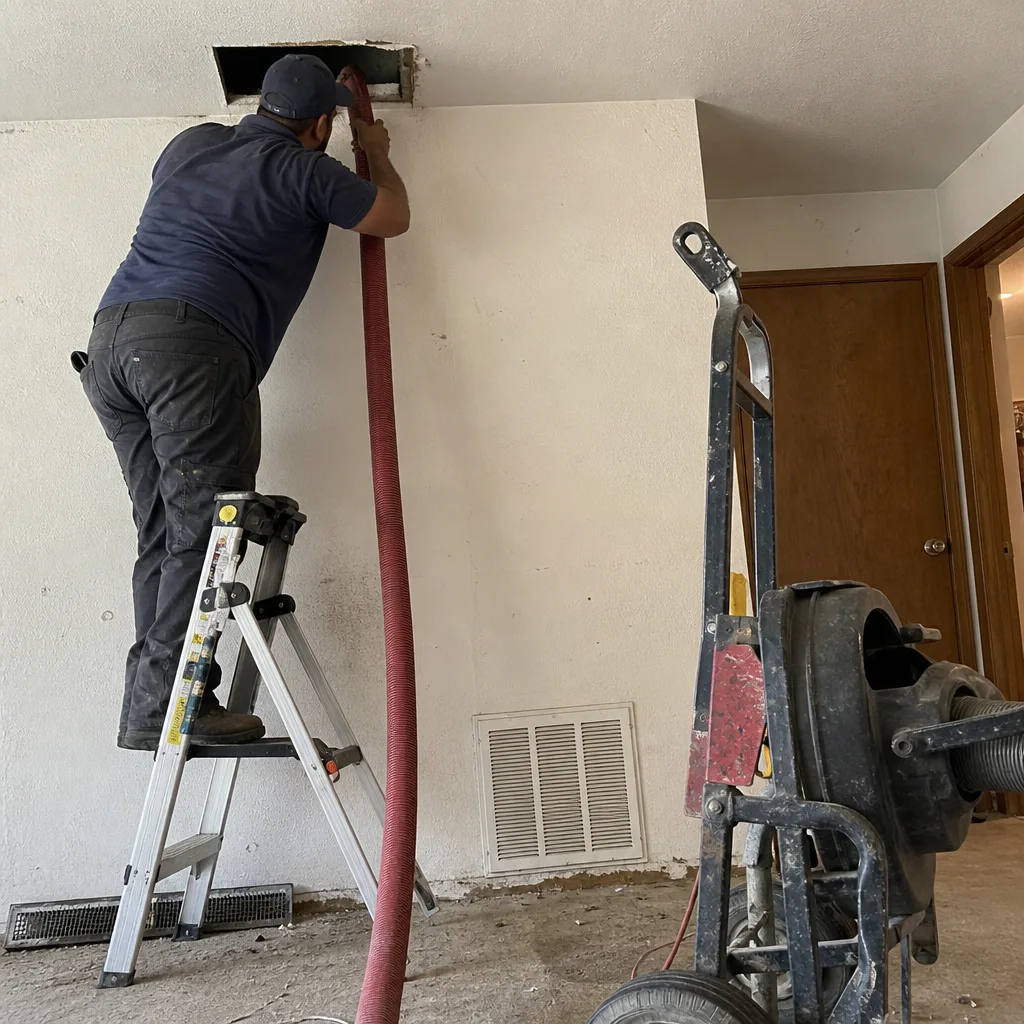 Before
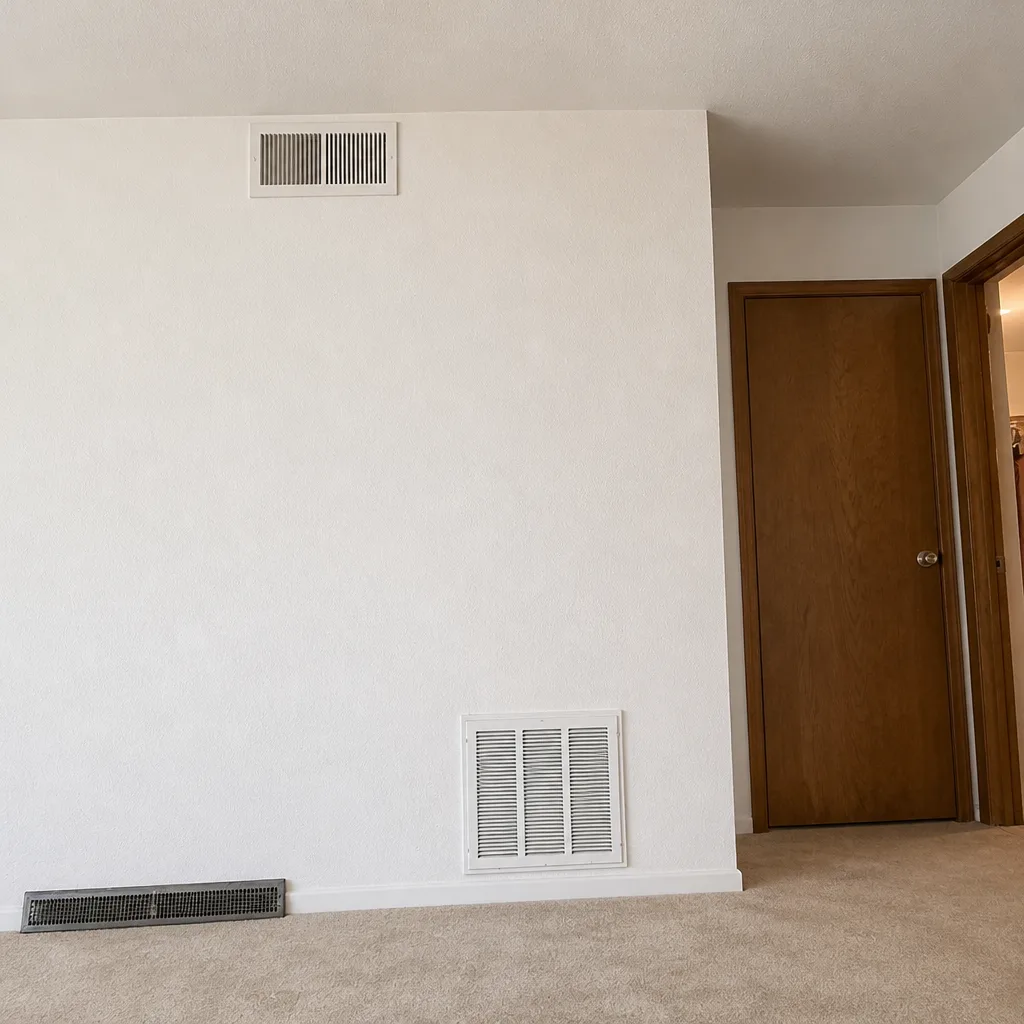 After
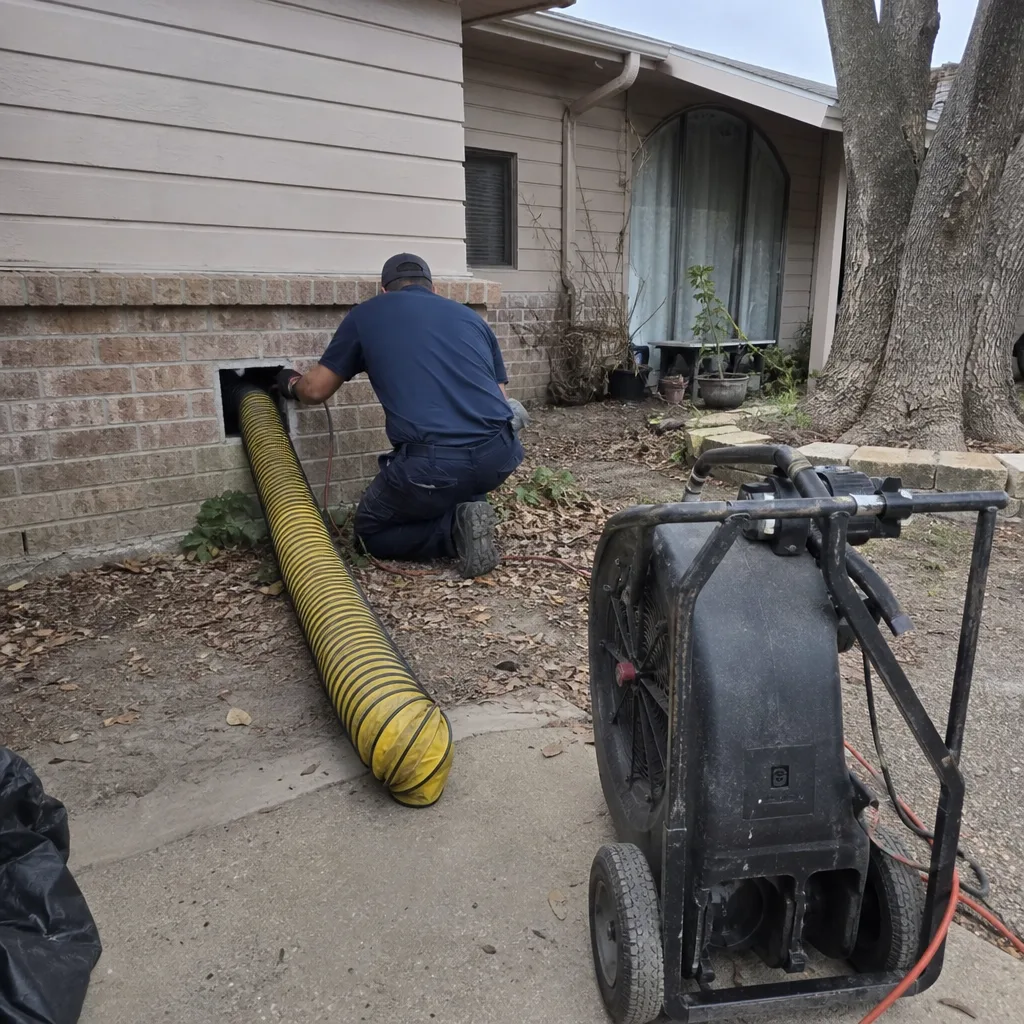 Before
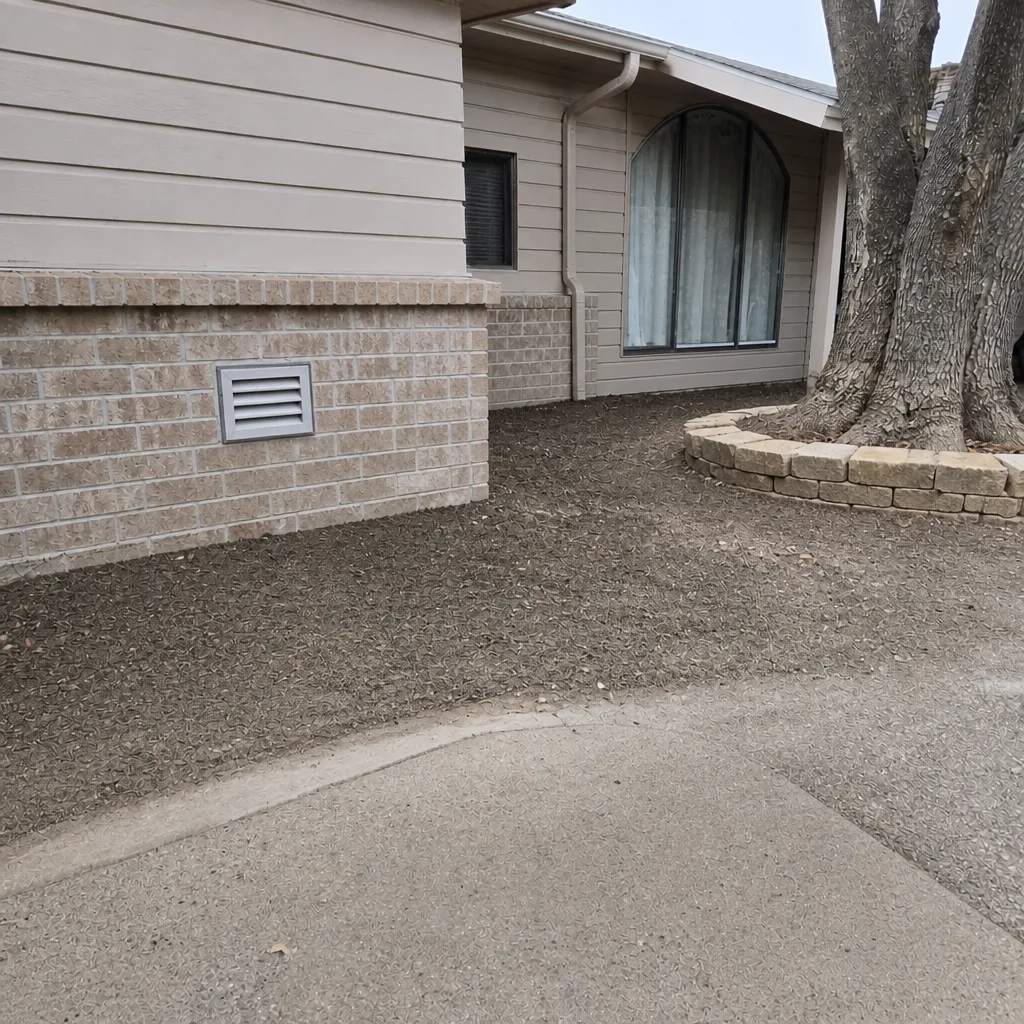 After
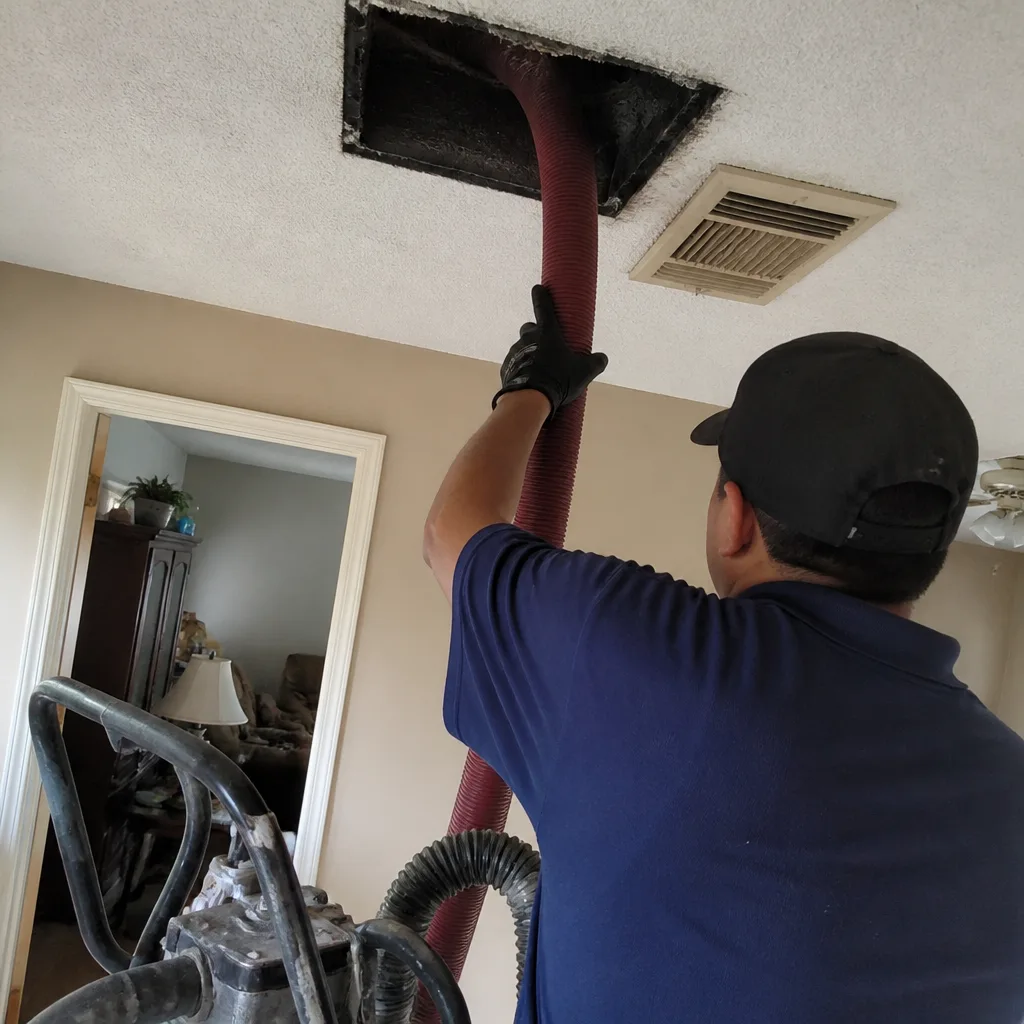 Before
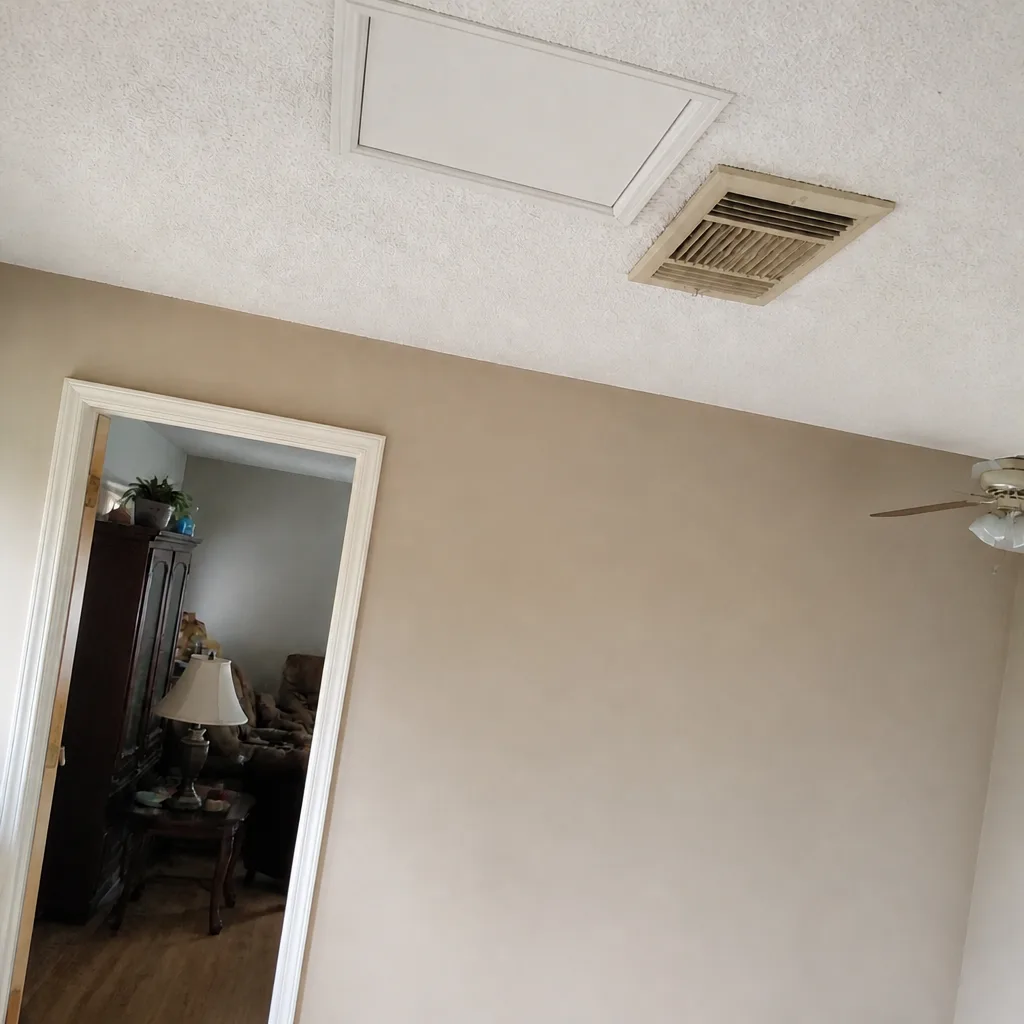 After
When to Call a Professional
Call a professional when any of these are true: your home took on visible water near a duct run, there’s a persistent smoky or musty smell when the system runs, a storm damaged the attic or roofing and the return side was open, a major renovation finished without return protection, or your household’s respiratory symptoms spiked during or after an event and haven’t settled. Also call if a camera inspection has never been done on a home older than about fifteen years; you don’t need an emergency to find out the ducts have been collecting contamination for a decade. Duct Cleaning Mesquite offers free estimates in Mesquite – call (855) 360-8359. We answer 24/7. Fast dispatch, 7am-7pm, Sunday through Friday.
Frequently Asked Questions
You need an inspection, and possibly cleaning, if the storm damaged roofing, soffit, or attic connections, or if visible debris entered through return grilles. Storms that leave the attic envelope intact usually don’t require duct cleaning, but wind-driven events that exposed the attic often do. Call (855) 360-8359 for a free estimate, and we’ll tell you honestly which situation you’re in.
Smoke residue can stay in ductwork for weeks or longer without professional extraction because the VOCs adsorb onto duct surfaces and off-gas on every cycle. A standard filter change doesn’t remove them. If the smoky smell returns whenever the system runs, the ducts need cleaning. Call (855) 360-8359 for an assessment.
No – a shop vac captures some surface dust but blows a portion of fine particulate back into the room and can’t reach the corrugations inside flexible duct where drywall dust and insulation fibers lodge. Professional agitation and high-volume extraction are necessary for a real clean. Call (855) 360-8359 for a free estimate.
Cleaning removes accumulated contamination from the interior of the ducts; repair addresses structural problems like torn flex, disconnected joints, crushed runs, and sections with compromised insulation. When both are needed, they should be done in the same service relationship so a repaired duct isn’t cleaned and then re-contaminated by the still-damaged section downstream. Call (855) 360-8359 to discuss which your ducts need.
You usually can’t tell from the outside. Water that reaches duckwork shows up as musty odor, condensation on register faces, or a moisture-reading problem inside the duct that only an on-site inspection will catch. If you had a roof leak, burst pipe, or flood near any duct run, have it inspected within the first 48 hours so you still have the option to clean rather than replace. Call (855) 360-8359.
A visual and camera inspection is worth doing every few years as a baseline, and after any storm, smoke event, water intrusion, or major renovation regardless of routine schedule. Duct cleaning itself usually falls in the three-to-five-year range for typical homes, faster for homes with pets, allergies, or recent construction. Call (855) 360-8359 for a free estimate on your specific home.
The Bottom Line
The next storm, smoke advisory, or renovation is going to happen. What you control is what you do in the first 24 to 48 hours after it. Shut the system off before restarting it, look at the attic and duct runs, treat water intrusion as a mold clock, and treat smoke and renovation dust as extraction jobs rather than filter swaps. Keep your dryer vent clear during heavy laundry cycles. And when the situation is bigger than a filter change, get the ducts assessed by a crew with the equipment for it. For Mesquite homes, that’s what we do. Call (855) 360-8359 for a free estimate. We answer 24/7. Fast dispatch from 7am to 7pm, Sunday through Friday.
Written by the team at Duct Cleaning Mesquite.