
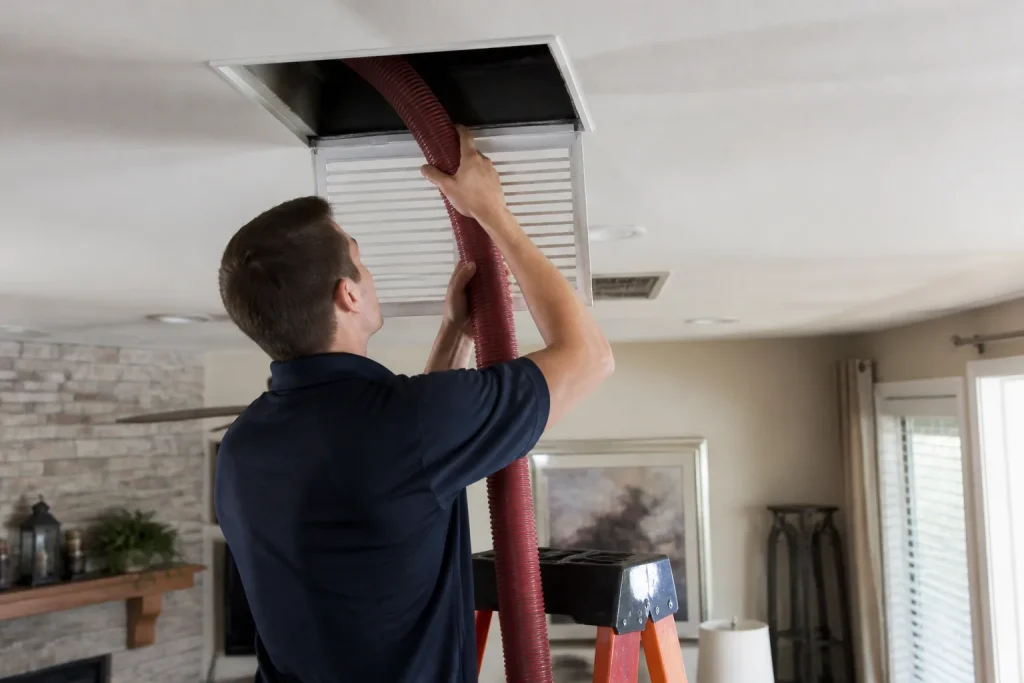

Nikro Air Duct Cleaning in Mesquite: A Homeowner’s Guide
Most homeowners in Mesquite book duct cleaning without ever asking what equipment will show up in the driveway. That’s the question that actually decides the outcome. A truck tells you nothing. The machine carried inside tells you everything, and Nikro industrial duct cleaning systems run at airflow ratings most residential rigs can’t match. This guide explains what Nikro equipment does mechanically, which problems each tool solves, and how to tell real negative-pressure containment from a glorified shop vac before anyone climbs into your attic.
If you’d rather skip the homework and talk to someone who uses this gear on every job, call (855) 360-8359 for a free estimate.
Key Takeaways
- Nikro is commercial and industrial duct equipment, not a residential entry-level tool.
- True negative pressure creates one direction of airflow, from supply to return, so dislodged debris leaves your home instead of settling in it.
- Different Nikro tools handle different problems: power vacuums for volume, air wash whips for wall contact, inspection systems for proof.
- Camera documentation before and after is the difference between a claim you can support and a memory you can’t.
- You can ask any contractor three questions about their equipment and learn most of what you need in two minutes.
What Makes Nikro Equipment Different From a Standard Duct Rig?
Nikro systems move air at a volume and pressure that standard residential portables can’t match, and that’s the whole point. Duct cleaning works through containment: you put the duct system under negative pressure, then disturb the debris inside. If the vacuum is strong enough, everything loosened stays inside the airstream and travels out through a collection filter. If it isn’t, that debris has nowhere to go but into your living room.
A common mistake we hear about in Mesquite is a crew arriving with a single small vacuum, a brush, and a hose that barely reaches past the first run. That setup does move dust. It also stirs contaminants into the air and relocates them somewhere else in the house, which is worse than leaving them alone. A stronger machine doesn’t just clean harder. It gives the dust one direction to travel and holds it there.
There’s a physical reason for this. Negative pressure inside a duct system means every opening, every gap, and every register pulls air inward. Contaminant clouds collapse toward the source instead of spreading. When the vacuum can’t sustain that pressure, the seal breaks down and the airflow reverses. That’s not a cleaning problem. It’s a containment failure, and no amount of scrubbing fixes it.
Nikro builds industrial duct cleaning systems. Deploying that class of equipment in a Mesquite home means the same containment discipline used on commercial jobs gets applied to a residential system.
The Three Nikro Equipment Categories and What Each One Solves
Nikro isn’t one machine. It’s a system of tools, and each one addresses a specific job that a single brush-and-hose setup handles poorly. Here’s how they break down, and how we think about using them together:
- Portable power vacuums. The core of a true negative-pressure setup. These units attach to the duct system and hold the whole network under suction while cleaning happens. Without one, you’re brushing dust loose with nothing catching it.
- Air wash whips. These use compressed air to scrub the duct walls from the inside, reaching the corners and joints a spinning brush skips. Wall contact is where the dust actually lives, and whips do more of it than brushes do.
- Inspection and air quality systems. Camera tools let the technician see inside the ductwork before, during, and after work. Without them, neither of you knows what was cleaned or whether it was cleaned at all.
Here’s where it matters for a Mesquite house. Local ducts run long distances through hot attics, and that’s a lot of surface area for dust to settle into. A tool that only reaches the first few feet of a run doesn’t address the problem. Each category of Nikro gear exists because the one before it can’t do everything alone.
Why Nikro Is the Standard in Commercial and Industrial Duct Work
Nikro equipment shows up on commercial and industrial duct jobs because those systems are larger, dirtier, and less forgiving of shortcuts. A large commercial HVAC network has hundreds of feet of ductwork and a lot of internal volume. Loosening debris without containing it doesn’t just create a mess; it makes the building airborne. So the equipment that gets trusted on those jobs is the equipment that holds containment under load.
Bringing that same grade of machine into a Mesquite home changes what’s possible on the job. It also opens the door to considerations most residential cleanings don’t touch. For larger dust volumes or higher particulate concerns, we can bring Abatement Technologies equipment to handle deeper contamination rather than routine dust.
And if the ducts themselves are damaged, cleaning alone won’t fix the problem. That’s why we offer air duct repair as its own service, separate from cleaning. Loose joints, disconnections, and crushed runs let debris back into the airstream no matter how well the system was cleaned the last time. Repair capability means the whole problem gets addressed under one service relationship instead of three phone calls to three contractors.
The point isn’t the brand name. The point is what a commercial-grade system makes possible in a residential setting.
What a Nikro-Based Cleaning Job Actually Involves
A proper job follows a sequence. Skipping any step means the cleaning is incomplete, regardless of how long the crew spends inside.
- Inspection first. A camera survey maps the ductwork before any work begins, so the technician knows where the dust is and whether the system has damage. In a Mesquite home with a long attic run, that survey is where you find the crushed section nobody knew was there.
- Containment setup. The vacuum attaches to the duct system, creating negative pressure throughout. Every register stays closed except the ones being worked.
- Agitation. Air whips and brushes work the duct walls, from the supply side toward the return. The vacuum catches everything that comes loose.
- Return-side cleaning. The return duct collects the dust the supply side feeds it, so it gets handled last and cleaned thoroughly.
- Final camera pass. The technician re-inspects the same areas to show what changed. That’s the part that matters most for you.
Alongside the cleaning, consider the finishing layer. Guardsman products support protective treatment after cleaning, and if you’re thinking about filtration upgrades, Honeywell and Aprilaire equipment integrates with the same job. Clean ducts are only half the story.
Questions to Ask Any Duct Cleaner Before You Book
You don’t need to be an equipment expert to tell real containment from a shop vac. Three questions do most of the work:
- “What brand of vacuum are you using, and what’s its rated airflow?” If the answer is “a HEPA vac” without a brand, ask again. A machine built for containment can hold negative pressure across an entire duct system. A shop vac can’t.
- “Will you show me camera footage before and after?” A contractor with inspection gear will say yes without hesitation. One without it will explain why photos aren’t necessary. That’s your answer.
- “Do you repair duct damage, or clean only?” In Mesquite, where ducts run through hot attics, damaged runs are common. A company that only cleans will clean around a problem it can’t fix.
Documentation matters beyond the cleaning itself. Before and after footage gives you a record if you ever need it for a home warranty, a homeowner’s insurance conversation, or a renovation. A no-documentation job leaves you with nothing but a receipt.
Related services in Mesquite
If your ducts need attention, we also handle dryer vent cleaning and air duct cleaning as separate bookable services, and we serve homeowners across Mesquite. For a full look at what we do, start with Duct Cleaning Mesquite.
When to Call a Pro
If your ducts haven’t been inspected, if you’re seeing dust settle faster than it used to, or if you’ve noticed any crushed or disconnected runs in the attic, that’s the point to bring in a specialist. The equipment, not the intention, decides what gets cleaned. Call (855) 360-8359. We answer 24/7. Fast dispatch from 7am to 7pm, Sunday through Friday.
The Bottom Line
The difference between a Nikro-powered cleaning and a standard portable job comes down to containment. Negative pressure that actually holds means dislodged contaminants leave the house instead of resettling in it. Different tools in the Nikro line handle different problems: power vacuums for airflow, air wash whips for wall contact, inspection systems for proof. We also carry Abatement Technologies equipment for deeper air quality concerns and work with Honeywell and Aprilaire products when filtration upgrades make sense. Our technicians have up to 10 years of experience with this gear, and we’re honest about what your ducts actually need. If you’re in Mesquite and want a clear answer, Duct Cleaning Mesquite offers free estimates. Call (855) 360-8359, and we’ll talk through what your system is telling us.
Frequently Asked Questions
No. It’s the right tool for the job because containment is the whole goal of duct cleaning, and containment depends on airflow the small machines can’t sustain. A home with long attic runs through a hot Texas climate has real dust volume, and containment that holds under load matters more than the square footage.
Ask for before and after camera footage of the same areas. A cleaning backed by inspection equipment produces visible proof; a cleaning without it produces a receipt. Requesting the footage before you book tells you which kind of job you’re getting.
Sometimes, and sometimes not. Cleaning removes what’s inside the ducts, but damaged joints, crushed runs, or disconnections let debris back in. That’s why we separate cleaning from repair. Call (855) 360-8359 for an exact quote. Estimates are free.
Pricing depends on system size, the number of runs, and whether repair work is involved, so we quote per job rather than invent a number that won’t match your house. The estimate sets the final price, and the number is agreed before work starts. Call (855) 360-8359 for an exact quote. Estimates are free.
Cheaper quotes usually reflect cheaper equipment. A small portable unit and a brush cost less to run than a containment-grade vacuum and inspection camera, so the job costs less to sell. It also cleans less. Ask what machine will be on site before comparing prices.
Most homes benefit from an inspection every few years, with cleaning when the inspection shows it’s needed. Homes with pets, recent renovation, or visible dust buildup usually need it sooner. If you’re not sure, a camera survey answers the question.
Written by the team at Duct Cleaning Mesquite.
Need Air Duct Cleaning Help?
Call Duct Cleaning Mesquite - licensed & insured, with free written estimates in Mesquite.
(855) 360-8359